Friday, 16 December 2022

When there are no consequences for misconduct: Parallels between politics and science


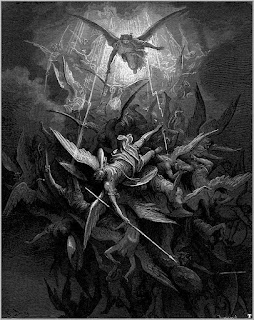
Gustave Doré: Illustration for Paradise Lost

(Updated 17 Dec 2022) 

As children, we grow up with stories of the battle between good and evil, but good ultimately triumphs. In adulthood, we know things can be more complicated: bad people can get into positions of power and make everyone suffer.  And yet, we tell ourselves, we have a strong legal framework, there are checks and balances, and a political system aspires to be free and fair.


During the last decade, I started for the first time to have serious doubts about those assumptions. In both the UK and the US, the same pattern is seen repeatedly: the media report on a scandal involving the government or a public figure, there is a brief period of public outrage, but then things continue as before.


In the UK we have become accustomed to politicians lying to Parliament and failing to correct the record, to bullying by senior politicians, and to safety regulations being ignored.  The current scandal is a case of disaster capitalism where government cronies made vast fortunes from the Covid pandemic by gaining contracts for personal protective equipment – which was not only provided at inflated prices, but then could not be used as it was substandard.


These are all shocking stories, but even more shocking is the lack of any serious consequences for those who are guilty. In the past, politicians would have resigned for minor peccadilloes, with pressure from the Prime Minister if need be. During Boris Johnson’s premiership, however, the Prime Minister was part of the problem. 


During the Trump presidency in the US, Sarah Kendzior wrote about “saviour syndrome”  - the belief people had that someone would come along and put things right. As she noted: “Mr. Trump has openly committed crimes and even confessed to crimes: What is at stake is whether anyone would hold him accountable.” And, sadly, the answer has been no.


No consequences for scientific fraud

So what has this got to do with science?  Well, I get the same sinking feeling that there is a major problem, everyone can see there's a problem, but nobody is going to rescue us. Researchers who engage in obvious malpractice repeatedly get away with no consequences.  This has been a recurring theme from those who have exposed academic papermills (Byrne et al., 2021) and/or reported manipulation of figures in journal articles (Bik et al., 2016).  For instance, when Bik was interviewed by Nature, she noted that 60-70% of the 800 papers she had reported to journals had not been dealt with within 5 years. That matches my more limited experience; if one points out academic malpractice to publishers or institutions, there is often no reply. Those who do reply typically say they will investigate, but then you hear no more.


At a recent symposium on Research Integrity at Liverpool Medical Institution*, David Sanders (Purdue University) told of repeated experiences of being given the brush-off by journals and institutions when reporting suspect papers. For instance, he reported an article that had simply recycled a table from a previous paper on a different topic. The response was “We will look into it”. “What”, said David incredulously, “is there to look into?”. This is the concern – that there can be blatant evidence of malpractice within a paper, yet the complainant is ignored. In this case, nothing happened. There are honorable exceptions, but it seems shocking that serious and obvious errors in work are not dealt with in a prompt and professional manner.


At the same seminar, there was a searing presentation by Peter Wilmshurst, whose experiences of exposing medical fraud by powerful individuals and organisations have led him to be the subject of numerous libel complaints.  Here are a few details of two of the cases he presented:


Paolo Macchiarini:  Convicted in 2022 of causing bodily harm with an experimental transplant of a synthetic windpipe that he performed between 2011-2012.  Wilmshurst noted that the descriptions of the experimental surgery in journals were incorrect. For a summary see this BMJ article.   A 2008 paper by Macchiarini and colleagues is still published in the Lancet, despite demands for it to be retracted. 


Don Poldermans: An eminent cardiologist who conducted a series of studies on perioperative betablockers, leading them to be recommended in guidelines from the European Society of Cardiology,  whose task force he chaired. A meta-analysis challenged that conclusion, showing mortality increased; an investigation found that work by Poldermans had serious integrity problems, and he was fired. Nevertheless, the papers have not been retracted. Wilmshurst estimated that thousands of deaths would have resulted from physicians following the guidelines recommending betablockers.


The week before the Liverpool meeting, there was a session on Correcting the Record at AIMOS2022.  The four speakers, John Loadsman (anaesthesiology), Ben Mol (Obstetrics and Gynecology), Lisa Parker (Oncology) and Jana Christopher (image integrity) covered the topic from a range of different angles, but in every single talk, the message came through loud and clear: it’s not enough to flag up cases of fraud – you have to then get someone to act on them, and that is far more difficult than it should be.


And then on the same day as the Liverpool meeting, Le Monde ran a piece about a researcher whose body of work contained numerous problems: the same graphs were used across different articles that purported to show different experiments, and other figures had signs of manipulation.  There was an investigation by the institution and by the funder, Centre National de la Recherche Scientifique (CNRS), which concluded that there had been several breaches of scientific integrity. However, it seems that the recommendation was simply that the papers should be “corrected”.


Why is scientific fraud not taken seriously?

There are several factors that conspire to get scientific fraud brushed under the carpet.

1.     Accusations of fraud may be unfounded. In science, as in politics, there may be individuals or organisations who target people unfairly – either for personal reasons, or because they don’t like their message. Furthermore, everyone makes mistakes and it would be dangerous to vilify researchers for honest errors. So it is vital to do due diligence and establish the facts. In practice, however, this typically means giving the accused the benefit of the doubt, even when the evidence of misconduct is strong.  While it is not always easy to demonstrate intent, there are many cases, such as those noted above, where a pattern of repeated transgressions is evident in published papers – and yet nothing is done.  

2.     Conflict of interest. Institutions may be reluctant to accept that someone is fraudulent if that person occupies a high-ranking role in the organisation, especially if they bring in grant income. Worries about reputational risk also create conflict of interest. The Printeger project is a set of case studies of individual research misconduct cases, which illustrates just how inconsistently these are handled in different countries, especially with regard to transparency vs confidentiality of process. It concluded “The reflex of research organisations to immediately contain and preferably minimise misconduct
cases is remarkable
”.

3.     Passing the buck. Publishers may be reluctant to retract papers unless there is an institutional finding of misconduct, even if there is clear evidence that the published work is wrong. I discussed this here.  My view is that leaving flawed research in the public record is analogous to a store selling poisoned cookies to customers – you have a responsibility to correct the record as soon as possible when the evidence is clear to avoid harm to consumers. Funders might be expected to also play a role in correcting the record when research they have funded is shown to be flawed. Where public money is concerned, funders surely have a moral responsibility to ensure it is not wasted on fraudulent or sloppy research. Yet in her introduction to the Liverpool seminar, Patricia Murray noted that the new UK Committee on Research Integrity (CORI) does not regard investigation of research misconduct as within its purview.  

4.     Concerns about litigation. Organisations often have concerns that they will be sued if they make investigations of misconduct public, even if they are confident that misconduct occurred. These concerns are justified, as can be seen from the lawsuits that most of the sleuths who spoke at AIMOS and Liverpool have been subjected to.  My impression is that, provided there is clear evidence of misconduct, the fraudsters typically lose libel actions, but I’d be interested in more information on that point.


Consequences when misconduct goes unpunished


The lack of consequences for misconduct has many corrosive impacts on society. 


1.     Political and scientific institutions can only operate properly if there is trust. If lack of integrity is seen to be rewarded, this erodes public confidence. 


2.     People depend on us getting things right. We are confronting major challenges to health and to our environment. If we can’t trust researchers to be honest, then we all suffer as scientific progress stalls.  Over-hyped findings that make it into the literature can lead subsequent generations of researchers to waste time pursuing false leads.  Ultimately, people are harmed if we don’t fix fraud.


3.     Misconduct leads to waste of resources. It is depressing to think of all the research that could have been supported by the funds that have been spent on fraudulent studies.


4.     People engage in misconduct because in a competitive system, it brings them personal benefits, in terms of prestige, tenure, power and salary. If the fraudsters are not tackled, they end up in positions of power, where they will perpetuate a corrupt system; it is not in their interests to promote those who might challenge them.


5.     The new generation entering the profession will become cynical if they see that one needs to behave corruptly in order to succeed. They are left with the stark choice of joining in the corruption or leaving the field.


What can be done?


There’s no single solution, but I think there are several actions that are needed to help clean up the mess.


1.     Appreciate the scale of the problem.

When fraud is talked about in scientific circles, you typically get the response that “fraud is rare” and “science is self-correcting”.  A hole has been blown in the first assumption by the emergence of industrial-scale fraud in the form of academic paper-mills . The large publishers are now worried enough about this to be taking concerted action to detect papermill activity, and some of them have engaged in mass retractions of fraudulent work (see, e.g. the case of IEEE retractions here). Yet, I have documented on PubPeer numerous new papermill articles in Hindawi special issues appearing since September of this year, when the publisher announced it would be engaging in retraction of 500 papers. It’s as if the publisher is trying to clean up with a mop while a fire-hose is spewing out fraudulent content.  This kind of fraud is different from that reported by Wilmshurst, but it illustrates just how slow the business of correcting the scientific record can be – even when the evidence for fraud is unambiguous. 

Publishers trying to mop up papermill outputs
 

Yes, self-correction will ultimately happen in science, when people find they cannot replicate the flawed research on which they try to build. But the time-scale for such self-correction is often far longer than it needs to be.  We have to understand just how much waste of time and money is caused by reliance on a passive, natural evolution of self-correction, rather than a more proactive system to root out fraud.  


2.     Full transparency

There’s been a fair bit of debate about open data, and now it is recognised that we also need open code (scripts to generate figures etc.) to properly evaluate results. I would go further, though, and say we also need open peer review. This need not mean that the peer reviewer is identified, but just that their report is available for others to read. I have found open peer reviews very useful in identifying papermill products.


3.     Develop shared standards

Organisations such as the Committee on Publication Ethics (COPE) give recommendations for editors about how to respond when an accusation of misconduct occurs.  Although this looks like a start in specifying standards to which reputable journals should adhere, several speakers at the AIMOS meeting suggested that COPE guidelines were not suited for dealing with papermills and could actually delay and obfuscate investigations. Furthermore, COPE has no regulatory power and publishers are under no obligation to follow the guidelines (even if they state they will do so).


4.     National bodies for promoting scientific integrity

The Printeger project (cited above) noted that “A typical reaction of a research organisation facing unfamiliar research misconduct without appropriate procedures is to set up ad hoc investigative committees, usually consisting of in-house senior researchers…. Generally, this does not go well.”

In response to some high-profile cases that did not go well, some countries have set up national bodies for promoting scientific integrity. These are growing in number, but those who report cases to them often complain that they are not much help when fraud is discovered – sometimes this is because they lack the funding to defend a legal challenge. But, as with shared standards, this is at least a start, and they may help gather data on the scale and nature of the problem.  


5.     Transparent discussion of breaches of research integrity

Perhaps the most effective way of persuading institutions, publishers and funders to act is by publicising when they have failed to respond adequately to complaints.  David Sanders described a case where journals and institutions took no action despite multiple examples of image manipulation and plagiarism from one lab.  He only got a response when the case was featured in the New York Times.

Nevertheless, as the Printeger project noted, relying on the media to highlight fraud is far from ideal – there can a tendency to sensationalise and simplify the story, with potential for disproportionate damage to both accused and whistleblowers. If we had trustworthy and official channels to report suspected research misconduct, then whistleblowers would be less likely to seek publicity through other means.


6.     Protect whistleblowers

In her introduction to the Liverpool Research Integrity seminar, Patricia Murray noted the lack of consistency in institutional guidelines on research integrity. In some cases, the approach to whistleblowers seemed hostile, with the guidelines emphasising that they would be guilty of misconduct if they were found to have made frivolous, vexatious and/or malicious allegations. This, of course, is fair enough, but it needs to be countered by recommendations that allow for whistleblowers who are none of these things, who are doing the institution a service by casting light on serious problems. Indeed, Prof Murray noted that in her institution, failure to report an incident that gives reasonable suspicion of research misconduct is itself regarded as misconduct.  At present, whistleblowers are often treated as nuisances or cranks who need to be shut down. As was evident from the cases of both Sanders and Wilmshurst, they are at risk of litigation, and careers may be put in jeopardy if they challenge senior figures.


7.     Changing the incentive structure in science

It’s well-appreciated that if you really want to stop a problem, you should understand what causes it and stop it at source. People do fraudulent research because the potential benefits are large and the costs seem negligible.  We can change that balance by, on the one hand having serious and public sanctions for those who commit fraud, and on the other hand, rewarding scientists who emphasise integrity, transparency and accuracy in their work, rather than those that get flashy, eyecatching results.


I'm developing my ideas on this topic and I welcome thoughts on these suggestions. Comments are moderated and so do not appear immediately, but I will post any that are on topic and constructive.  


Update 17th December 2022  


Jennifer Byrne suggested one further recommendation, as follows:

To change the incentive structure in scientific publishing. Journals are presently rewarded for publishing, as publishing drives both income (through subscriptions and/or open access charges) and the journal impact factor. In contrast, journals and publishers do not earn income and are not otherwise rewarded for correcting the literature that they publish. This means that the (seemingly rare) journals that work hard to correct, flag and retract erroneous papers are rewarded identically to journals that appear to do very little. Proactive journals appear to represent a minority, but while there are no incentives for journals to take a proactive approach to published errors and misinformation, it should not be surprising that few journals join their efforts. Until publication and correction are recognized as two sides of the same coin, and valued as such, it seems inevitable that we will see a continued drive towards publishing more and correcting very little, or continuing to value publication quantity over quality.


Bibliography 

I'll also add here additional resources. I'm certainly not the first to have made the points in this post, and it may be useful to have other articles gathered together in one place.  


Besançon, L., Bik, E., Heathers, J., & Meyerowitz-Katz, G. (2022). Correction of scientific literature: Too little, too late! PLOS Biology, 20(3), e3001572. https://doi.org/10.1371/journal.pbio.3001572   


Byrne, J. A., Park, Y., Richardson, R. A. K., Pathmendra, P., Sun, M., & Stoeger, T. (2022). Protection of the human gene research literature from contract cheating organizations known as research paper mills. Nucleic Acids Research, gkac1139. https://doi.org/10.1093/nar/gkac1139 


Christian, K., Larkins, J., & Doran, M. R. (2022). The Australian academic STEMM workplace post-COVID: a picture of disarray. BioRxiv. https://doi.org/10.1101/2022.12.06.519378 


Lévy, R. (2022, December 15). Is it somebody else’s problem to correct the scientific literature? Rapha-z-Lab. https://raphazlab.wordpress.com/2022/12/15/is-it-somebody-elses-problem-to-correct-the-scientific-literature/ 


Research misconduct: Theory & Pratico – For Better Science. (n.d.). Retrieved 17 December 2022, from https://forbetterscience.com/2022/08/31/research-misconduct-theory-pratico/   


Star marine ecologist committed misconduct, university says. (n.d.). Retrieved 17 December 2022, from https://www.science.org/content/article/star-marine-ecologist-committed-misconduct-university-says  


Additions on 18th December: Yet more relevant stuff coming to my attention! 


Naudet, Florian (2022) Lecture: Busting two zombie trials in a post-COVID world.   


Wilmshurst, Peter (2022) Blog: Has COPE membership become a way for unprincipled journals to buy a fake badge of integrity?


 *Addition on 20th December

Liverpool Medical Institution seminar on Research Integrity: The introduction by Patricia Murray, talk by Peter Wilmshurt, and Q&A are now available on Youtube.


And finally.... 

A couple of sobering thoughts:


Alexander Trevelyan on Twitter noted  a great quote from the anonymous @mumumouse (author of Research misconduct blogpost above): “To imagine what it’s like to be a whistleblower in the science community, imagine you are trying to report a Ponzi scheme, but instead of receiving help you are told, nonchalantly, to call Bernie Madoff, if you wish." 


Peter Wilmshurst started his talk by relaying a conversation with Patricia Murray in the run-up to his talk. He said he planned to talk about the 3 Fs, fabrication, falsification and honesty.

 To which Patricia replied, “There is no F in honesty”. 

(This may take a few moments to appreciate).


Tuesday, 6 December 2022

Biomarkers to screen for autism (again)


Diagnosis of autism from biomarkers is a holy grail for biomedical researchers. The days when it was thought we would find “the autism gene” are long gone, and it’s clear that both the biology and the psychology of autism is highly complex and heterogeneous. One approach is to search for individual genes where mutations are more likely in those with autism. Another is to address the complexity head-on by looking for combinations of biomarkers that could predict who has autism.  The latter approach is adopted in a paper by Bao et al (2022) who claimed that an ensemble of gene expression measures taken from blood samples could accurately predict which toddlers were autistic (ASD) and which were typically-developing (TD). An anonymous commenter on PubPeer queried whether the method was as robust as the authors claimed, arguing that there was evidence for “overfitting”. I was asked for my thoughts by a journalist, and they were complicated enough to merit a blogpost.  The bottom line is that there are reasons to be cautious about the conclusion of the authors that they have developed “an innovative and accurate ASD gene expression classifier”.


Some of the points I raise here applied to a previous biomarker study that I blogged about in 2019. These are general issues about the mismatch between what is done in typical studies in this area and what is needed for a clinically useful screening test.


Base rates

Consider first how a screening test might be used. One possibility is that there might be a move towards universal screening, allowing early diagnosis that might help ensure intervention starts young.  But for effective screening in that context, you need extremely high diagnostic accuracy, and accuracy depends on the frequency of autism in the population.  I discussed this back in 2010. The levels of accurate classification reported by Bao et al would be of no use for population screening because there would be an extremely high rate of false positives, given that most children don’t have autism.


Diagnostic specificity

But, you may say, we aren’t talking about universal screening.  The test might be particularly useful for those who either (a) already have an older child with autism, or (b) are concerned about their child’s development.  Here the probability of a positive autism diagnosis is higher than in the general population.  However, if that’s what we are interested in, then we need a different comparison group – not typically-developing toddlers, but unaffected siblings of children with autism, and/or children with other neurodevelopmental disorders.   

When I had a look at the code that the authors deposited for data analysis, it implied that they did have data on children with more general developmental delays, and sibs of those with autism, but they are not reported in this paper. 


The analyses done by the researchers are extremely complex and time-consuming, and it is understandable that they may prefer to start out with the clearest case of comparing autism with typically-developing children. But the acid test of the suitability of the classifier for clinical use would be a demonstration that it could distinguish children with autism from unaffected siblings, and from nonautistic children with intellectual disability.


Reliability of measures

If you run a diagnostic test, an obvious question is whether you’d get the same result on a second test run.  With biological and psychological measures the answer is almost always no, but the key issue for a screener is just how much change there is. Gene expression levels could vary from occasion to occasion depending on time of day or what you’d eaten – I have no idea how important this might be, but it's not possible to evaluate in this paper, where measures come from a single blood sample. My personal view is that the whole field of biomedical research needs to wake up to the importance of reliability of measurement so that researchers don’t waste time exploring the predictive power of measures that may be too unreliable to be useful.  Information about stability of measures over time is a basic requirement for any diagnostic measure.


A related issue concerns comparability of procedures for autism and TD groups. Were blood samples collected by the same clinicians over the same period and processed in the same lab for these two groups? Were the blood analyses automated and/or done blind? It’s crucial to be confident that minor differences in clinical or lab procedures do not bias results in this kind of study.


Overfitting

Overfitting is really just a polite way of saying that the data may be noise. If you run enough analyses, something is bound to look significant, just by chance.  In the first step of the analysis, the researchers ran 42,840 models on “training” data from 93 autistic and 82 TD children and found 1,822 of them performed better than .80 on a measure that reflects diagnostic accuracy (AUC-ROC – which roughly corresponds to proportion correctly classified: .50 is chance, and 1.00 is perfect classification).  So we can see that just over 4% of the models (1822/42840) performed this well.


The researchers were aware of the possibility of overfitting, and they addressed it head-on, saying: “To test this, we permuted the sample labels (i.e., ASD and TD) for all subjects in our Training set and ran the pipeline to test all feature engineering and classification methods. Importantly, we tested all 42,840 candidate models and found the median AUC-ROC score was 0.5101 with the 95th CI (0.42–0.65) on the randomized samples. As expected, only rare chance instances of good 'classification' occurred.”  The distribution of scores is shown in Figure 2b. 


Figure 2b from Bao et al (2022)


They then ran a further analysis on a “test set” of 34 autistic and 31 TD children who had been held out of the original analysis, and found that 742 of the 1822 models performed better than .80 in classification. That’s 40% of the tested models.  Assuming I have understood the methods correctly, that does look meaningful and hard to explain just in terms of statistical noise.  In effect, they have run a replication study and found that a substantial subset of the identified models do continue to separate autism and TD groups when new children are considered. The claim is that there is substantial overlap in the models that fall in the right-hand area under the curve for the red and pink distributions.


The PubPeer commenter seems concerned that results look too good to be true. In particular, Figure 2b suggests the models perform a bit better in the test set than in the training set. But the figure shows the distribution of scores for all the models (not just the selected models) and, given the small sample sizes, the differences between distributions does not seem large to me. I was more surprised by the relatively tight distribution of AUC-ROC values obtained in the permutation analysis, as I would have anticipated some models would have given high classification accuracy just by chance in a sample of this size.

The researchers went on to present data for the set of models that achieved .8 classification in both training and test sets. This seemed a reasonable approach to me. The PubPeer commenter is correct in arguing that there will be some bias caused by selecting models this way, and that one would expect  less good performance in a completely new sample, but the 2-stage selection of models would seem to ensure there is not "massive overfitting". I think there would be a problem if only 4% of the 1822 selected models had given accurate classification, but the good rate of agreement between the models selected in the training and test samples, coupled with the lack of good models in the permuted data, suggests there is a genuine effect here. 


Conclusion

So, in sum, I think that the results can’t just be attributed to overfitting, but I nevertheless have reservations about whether they would be useful for screening for autism.  And one of the first things I’d check if I were the researchers would be the reliability of the diagnostic classification in repeated blood samples taken on different occasions, as that would need to be high for the test to be of clinical use.


Note: I'd welcome comments or corrections on this post. Please note, comments are moderated to avoid spam, and so may not appear immediately. If you post a comment and it has not appeared in 24 hr, please email me and I'll ensure it gets posted. 

 PS. See comment from original PubPeer poster attached. 

Also, 8th Dec 2022, I added a further PubPeer comment asking authors to comment on Figure 2B, which does seem odd. 

https://pubpeer.com/publications/B693366B2B51D143C713359F151F7B#4  


PPS. 10th Dec 2022. 

Author Eric Courchesne has responded to several of the points made in this blogpost on Pubpeer: https://pubpeer.com/publications/B693366B2B51D143C713359F151F7B#5  


Wednesday, 12 October 2022

What is going on in Hindawi special issues?

A guest blogpost by Nick Wise 

 http://www.eng.cam.ac.uk/profiles/nhw24


The Hindawi journal Wireless Communications and Mobile Computing is booming. Until a few years ago they published 100-200 papers a year, however they published 269 papers in 2019, 368 in 2020 and 1,212 in 2021. So far in 2022 they have published 2,429. This growth has been achieved primarily by the creation of special issues, which makes sense. It would be nearly impossible for a journal to increase its publication rate by an order of magnitude in 2 years without outsourcing the massive increase in workload to guest editors.

Recent special issues include ‘Machine Learning Enabled Signal Processing Techniques for Large Scale 5G and 5G Networks’ (182 articles), ‘Explorations in Pattern Recognition and Computer Vision for Industry 4.0’ (244) and ‘Fusion of Big Data Analytics, Machine Learning and Optimization Algorithms for Internet of Things’ (204). Each of these special issues contains as many papers as the journal published in a year until recently. They also contain many papers that are flagged on Pubpeer for irrelevant citations, tortured phrases and surprising choices of corresponding email addresses.

However, I am going to focus on one special issue that is still open for submissions, and so far contains a modest 62 papers: ‘AI-Driven Wireless Energy Harvesting in Massive IoT for 5G and Beyond’, edited by Hamurabi Gamboa Rosales, Danijela Milosevic and Dijana Capeska Bogatinoska. Given the title of the special issue, it is perhaps surprising that only two of the articles contain ‘wireless’ in the title and none contain ‘energy’. The authors of the other papers (or whoever submitted them) appear to have realised that as long as they included the buzzwords ‘AI’, ‘IoT’ (Internet of Things) or ‘5G’ in the title, the paper could be about anything at all. Hence, the special issue contains titles such as:

  • Analysis Model of the Guiding Role of National Sportsmanship on the Consumer Market of Table Tennis and Related IoT Applications 
  • Evaluation Method of the Metacognitive Ability of Chinese Reading Teaching for Junior Middle School Students Based on Dijkstra Algorithm and IoT Applications 
  • The Construction of Shared Wisdom Teaching Practice through IoT Based on the Perspective of Industry-Education Integration

Of the 62 papers, 60 give Hamurabi Gamboa Rosales as the academic editor and 2 give Danijela Milosevic. Why is the distribution of labour so lopsided? One can imagine an arrangement where the lead editor does the admin of waving through irrelevant papers and the other 2 guest editors get to say that they’ve guest-edited a special issue on their CV.

Of course, in addition to boosting publication numbers for the authors and providing CV points for the guest editors, every paper in the special issue has a references section. Each reference gives someone a citation, another academic brownie point on which careers can be built. An anonymous Pubpeer sleuth has trawled through the references section of every paper in this special issue and found that Malik Bader Alazzam of Amman Arab University in Jordan has been cited 139 times across the 62 papers. The chance that the authors of almost every article would independently decide to cite the same person seems small.

The most intriguing fact about the papers in the special issue however, is that only 4 authors give corresponding email addresses that match their affiliation. These 4 include the only 3 papers with non-Chinese authors. Of the other 58, 1 uses an email address from Guangzhou University, 6 use email addresses from Changzhou University, and 51 use email addresses from Ma’anshan University. All of the Ma’anshan addresses are of the form 1940XXXX@masu.edu.cn and many are nearly sequential, suggesting that someone somewhere purchased a block of sequential email addresses (you do not need to be at Ma’anshan University to have an @masu email address). The screenshot below shows a sample (the full dataset is linked here).

A subset of the titles from the special issue with their corresponding email addresses, all of the form 1940XXXX@masu.edu.cn

The use and form of the email addresses suggests that all of these papers are the work of a paper mill. It is hard to imagine otherwise how 51 different authors could submit papers to the same special issue using the same institutional email domain and format. Indeed, before 2022 only 2 papers had ever used @masu.edu.cn as a corresponding address according to Dimensions. It is equally hard to imagine how Hamurabi Gamboa Rosales is unaware. How can you not notice that, of the 19 papers you receive for your special issue on the 12th of July, 18 use the same email domain that doesn’t match their affiliation? This may also explain why Hamurabi has dealt with almost all the papers himself. This special issue should be closed for submissions and an investigation begun.

Stepping back from this special issue, this is not an isolated problem. There are at least 40 other papers published in Wireless Communications and Mobile Computing with corresponding emails from Ma’anshan, and Dimensions finds there are 46 in Computational Intelligence and Neuroscience, 38 in Computational and Mathematical Methods in Medicine and 30 in Mobile Information Systems, all published in 2022 and all in Hindawi journals. What are the chances that 18404032@masu.edu.cn is used in a special issue in Computational Intelligence and Neuroscience, 18404038@masu.edu.cn in Disease Markers and 18404041@masu.edu.cn in Wireless Communications and Mobile Computing?

Finally, masu.edu.cn is only one example of a commonly used email domain that doesn’t match the author’s affiliation. It is conceivable that the entire growth in publications of Wireless Communications and Mobile Computing, Computational Intelligence and Neuroscience (163 articles in 2020, 3,079 in 2022) and Computational and Mathematical Methods in Medicine (225 in 2020, 1,488 in 2022) is from paper mills publishing in corrupted special issues.


Nick Wise


*All numbers accurate as of the 12th October 2022.

Tuesday, 4 October 2022

A desire for clickbait can hinder an academic journal's reputation


On 28th September, I woke up to look at Twitter and find Pete Etchells fulminating about a piece in the Guardian.  

It was particularly galling for him to read a piece that implied research studies had shown that voice-responsive devices were harming children’s development when he and Amy Orben had provided comments to the Science Media Centre that were available to the journalist. They both noted that: 

a) This was a Viewpoint piece, not new research 

b) Most of the evidence it provided consisted of anecdotes from newspaper articles

I agreed with Pete’s criticism of the Guardian, but having read the original Viewpoint in the Archives of Disease in Childhood, I had another question, namely, why on earth was a reputable paediatrics journal doing a press release on a flimsy opinion piece written by two junior medics with no track record in the area? 

So I wrote to the Editor with my concerns, as follows: 

Dear Dr Brown 

Viewpoint: Effects of smart voice control devices on children: current challenges and future perspectives doi 10.1136/archdischild-2022-323888 Journal: Archives of Disease in Childhood  

I am writing to enquire why this Viewpoint was sent out to the media under embargo as if it was a substantial piece of new research. I can understand that you might want to publish less formal opinion pieces from time to time, but what I cannot understand is the way this was done to attract maximum publicity by the media. 

The two people who commented about it for the Science Media Centre both noted this was an opinion piece with no new evidence, relying mainly on media reports. 

https://www.sciencemediacentre.org/expert-reaction-to-an-opinion-piece-on-voice-controlled-devices-and-child-development/ 

Unfortunately, despite this warning, it has been picked up by the mainstream media, where it is presented as ‘new research’, which will no doubt give parents of young children something new to worry about. 

I checked out the authors, and found these details: 

https://orcid.org/0000-0003-4881-8293 

https://www.researchgate.net/profile/Ananya-Arora-3 

These confirm that neither has a strong research track record, or any evidence of expertise in the topic of the Viewpoint. I can only assume that ADC is desperate for publicity at any cost, regardless of scientific evidence or impact on the public. 

As an Honorary Fellow of the Royal College of Paediatrics and Child Health, and someone who has previously published in ADC, I am very disappointed to see the journal sink so low. 

Yesterday I got a reply that did nothing to address my concerns. Here’s what the editor, Nick Brown*, said (in italic), with my reactions added: 

Thank you for making contact . My response reflects the thoughts of both the BMJ media and publication departments  

Given my reactions, below, this is more worrying than reassuring. It would be preferable to have heard that there had been some debate as to the wisdom of promoting this article to the press. 

It is a key role of a scientific journal to raise awareness of, and stimulate debate on, live and emerging issues. Voice control devices are becoming increasingly common and their impact on children's development is a legitimate topic of discussion.  

I have no quarrel with the idea that impact of voice control devices on children is a legitimate topic for the journal. But I wonder about how far its role is ‘raising awareness of, and stimulating debate’ when the topic is one on which we have very little evidence. A scientific journal might be expected to provide a balanced account of evidence, whereas the Viewpoint presented one side of the ‘debate’, mainly using anecdotes. I doubt it would have been published if it had concluded that there was no negative impact of voice control devices.  

Opinion pieces are part of a very wide range of content that is selected for press release from among BMJ's portfolio of journals. They are subject to internal review in line with BMJ journals´overall editorial policy: the process (intentionally) doesn't discriminate against authors who don't have a strong research track record in a particular field  

I’ve been checking up on how frequently ADC promotes an article for press release. This information can be obtained here. This year, they have published 219 papers, of which three other articles have merited a press release: an analysis of survey data on weight loss (July), a research definition of Long Covid in children (February) and a data-based analysis of promotional claims about baby food (February). Many of the papers that were not press-released are highly topical and of general interest – a quick scan found papers on vaping, monkey pox, transgender adolescents, unaccompanied minors as asylum seekers, as well as many papers relating to Covid. It’s frankly baffling why a weakly evidenced viewpoint on a topic with little evidence was selected as meriting special treatment with a press release. 

As for the press release pathway itself, all potential pieces are sent out under embargo, irrespective of article type. This maximises the chances of balanced coverage: an embargo period enables journalists to contact the authors with any queries and to contact other relevant parties for comment. 

My wording may have been clumsy here and led to misunderstanding. My concern was more with the fact that the paper was press-released, which is, as established above, highly unusual, rather than with the embargo.  

The press release clearly stated (3 times) this article was a viewpoint and not new research, and that it hadn't been externally peer reviewed. We also always include a direct URL link to the article in question in our press releases so that journalists can read the content in full for themselves. 

I agree that the press release included these details, and indeed, had journalists consulted the Science Media Centre’s commentaries, the lack of peer review and data would have been evident. But nevertheless, it’s well-known that (a) journalists seldom read original sources, and (b) some of the less reputable newspapers are looking for  clickbait, so why provide them with the opportunity for sensationalising journal content?

While we do all we can to ensure that journalists cover our content responsibly, we aren't responsible for the manner in which they choose to do so. 

I agree that part of the blame for the media coverage lies with journalists. But I think the journal must bear some responsibility for the media uptake of the article. It’s a reasonable assumption that if a reputable journal issues a press release, it’s because the article in question is important and provides novel information from recognised experts in the field. It is unfortunate that that assumption was not justified in that case. 

I just checked to see how far the media interest in the story had developed. The Guardian, confronted with criticism, changed the lede to say “Researchers suggest”, rather than “New research says”, but the genie was well out of the bottle by that time. The paper has an Altmetric ‘attention’ score of 1577, and been picked up by 209 news outlets. There’s no indication that the article has “stimulated debate”. Rather it has been interpreted as providing a warning about a new danger facing children. The headlines, which can be found here, are variants of: 

 “Alexa and Siri make children rude” 

“Siri, Alexa and Google Home could hinder children’s social and cognitive development” 

“Voice-control devices may have an impact on children’s social, emotional development: Study” 

“According to a study, voice-controlled electronic aides can impair children’s development” 

“Experts warn that AI assistants affect children’s social development” 

“Experts warn AI assistants affect social growth of children” 

“Why Alexa and Siri may damage kids’ social and emotional development” 

“Voice assistants harmful for your child’s development, claims study” 

“Alexa, Siri, and Other Voice Assistants could negatively rewire your child’s brain” 

“Experts warn using Alexa and Siri may be bad for children” 

“Parents issued stark warning over kids using Amazon’s Alexa” 

“Are Alexa and Siri making our children DUMB?” 

“Use of voice-controlled devices ‘might have long-term consequences for children’” 

And most alarmingly, from the Sun: 

“Urgent Amazon Alexa warning for ALL parents as new danger revealed” 

Maybe the journal’s press office regards that as a success. I think it’s a disaster for the journal’s reputation as a serious academic journal. 


*Not the sleuth Nick Brown. Another one. 

Friday, 30 September 2022

Reviewer-finding algorithms: the dangers for peer review


Last week many words were written for Peer Review Week, so you might wonder whether there is anything left to say. I may have missed something, but I think I do have a novel take on this, namely to point out that some recent developments in automation may be making journals vulnerable to fake peer review. 

Finding peer reviewers is notoriously difficult these days. Editors are confronted with a barrage of submissions, many outside their area. They can ask authors to recommend peer reviewers, but this raises concerns of malpractice, if authors recommend friends, or even individuals tied up with paper mills, who might write a positive review in return for payment.

One way forward is to harness the power of big data to identify researchers who have a track record of publishing in a given area. Many publishers now use such systems. This way a journal editor can select from a database of potential reviewers that is formed by identifying papers with some overlap to a given submission.

I have become increasingly concerned, however, that use of algorithmically-based systems might leave a journal vulnerable to fraudulent peer reviewers who have accumulated publications by using paper mills. I became interested in this when submitting work to Wellcome Open Research and F1000, where open peer review is used, but it is the author rather than an editor who selects reviewers. Clearly, with such a system, one needs to be careful to avoid malpractice, and strict criteria are imposed. As explained here,  reviewers need to be:
  1. Qualified: typically hold a doctorate (PhD/MD/MBBS or equivalent). 
  2. Expert: have published at least three articles as lead author in a relevant topic, with at least one article having been published in the last five years. 
  3. Impartial: No competing interests and no co-authorship or institutional overlap with current authors. 
  4. Global: geographically diverse and from different institutions. 
  5. Diverse: in terms of gender, geographic location and career stage

Unfortunately, now that we have paper mills, which allow authors, for a fee, to generate and publish a large number of fake papers, these criteria are inadequate. Consider the case of Mohammed Sahab Uddin, who features in this account in Retraction Watch. As far as I am aware, he does not have a doctorate*, but I suspect people would be unlikely to query the qualifications of someone who had 137 publications and an H-index of 37. By the criteria above, he would be welcomed as a reviewer from an underrepresented location. And indeed, he was frequently used as a reviewer: Leslie McIntosh, who unmasked Uddin’s deception, noted that before he wiped his Publons profile, he had been listed as a reviewer on 300 papers. 

This is not an isolated case. We are only now beginning to get to grips with the scale of the problem of paper mills. There are undoubtedly many other cases of individuals who are treated as trusted reviewers on the back of fraudulent publications. Once in positions of influence, they can further distort the publication process. As I noted in last week's blogpost, open peer review offers a degree of defence against this kind of malpractice, as readers will at least be able to evaluate the peer review, but it is disturbing to consider how many dubious authors will have already found themselve promoted to positions of influence based on their apparently impressive track record of publishing, reviewing and even editing.

I started to think about this might interact with other moves to embrace artificial intelligence. A recent piece in Times Higher Education stated: “Research England has commissioned a study of whether artificial intelligence could be used to predict the quality of research outputs based on analysis of journal abstracts, in a move that could potentially remove the need for peer review from the Research Excellence Framework (REF).” This seems to me to be the natural endpoint of the move away from trusting the human brain in the publication process. We could end up with a system where algorithms write the papers, which are attributed to fake authors,  peer reviewed by fake peer reviewers, and ultimately evaluated in the Research Excellence Framework by machines. Such a system is likely to be far more successful than mere mortals, as it will be able to rapidly and flexibly adapt to changing evaluation criteria. At that point, we will have dispensed with the need for human academics altogether and have reached peak academia. 

 *Correction 30/9/22: Leslie McIntosh tells me he does have a doctorate and was working on a postdoc.

Sunday, 11 September 2022

So do we need editors?

It’s been an interesting week in world politics, and I’ve been distracting myself by pondering the role of academic editors. The week kicked off with a rejection of a preprint written with co-author Anna Abalkina, who is an expert sleuth who tracks down academic paper mills – organisations that will sell you a fake publication in an academic journal. Our paper describes a paper mill that had placed six papers in the Journal of Community Psychology, a journal which celebrated its 50th anniversary in 2021. We had expected rejection, as we submitted the paper to the Journal of Community Psychology, as a kind of stress test to see whether the editor, Michael B. Blank, actually reads papers that he accepts for the journal. I had started to wonder, because you can read his decision letters on Publons, and they are identical for every article he accepts. I suspected he may be an instance of Editoris Machina, or automaton, one who just delegates editorial work to an underling, waits until reviewer reports converge on a recommendation, and then accepts or rejects accordingly without actually reading the paper. I was wrong, though. He did read our paper, and rejected it with the comment that it was a superficial analysis of six papers. We immediately posted it as a preprint and plan to publish it elsewhere.

Although I was quite amused by all of this, it has a serious side. As we note in our preprint, when paper mills succeed in breaching the defences of a journal, this is not a victimless crime. First, it gives competitive advantage to the authors who paid the paper mill – they do this in order to have a respectable-looking publication that will help their career. I used to think this was a minor benefit, but when you consider that the paper mills can also ensure that the papers they place are heavily cited, you start to realise that authors can edge ahead on conventional indicators of academic prestige, while their more honest peers trail behind. The second set of victims are those who publish in the journal in good faith. Once its reputation is damaged by the evidence that there is no quality control, then all papers appearing in the journal are tainted by association. The third set of victims are busy academics who are trying to read and integrate the literature, who can get tangled up in the weeds as they try to navigate between useful and useless information. And finally, we need to be concerned about the cynicism induces in the general public when they realise that for some authors and editors, the whole business of academic publishing is a game, which is won not by doing good science, but by paying someone to pretend you have done so.

Earlier this week I shared my thoughts on the importance of ensuring that we have some kind of quality control over journal editors. They are, after all, the gatekeepers of science. When I wrote my taxonomy of journal editors back in 2010, I was already concerned at the times I had to deal with editors who were lazy or superficial in their responses to authors. I had not experienced ‘hands off’ editors in the early days of my research career, and I wondered how far this was a systematic change over time, or whether it was related to subject area. In the 1970s and 1980s, I mostly published in journals that dealt with psychology and/or language, and the editors were almost always heavily engaged with the paper, adding their own comments and suggesting how reviewer comments might be addressed. That’s how I understood the job when I myself was an editor. But when I moved to publishing work in journals that were more biological (genetics, neuroscience) things seemed different, and it was not uncommon to find editors who really did nothing more than collate peer reviews.

The next change I experienced was when, as a Wellcome-funded researcher, I started to publish in Wellcome Open Research (WOR), which adopts a very different publication model, based on that initiated by F1000. In this model, there is no academic editor. Instead, the journal employs staff who check that the paper complies with rigorous criteria: the proposed peer reviewers much have a track record of publishing and be clear from conflict of interest. Data and other materials must be openly available so that the work can be reproduced. And the peer review is published. The work is listed on PubMed if and when peer reviewers agree that it meets a quality threshold: otherwise the work remains visible but with status shown as not approved by peer review. 

The F1000/WOR model shows that editors are not needed, but I generally prefer to publish in journals that do have academic editors – provided the editor is engaged and does their job properly. My papers have benefitted from input from a wise and experienced editor on many occasions. In a specialist journal, such an editor will also know who are the best reviewers – those who have the expertise to give a detailed and fair appraisal of the work. However, in the absence of an engaged editor, I prefer the F1000/WOR model, where at least everything is transparent. The worst of all possible worlds is when you have an editor who doesn’t do more than collate peer reviews, but where everything is hidden: the outside world cannot know who the editor was, how decisions were made, who did the reviews, and what they said. Sadly, this latter situation seems to be pretty common, especially in the more biological realms of science. To test my intuitions, I ran a little Twitter poll for different disciplines, asking, for instance: 


 Results are below

% respondents stating Not Read, Read Superfially, or Read in Depth


Such polls of course have to be taken with a pinch of salt, as the respondents are self-selected, and the poll allows only very brief questions with no nuance. It is clear that within any one discipline, there is wide variability in editorial engagement. Nevertheless, I find it a matter of concern that in all areas, some respondents had experienced a journal editor who did not appear to have read the paper they had accepted, and in areas of biomedicine, neuroscience, and genetics, and also in mega journals, this was as high as around 25-33%

So my conclusion is that it is not surprising that we are seeing phenomena like paper mills, because the gatekeepers of the publication process are not doing their job. The solution would be either to change the culture for editors, or, where that is not feasible, to accept that we can do without editors. But if we go down that route, we should move to a model such as F1000 with much greater quality control over reviewers and COI, and much more openness and transparency.

 As usual comments are welcome: if you have trouble getting past comment moderation, please email me.

Tuesday, 6 September 2022

We need to talk about editors


Editoris spivia

The role of journal editor is powerful: you decide what is accepted or rejected for publication. Given that publications count as an academic currency – indeed in some institutions they are literally fungible – a key requirement for editors is that they are people of the utmost integrity. Unfortunately, there are few mechanisms in place to ensure editors are honest – and indeed there is mounting evidence that many are not. I argue here that we can no longer take editorial honesty for granted, and systems need to change to weed out dodgy editors if academic publishing is to survive as a useful way of advancing science. In particular, the phenomenon of paper mills has shone a spotlight on editorial malpractice.

Questionable editorial practices

Back in 2010, I described a taxonomy of journal editors based on my own experience as an author over the years. Some were negligent, others were lordly, and others were paragons – the kind of editor we all want, who is motivated solely by a desire for academic excellence, who uses fair criteria to select which papers are published, who aims to help an author improve their work, and provides feedback in a timely and considerate fashion. My categorisation omitted another variety of editor that I have sadly become acquainted with in the intervening years: the spiv. The spiv has limited interest in academic excellence: he or she sees the role of editor as an opportunity for self-advancement. This usually involves promoting the careers of self or friends by facilitating publication of their papers, often with minimal reviewing, and in some cases may go as far as working hand in glove with paper mills to receive financial rewards for placing fraudulent papers.

When I first discovered a publication ring that involved journal editors scratching one another’s backs, in the form of rapid publication of each other’s papers, I assumed this was a rare phenomenon. After I blogged about this, one of the central editors was replaced, but others remained in post. 

I subsequently found journals where the editor-in-chief authored an unusually high percentage of the articles published in the journal. I drew these to the attention of integrity advisors of the publishers that were involved, but did not get the impression that they regarded this as particularly problematic or were going to take any action about it. Interestingly, there was one editor, George Marcoulides, who featured twice in a list of editors who authored at least 15 articles in their own journal over a five year period. Further evidence that he equates his editorial role with omnipotence came when his name cropped up in connection with a scandal where a reviewer, Fiona Fidler, complained after she found her positive report on a paper had been modified by the editor to justify rejecting the paper: see this Twitter thread for details. It appears that the publishers regard this as acceptable: Marcoulides is still editor-in-chief at the Sage journal Educational and Psychological Measurement, and at Taylor and Francis’ Structural Equation Modeling, though his rate of publishing in both journals has declined since 2019; maybe someone had a word with him to explain that publishing most of your papers in a journal you edit is not a good look.

Scanff et al (2021) did a much bigger investigation of what they termed “self-promotion journals” - those that seemed to be treated as the personal fiefdom of editors, who would use the journal as an outlet for their own work. This followed on from a study by Locher et al (2021), which found editors who were ready to accept papers by a favoured group of colleagues with relatively little scrutiny. This had serious consequences when low-quality studies relating to the Covid-19 pandemic appeared in the literature and subsequently influenced clinical decisions. Editorial laxness appears in this case to have done real harm to public health.

So, it's doubtful that all editors are paragons. And this is hardly surprising: doing a good job as editor is hard and often thankless work. On the positive side, an editor may obtain kudos for being granted an influential academic role, but often there is little or no financial reimbursement for the many hours that must be dedicated to reading and evaluating papers, assigning reviewers, and dealing with fallout from authors who react poorly to having their papers rejected. Even if an editor starts off well, they may over time start to think “What’s in this for me?” and decide to exploit the opportunities for self-advancement offered by the position. The problem is that there seems little pressure to keep them on the straight and narrow; it's like when a police chief is corrupt. Nobody is there to hold them to account. 

Paper mills

Many people are shocked when they read about the phenomenon of academic paper mills – defined in a recent report by the Committee on Publication Ethics (COPE) and the Association of Scientific, Tehcnical and Medical Publishers (STM) as “the process by which manufactured manuscripts are submitted to a journal for a fee on behalf of researchers with the purpose of providing an easy publication for them, or to offer authorship for sale.” The report stated that “the submission of suspected fake research papers, also often associated with fake authorship, is growing and threatens to overwhelm the editorial processes of a significant number of journals.” It concluded with a raft of recommendations to tackle the problem from different fronts: changing the incentives adopted by institutions, investment in tools to detect paper mill publications, education of editors and reviewers to make them aware of paper mills, introduction of protocols to impede paper mills succeeding, and speeding up the process of retraction by publishers.

However, no attention was given to the possibility that journal editors may contribute to the problem: there is talk of “educating” them to be more aware of paper mills, but this is not going to be effective if the editor is complicit with the paper mill, or so disengaged from editing as to not care about them. 

It’s important to realise that not all paper mill papers are the same. Many generate outputs that look plausible. As Byrne and Labbé (2017) noted, in biomedical genetic studies, fake papers are generated from a template that is based on a legitimate paper, and just vary in terms of the specific genetic sequence and/or phenotype that is studied. There are so many genetic sequences and phenotypes, that the number of possible combinations of these is immense. In such cases, a diligent editor may get tricked into accepting a fake paper, because the signs of fakery are not obvious and aren’t detected by reviewers. But at the other extreme, some products of paper mills are clearly fabricated. The most striking examples are those that contain what Guillaume Cabanac and colleagues term “tortured phrases”. These appear to be generated by taking segments of genuine articles and running them through an AI app that will use a thesaurus to alter words, with the goal of evading plagiarism detection software. In other cases, the starting point appears to be text from an essay mill. The results are often bizarre and so incomprehensible that one only needs read a few sentences to know that something is very wrong. Here’s an example from Elsevier’s International Journal of Biological Macromolecules, which those without access can pay $31.50 for (see analysis on Pubpeer, here).

"Wound recuperating camwood a chance to be postponed due to the antibacterial reliance of microorganisms concerning illustration an outcome about the infection, wounds are unable to mend appropriately, furthermore, take off disfiguring scares [150]. Chitin and its derivatives go about as simulated skin matrixes that are skilled should push a fast dermal redesign after constantly utilized for blaze treatments, chitosan may be wanton toward endogenous enzymes this may be a fundamental preference as evacuating those wound dressing camwood foundation trauma of the wounds and harm [151]. Chitin and its derivatives would make a perfect gas dressing. Likewise, they dampen the wound interface, are penetrability will oxygen, furthermore, permit vaporous exchange, go about as a boundary with microorganisms, and are fit about eliminating abundance secretions"

And here’s the start of an Abstract from a Springer Nature collection called Modern Approaches in Machine Learning and Cognitive Science (see here for some of the tortured phrases that led to detection of this article). The article can be yours for £19.95:

“Asthma disease are the scatters, gives that influence the lungs, the organs that let us to inhale and it’s the principal visit disease overall particularly in India. During this work, the matter of lung maladies simply like the trouble experienced while arranging the sickness in radiography are frequently illuminated. There are various procedures found in writing for recognition of asthma infection identification. A few agents have contributed their realities for Asthma illness expectation. The need for distinguishing asthma illness at a beginning period is very fundamental and is an exuberant research territory inside the field of clinical picture preparing. For this, we’ve survey numerous relapse models, k-implies bunching, various leveled calculation, characterizations and profound learning methods to search out best classifier for lung illness identification. These papers generally settlement about winning carcinoma discovery methods that are reachable inside the writing.”

These examples are so peculiar that even a layperson could detect the problem. In more technical fields, the fake paper may look superficially normal, but is easy to spot by anyone who knows the area, and who recognises that the term “signal to noise” does not mean “flag to commotion”, or that while there is such a thing as a “Swiss albino mouse” there is no such thing as a “Swiss pale-skinned person mouse”. These errors are not explicable as failures of translation by someone who does not speak good English. They would be detected by any reviewer with expertise in the field. Another characteristic of paper mill outputs, featured in this recent blogpost, are fake papers that combine tables and figures from different publications in nonsensical contexts.

Sleuths who are interested in unmasking paper mills have developed automated methods for identifying such papers, and the number is both depressing and astounding. As we have seen, though some of these outputs appear in obscure sources, many crop up in journals or edited collections that are handled by the big scientific publishing houses, such as Springer Nature, Elsevier and Wiley. When sleuths find these cases, they report the problems on the website PubPeer, and this typically raises an incredulous response as to how on earth did this material get published. It’s a very good question, and the answer has to be that somehow an editor let this material through. As explained in the COPE&STM report, sometimes a nefarious individual from a paper mill persuades a journal to publish a “special issue” and the unwitting journal is then hijacked and turned into a vehicle for publishing fraudulent work. If the special issue editor poses as a reputable scientist, using a fake email address that looks similar to the real thing, this can be hard to spot.

But in other cases, we see clearcut instances of paper mill outputs that have apparently been approved by a regular journal editor. In a recent preprint, Anna Abalkina and I describe finding putative paper mill outputs in a well-established Wiley journal, the Journal of Community Psychology. Anna identified six papers in the journal in the course of a much larger investigation of papers that came from faked email addresses. For five of them the peer review and editorial correspondence was available on Publons. The papers,  from addresses in Russia or Kazakhstan, were of very low quality and frequently opaque. I had to read and re-read to work out what the paper was about, and still ended up uncertain. The reviewers, however, suggested only minor corrections. They used remarkably similar language to one another, giving the impression that the peer review process had been compromised. Yet the Editor-in-Chief, Michael B. Blank, accepted the papers after minor revisions, with a letter concluding: “Thank you for your fine contribution”. 

There are two hypotheses to consider when a journal publishes incomprehensible or trivial material: either the editor was not doing their job of scrutinising material in the journal, or they were in cahoots with a paper mill. I wondered whether the editor was what I have previously termed an automaton – one who just delegates all the work to a secretary. After all, authors are asked to recommend reviewers, so all that is needed is for someone to send out automated requests to review, and then keep going until there are sufficient recommendations to either accept or reject. If that were the case, then maybe the journal would accept a paper by us. Accordingly, we submitted our manuscript about paper mills to the Journal of Community Psychology. But it was desk rejected by the Editor in Chief with a terse comment: “This a weak paper based on a cursory review of six publications”. So we can reject hypothesis 1 – that the editor is an automaton. But that leaves hypothesis 2 – that the editor does read papers submitted to his journal, and had accepted the previous paper mill outputs in full knowledge of their content. This raises more questions than it answers. In particular, why would he risk his personal reputation and that of his journal by behaving that way? But perhaps rather than dwelling on that question, we should think positively about how journals might protect themselves in future from attacks by paper mills.

A call for action

My proposal is that, in addition to the useful suggestions from the COPE&STM report, we need additional steps to ensure that those with editorial responsibility are legitimate and are doing their job. Here are some preliminary suggestions:

  1. Appointment to the post of editor should be made in open competition among academics who meet specified criteria.
  2. It should be transparent who is responsible for final sign-off for each article that is published in the journal.
  3. Journals where a single editor makes the bulk of editorial decisions should be discouraged. (N.B. I looked at the 20 most recent papers in Journal of Community Psychology that featured on Publons and all had been processed by Michael B. Blank).
  4. There should be an editorial board consisting of reputable people from a wide range of institutional backgrounds, who share the editorial load, and meet regularly to consider how the journal is progressing and to discuss journal business.
  5.  Editors should be warned about the dangers of special issues and should not delegate responsibility for signing off on any papers appearing in a special issue.
  6. Editors should be required to follow COPE guidelines about publishing in their own journal, and publishers should scrutinise the journal annually to check whether the recommended procedures were followed.
  7. Any editor who allows gibberish to be published in their journal should be relieved of their editorial position immediately.

Many journals run by academic societies already adopt procedures similar to these. Particular problems arise when publishers start up new journals to fill a perceived gap in the market, and there is no oversight by academics with expertise in the area. The COPE&STM report has illustrated how dangerous that can be – both for scientific progress and for the reputation of publishers.

Of course, when one looks at this list of requirements, one may start to wonder why anyone would want to be an editor. Typically there is little financial renumeration, and the work is often done in a person’s “spare time”. So maybe we need to rethink how that works, so that paragons with a genuine ability and interest in editing are rewarded more adequately for the important work they do.

P.S. Comment moderation is enabled for this blog to prevent it being overwhelmed by spam, but I welcome comments, and will check for these in the weeks following the post, and admit those that are on topic. 


Comment by Jennifer Byrne, 9th Sept 2022 

(this comment by email, as Blogger seems to eat comments by Jennifer for some reason, while letting through weird spammy things!).

This is a fantastic list of suggestions to improve the important contributions of journal editors. I would add that journal editors should be appointed for defined time periods, and their contributions regularly reviewed. If for any reason it becomes apparent that an editor is not in a position to actively contribute to the journal, they should be asked to step aside. In my experience, editorial boards can include numerous inactive editors. These can provide the appearance of a large, active and diverse editorial board, when in practice, the editorial work may be conducted by a much smaller group, or even one person. Journals cannot be run successfully without a strong editorial team, but such teams require time and resources to establish and maintain.