Showing posts with label academic publishing. Show all posts

Monday, 23 December 2024

Finland vs. Germany: the case of MDPI

It's been an odd week for the academic publisher MDPI. On 16th December, Finland's Publication Forum (known as JUFO) announced that from January 2025 it was downgrading its classification of 271 open access journals to the lowest level, zero. By my calculations, this includes 187 journals from MDPI and 82 from Frontiers, plus 2 others. This is likely to deter Finnish researchers from submitting work to these journals, as the rating indicates they are of low quality. As explained in an article in the Times Higher Education, JUFO justified its decision on the grounds that these journals “aim to increase the number of publications with the minimum time spend for editorial work and quality assessment”. 

Then the very next day, 17th December, MDPI announced that it had secured a national publishing agreement with ZB Med, which offered substantial discounts to authors from over 100 German Universities publishing in MDPI journals. On Bluesky, this news was not greeted with the universal joy that ZB Med might have anticipated, with comments such as "an embarrassment", "shocking", and "a catastrophe".

To understand the background, it's worth reading a thread on Bluesky by Mark Hanson, one of the authors of a landmark paper entitled "The Strain on Scientific Publishing". This article showed that MDPI and Frontiers stand out from other publishers in terms of having an exponential growth in number of papers published in recent years, a massive shift to special issues as a vehicle for this increase, and a sharp drop in publication lag from 2016 to 2022.

In their annual report for 2023, MDPI described annualised publication growth of 20.4%. They stated that they have over 295,693 academic editors on editorial boards, and a median lag of 17 days from receipt of a paper to the first editorial decision and 6 weeks from submission to publication. It's not clear whether the 17 day figure includes desk rejections, but even if it does, this is remarkably fast. Of course, you could argue (and I'm sure the publishers will argue) that if you are publishing a lot more and doing it faster, you are just being efficient. However, an alternative view, and one that is apparently held by JUFO, is that this speedy processing goes hand in hand with poor editorial quality control.

The problem here is that anyone who has worked as a journal editor knows that, while a 17 day turnaround might be a good goal to aim for, it is generally not feasible. There is a limited pool of experts who can do a thorough peer review, and often one has to ask as many as 20 people to do a review in order to achieve 2 or 3 reviews. So it can take at least a couple of weeks to secure reviewers, and then it is likely to be another couple of weeks before all reviewers have completed a comprehensive review. Given these constraints, most editors would be happy if they could achieve a median time to first decision of 34 days - i.e. double that reported by MDPI. So the sheer speed of decision making - regarded by MDPI as a selling point for authors - is a red flag.

It seems that speed is achieved by adopting a rather unorthodox process of assigning peer reviewers, where the involvement of an academic editor is optional: "At least two review reports are collected for each submitted article. The academic editor can suggest reviewers during pre-check. Alternatively, MDPI editorial staff will use qualified Editorial Board members, qualified reviewers from our database, or new reviewers identified by web searches for related articles." The impression is that, in order to meet targets, editorial staff will select peer reviewers who can be relied upon to respond immediately to requests to review.

A guest post on this blog by René Aquarius supported these suspicions and further suggested that reviewers who are critical may be sidelined. After writing an initial negative review, René had promptly agreed to review a revision of a paper, but was then told his review was not needed - this is quite remarkable, given that most editors would be delighted if a competent reviewer agreed to do a timely re-review. It's worth looking not just at René's blogpost but also the comments from others, which indicate his experience is not unique.

A further issue concerns the fate of papers receiving negative reviews. René found that the paper he had rejected popped up as a new submission in another MDPI journal, and after negative reviews there, it was published in a third journal. This raises questions about MDPI's reported rejection rate of around 50%. If each of these resubmissions was counted as a new submission, the rejection rate would appear to be 66%, but given that the same paper was recycled from journal to journal before eventual acceptance, the actual rate was 0%. 

One good thing about MDPI is that it gives authors the option of making peer review open. However, analysis of published peer reviews further dents confidence in the rigour of the peer review process. A commentary in Science covering the work of Maria Ángeles Oviedo García noted how some MDPI peer reviews contained repetitive phrases that suggested they were generated by a template. They were superficial and did not engage seriously with the content of the article. In some cases the reviewer freely admitted a lack of expertise in the topic of the article, and in others, there was evidence of coercive citation (i.e., authors being told to cite the work of a specific individual, sometimes the editor).

Comments on Reddit cannot, of course, be treated as hard evidence, but they raise further questions about the peer review process at MDPI. Several commenters described having recommended rejection as a peer reviewer only to find that the paper was published without their comments. If negative peer review comments are selectively suppressed in the public record, this would be a serious breach of ethical standards by the publisher.

Lack of competent peer review and/or editorial malpractice is also suggested by the publication of papers in MDPI that fall well below the threshold of acceptable science. Of course, quality judgements are subjective, and it's common for researchers to complain "How did this get past peer review?" But in the case of MDPI journals, one finds articles that are so poor that they suggest the editor was either corrupt or asleep on the job. I have covered some examples in previous blogposts, here, and here.

The Finns are not alone in being concerned about research quality in MDPI journals. The Swiss National Science Foundation did not mention specific publishers by name, but in November 2023 they withdrew funding for articles published in special issues. Since 2023, the Directory of Open Access Journals has withdrawn 19 MDPI journals from its index for "Not adhering to best practice". Details are not provided, but these tend to be journals where guest editors have used special issues to publish a high volume of articles by themselves and close collaborators - another red flag for scientific quality. Yet another issue is citation manipulation, where editors or peer reviewers demand inclusion of specific references in a revision of an article in order to boost their own citation count. In February 2024, China released its latest Early Warning List of journals that are deemed to be "untrustworthy, predatory or not serving the Chinese research community’s interests". This included four MDPI journals listed for citation manipulation.

A final red flag about MDPI is that it seems remarkably averse to retracting articles. Hindawi publishing, which was bought by Wiley in 2021, was heavily criticised for allowing a flood of paper-milled articles to be published, but it did subsequently retract over 13,000 of them (just under 5% of 267K articles), before the closure of the brand. A search on Web of Science for documents classified as "retracted publication" or "retraction" and published by "MDPI or MDPI Ag" turned up a mere 582 retractions since 2010, which amounts to 0.04% of the 1.4 million articles listed on the database.

I've heard various arguments against JUFO's action, such as: many papers published in MDPI journals are fine; you should judge an article by its content, not where it is published; authors should be free to prefer speed over scrutiny if they wish. The reason why I support JUFO, and think ZB Med is rash to sign an agreement, is because if the peer review process is not managed by experienced and respected academic editors with specialist subject knowledge, then we need to consider the impact, not just on individual authors, but on the scientific literature as a whole. If we allow trivia, fatally flawed studies or pseudoscience to be represented as "peer-reviewed" this contaminates the research literature, with adverse consequences for everyone.

Sunday, 23 July 2023

Is Hindawi “well-positioned for revitalization?”


Guest post by Huanzi Zhang*

 Screenshot from https://www.wiley.com/en-us/network/publishing/research-publishing/open-access/wiley-acquires-hindawi-qa-with-liz-ferguson
 

Over the past year, special issues of dozens of Hindawi journals have been exposed as being systematically manipulated, resulting in the delisting of more than 20 Hindawi journals from major journal databases, as well as the retraction of more than 2,700 papers by the publisher. This "unexpected event" at Hindawi also led to a slump in profits for the parent company, John Wiley & Sons. However, in a recent statement, the president, CEO & director of Wiley, Brian Napack, stated that Hindawi was now ready for revitalization and reinstatement of the special issue program. In my opinion, Wiley has not dealt adequately with the integrity issues that led to the problem, but appears focused on growth  through the medium of special issues. This raises questions as to whether Hindawi’s operation is sustainable in the long term. 

Napack’s statement can be read here. He stated:

 “Fiscal '24 (starts on May 1, 2023) will be a year of revitalization for Hindawi with positive signs already emerging. We've now named a new leader of Hindawi, a talented Wiley veteran with deep expertise in the area. We've restarted the special issues program and we will be ramping it up throughout the year. We're working through the large article backlog, and we are executing our journal growth plans.”

One might, however, be forgiven for being a bit sceptical about this upbeat message, since just a year before, Napack said:

 “Hindawi performed at a very high level this year, delivering strong double-digit organic revenue growth and 36% article output growth on a pro forma basis, and has achieved this with exceptional margins. We have now completed the integration and we are benefiting significantly from Hindawi's industry leading open publishing practices and its highly efficient systems.” 

So what is the problem with Hindawi journals that suddenly got Wiley into trouble? Is Hindawi really well-positioned for revitalization? 

Wiley’s acquisition of Hindawi

Wiley announced the acquisition of Hindawi on January 5, 2021. The person who pushed Wiley to buy Hindawi was Judy Verses, Wiley's Executive Vice President, who left Wiley to join Elsevier a few months after the acquisition was completed. On January 11, 2021, in an interview with Verses and Wiley's Senior Vice President Liz Ferguson, we learned that Wiley expected that Hindawi journals would publish many articles by Chinese authors, expanding their market in China:

 “It has surpassed the US in recent years, and in an increasing number of disciplines is undoubtedly the global leader. Hindawi had the foresight to launch and develop journals that reflect strengths in the China research space. Similar to Wiley, Hindawi identified early on how important it was to serve the needs of China-based researchers. Bringing together our two teams now means we have an even stronger position to be able to work to the needs of those researchers.”

The Publishing Perspective's interview with Jay Flynn, Senior Vice President and Chief Product Offer of Wiley Research, published on January 5, 2021, and Wiley's internal interview with Ferguson, published on February 23, 2021, mentioned the importance of China. The new niche market for Hindawi journals seemed to respond soundly to this appointment, and the number of submissions began to increase significantly (Figure 1), while no such increase had been seen in the preceding months.  In September 2021, Jay Flynn was promoted to Executive Vice President of Wiley Research to replace Judy Verses.
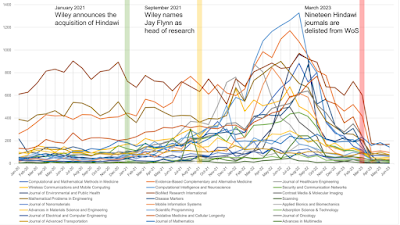
 

Figure 1. Number of submissions received per month for 24 journals that subsequently had papers retracted by Hindawi. Data from Hindawi Journal Report.

The papermill problem 

The first concerns were raised by research integrity communities and individuals, who since 2021 posted thousands of comments on the PubPeer journal club relating to papers published in hundreds of special issues of Hindawi journals. Many comments were made by anonymous sleuths Rhipidura albiventris, Hoya camphorifolia and Parashorea tomentella, whose contributions sometimes exceeded 100 per day.  Problems were not limited to individual special issues or even individual journals. There appeared to be systematic manipulation of the publishing process, especially affecting special issues, indicating activities of so-called “paper mills” – fraudulent organisations that will sell authorship and/or citations of papers, often faked, for a fee. Leonid Schneider, who runs the blog For Better Science, assisted David Bimler and others in posting their findings from Hindawi journals. Nick Wise discussed “What is going on in Hindawi special issues?” on October 12, 2022. These sleuths noted that many supposedly ‘peer-reviewed’ manuscripts had incoherent or unintelligible content, and corresponding authors used email addresses from other institutions; furthermore, a large number of papers cited irrelevant references, presumably to boost citation counts; some paper mills used the article processing charge (APC) waiver policy of Hindawi to make more profit. The pattern of abnormal citations confirmed that the fraud was not bounded by journals, and so publication-based investigations made it difficult to expose specific paper mills. 

It soon became clear that the special issues that were such a lucrative source of income for Hindawi were wide open to corrupt "guest editors" who, once appointed, could use fake peer review and flood the journal with fraudulent papers and irrelevant citations. In the gold open access model, Wiley earns APCs for every article published in Hindawi journals, whether in a special issue or not, so their incentive to exert quality control is compromised. Some examples are so extreme that nobody could take them seriously, such as an article on the ideological and political education of the Chinese Communist Party in a special issue "Exploration of Human Cognition using Artificial Intelligence in Healthcare", which was submitted, peer-reviewed and received on the same day. There are thousands of other papers which may be genuine but whose subject falls well outside the scope of the special issue where they are published, indicating that the journal is out of editorial control. 

Many of the authors and guest editors of the problematic papers mentioned by Bimler came from Asia. Ruihang Huang, Chunjiong Zhang, and Hanlie Cheng, PhD students at Donghua University, Tongji University and China University of Geosciences, Beijing, respectively, were beneficiaries of the citation manipulation and participants in the manipulation of special issues. Another example is Kaifa Zhao, who approved many nonsense manuscripts for publication as a guest editor at two journals: Computational Intelligence and Neuroscience and Journal of Environmental and Public Health. TigerBB8 identified Zhao as a PhD student at the Hong Kong Polytechnic University, and Dorothy Bishop requested an investigation by the university. As reported in Retraction Watch, their report claimed that Zhao's identity had been stolen by Yizhang Jiang, Zhao's master's program advisor. 

"According to Mr Zhao, he was not aware of relevant emails from Hindawi and has never responded to emails that are related to the two special issues"

 Hindawi takes action (slowly)

After a year of rapid growth in the Chinese market (Figure 2), Wiley acted. On September 28, 2022, Ferguson announced that 511 papers would be retracted from Hindawi journals. Intrestingly, no mention was made of the comments on PubPeer and Bimler's blog post; instead it was stated that these retractions were based on the findings of the Hindawi Research Integrity Team. The first retractions were seen in mid-November with concentrated releases during the Lunar New Year.
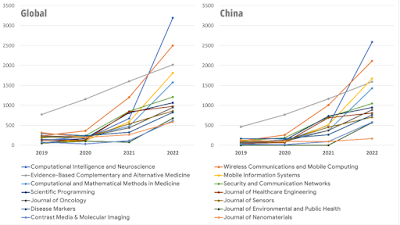
 

Figure 2. Number of articles and reviews published in 14 Hindawi journals 2019-2022. Data from Scopus.

It is possible that mass retractions were delayed because Wiley did not want to disrupt their agenda at the 74th Frankfurter Buchmesse (October 19 to 23, 2022). There was no indication that Wiley shared Hindawi's problems at the book fair. Instead, they were busy with other things. Flynn announced the creation of Wiley Partners Solution to meet the "scholarly publishing needs at scale" on October 17. Ferguson participated in a forum entitled "How the Article-Based Economy is Transforming Research Publishing" on October 19. Intriguingly, an essay posted by Chemistry World on April 24, 2023, citing Flynn, noted that Wiley had convened a meeting of publishers at that book fair, invited Clarivate, the owner of major journal database Web of Science (WoS) Core Collection, and disclosed to them the problems with Hindawi journals. We do not know the outcome of this meeting, but change did occur. On the one hand, Hindawi began issuing retractions on November 16, 2022. Nevertheless, in October 2022, special issues of Hindawi journals were still being published with many compromised articles, though from December 2022 onwards, the number of papers published in special issues decreased.  

Delisting of Hindawi journals

The public information prompted journal databases to re-evaluate whether Hindawi journals should continue to be indexed. In February 2023, DOAJ (Directory of Open Access Journals) delisted thirteen Hindawi journals. Then Scopus discontinued the indexing of six Hindawi journals. On March 20, 2023, Clarivate delisted nineteen Hindawi journals from WoS Core Collection. The fact that Education Research International was delisted suggested Clarivate conducted an independent investigation, as this journal had not been mentioned in relevant sources.  

As shown in Figure 3, the actions of the publisher and journal databases did not always involve the same journals. 


Figure 3. Twenty-six problematic Hindawi journals. WoS Core Collection: The journal was delisted from WoS Core Collection in March 2023. DOAJ: The journal was delisted from DOAJ in February 2023. Scopus: The journal was delisted from Scopus in the first half of 2023. Ferguson 500+: Papers in the journal were retracted and Liz Ferguson's statement was cited in the retraction statement. Flynn 2200+: Papers in the journal were retracted by Wiley using similar statements after May 2023. 

Clarivate did not publish the reasons for the delisting of each journal, nor did they delist more Hindawi journals before the release of 2023 Journal Citation Reports on June 28, 2023. Compared to MDPI, whose mega-journal the International Journal of Environmental Research and Public Health was delisted, Wiley's public response was subdued. In a mildly worded statement on March 22, 2023, on their WeChat Official Account, Hindawi said they were "disappointed" that their journals were delisted by Clarivate but did not offer any defence. In another post on April 5, 2023, Hindawi stated they would not appeal the delisting and suggested that the authors submit their manuscripts to Wiley journals. A guest post by Flynn in the Scholarly Kitchen on April 4, 2023, mentioned that:

 “At Wiley we take full responsibility for the quality of the content we publish across our portfolio.” 

He also announced a further 1,200 retractions to be issued by Hindawi journals. Flynn disclosed to Chemistry World how they selected which publications to retract, specifically that he deployed 200 people from his editorial staff to conduct "a manual review of every single paper that we thought may have been compromised'".

Impact on authors

Many authors published in Hindawi journals because they had the cachet of being listed in scholarly databases. One author of an article published in February 2023 in Oxidative Medicine and Cellular Longevity distributed email templates she drafted to others via an instant messaging software, encouraging them to ask Hindawi to work with Clarivate to index papers with publication dates before March 19, 2023. Anonymous sources described the chaos of Hindawi's customer service in late March 2023. Many people complained that Hindawi never responded to their emails. On the other hand, one author received a response from Oxidative Medicine and Cellular Longevity (omcl@hindawi.com), even though his complaint was about an article in another journal. Some authors of accepted manuscripts complained that Hindawi delayed their requests to withdraw their submissions, and feared that manuscripts would be accidentally published. 

Other authors turned on the sleuths who had exposed paper mill activity on PubPeer, describing their activities as "social media-related PubPeer extortion". Jincheng Wang from the Nanjing Drum Tower Hospital, who had published in a compromised special issue, suggested that the intent of those who posted comments was to blackmail the authors, under the threat of translating publicly available comments into Chinese and then posting them on social media in China. He encouraged authors to report these comments to the moderators.

Impact of delisting on Hindawi’s business 

Wiley did not inform investors about the retractions in Hindawi journals in their 2nd quarter report (August 1 to October 31, 2022) published on December 7, 2022. In the 3rd quarter report (November 1, 2022, to January 31, 2023) on March 9, 2023, Napack confronted the issue head-on: 

“Upon discovery, the Wiley team responded quickly, suspending the Hindawi special issues program and fixing the source of the problem by purging the external bad actors and by implementing measures to prevent this from happening again. To date, these actions include increasing editorial controls and introducing new AI-based screening tools into the editorial process. We've also been scrubbing the archive and publicly retracting any compromised articles.”

 And, 

“We put the fixes in place. We feel very good about what we've done. We are reopening the programs. And we are moving forward to clear the backlog and drive forward with our publishing program.” 

However, the statistics on publications showed that publications in special issues continued through November 2022 to January 2023. Despite the claim that the problem had been resolved, more than 200 articles published in special issues of 34 Hindawi journals in 2023 received comments on PubPeer relating to concerns about the publishing process. The release of retraction statements was also delayed. As of July 20, 2023,  retraction statements were issued on six dates, on May 24, June 21, June 28, June 29, July 12, and July 19, with 112, 559, 514, 1, 521, and 510 retractions, respectively. The total number of retracted papers, approximately 2700 including the initial 500 from 2022, substantially exceeds the 1200 mentioned by Flynn

An interesting development has been the involvement of law firms who specialize in shareholder rights litigation, such as Rosen Law Firm, Kirby McInerney LLP, Schall Law Firm, Glancy Prongay & Murray LLP, the Law Offices of Frank R. Cruz and the Law Offices of Howard G. Smith. All of these firms recently advertised that they are investigating whether Wiley issued misleading information about Hindawi to the investing public. 

In the 4th quarterly report for 2023, Napack stated that they had remedied all the problems, and were ready for “revitalization” 

“As discussed in Q3, we suspended the fast-growing special issues program after identifying a research integrity issue. This issue was the result of external misconduct by non-Wiley editors and reviewers. Essentially, Wiley decided to take a short-term hit to preserve the integrity of our journals and the value of our highly respected Wiley brand. This industry-wide issue has been widely reported on, and we believe that we now have it fully remediated in Wiley.” 

In the same report, Napack was still expressing satisfaction with Hindawi's performance since the acquisition: 

“Our expectation for Hindawi was a couple-fold. One, it would accelerate our position in that market, which it has; and that it would provide significant growth, which it has, and it will provide the ability to provide significant cascade across our portfolio that we could find homes for the many hundreds of thousands of articles that we get every year that are not published. Our expectations are the same going forward. We expect that over the next 12 to 18 months, we will be fully ramping back up. So, by '25, we're back on course with our volume growth and it should drop to the bottom line at/or we're close to the margin -- very healthy margin that it always has in our -- across all of our Open Access, but certainly across the Hindawi asset. So, the -- relative to our initial expectations, this acquisition has outperformed if you just can look aside for a minute against a very short-term thing that happened to us. But we're going to lead our way -- lead the industry out of it, and we feel very, very good about the future of our overall Open Access program.” 

So the paper mill debacle, which led to thousands of fraudulent papers being published in Hindawi journals over at least two years, is described as “a very short-term thing that happened to us” and is now “fully remediated”, was blamed on “external misconduct by non-Wiley editors and reviewers”. This leaves hanging the question of how those non-Wiley editors and reviewers not only achieved powerful positions determining what was published in Hindawi journals, but also continued to do so long after attention had been drawn to the problem by sleuths.

Regaining the market? 

Wiley is a mighty, major international publisher, and they have the potential to achieve a Hindawi revitalization, if revitalization is defined as a significant rebound in the number of papers published in Hindawi journals. The question is, which niche market does Hindawi intend to regain? Are they well-positioned to do so? Do they have any appreciation of the tension between their goal of publishing as much as possible, and the reputational costs of publishing papers that are low-quality at best and fraudulent at worst?

The sleuth Parashorea tomentella described the evolution of the niche of special issues of Hindawi journals after its acquisition in China. There is a highly competitive "first-tier" niche of authors from research universities and institutions, who have many manuscripts. China also has an extended, "second-tier" niche of authors from community colleges, polytechnics, and non-teaching hospitals. There are many, many of these potential customers, but they lack manuscripts on the one hand, and desire publications for promotion on the other. Paper mills fill the need of authors in this niche to publish and the needs of publishers to make money. It would be difficult for Hindawi to regain the first-tier niche, because most authors and institutions care about the reputation of the publisher, and even if they aren’t concerned about integrity they are spooked by unprecedented large-scale retractions. 

Hindawi is, however, in a strong position to regain the second-tier niche. First, despite all the problems, they still have many journals that are recognized by the Chinese authorities (typically those listed in databases such as WoS Core Collection and Engineering Village). Wiley has close links with those who maintain databases and may have an advantage in avoiding their journals being blacklisted. Wiley's longstanding commitment and partnership with Chinese research institutes and government stakeholders has brought them particularly close to the National Science Library, Chinese Academy of Sciences (NSL/CAS), a bureaucracy that compiles a blacklist which is recognized by many Chinese institutions. On June 16, 2023, Wiley and NSL/CAS announced the establishment of a Joint Laboratory on Scientific and Technical Journal Innovation. The press release mentioned that an important topic for the joint lab is research integrity, and Liying Yang, director of journal evaluation in NSL/CAS, introduced what NSL/CAS can do, including updating their Early Warning Journal List, which aimed to target paper mills. 

For reasons unknown, NSL/CAS has been particularly kind to Hindawi journals. NSL/CAS released their controversial Early Warning Journal List in December 2020, December 2021 and January 2023. In the latest version, the Hindawi journals Biomed Research International, Complexity, Advances in Civil Engineering, Shock and Vibration, Scientific Programming and Journal of Mathematics, which had been on the blacklist, were reinstated. Other problematic Hindawi journals were never on the blacklist. In contrast, the blacklist compiled by another Chinese bureaucracy, the Institute of Scientific and Technical Information of China (ISTIC), does not show undue goodwill toward Hindawi journals. In January and February 2023, some Chinese institutions, such as Zhejiang Gongshang University and Anhui Provincial Hospital (The First Affiliated Hospital of University of Science and Technology of China), told their employees not to submit to Hindawi journals. NSL/CAS was sending a different signal from other Chinese institutions and encouraged authors to continue submitting to Hindawi journals, although this effect was offset by Clarivate's delisting of nineteen Hindawi journals three months later. 

Hindawi’s determination to retain the second-tier niche may explain why they have continued to publish their customers' manuscripts from known paper mills. For instance, an article (now retracted) was published on March 11, 2023, long after the guest editor Kaifa Zhao had been proven to be an impostor. To take another example, the Hindawi Research Integrity Team retracted nine articles from a special issue of BioMed Research International on “Minimally Invasive Treatment Protocols in Clinical Dentistry” between November 22, 2022, and February 14, 2023, but subsequently published new articles in the same special issue on topics out of scope.
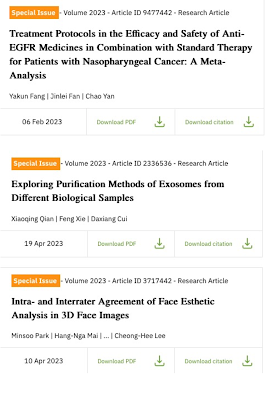
 

Figure 6. A special issue (https://www.hindawi.com/journals/bmri/si/652179/ ) of BioMed Research International published articles on a topic out of scope in between retraction statements
 

Even more alarmingly, special issues of four journals (Computational and Mathematical Methods in Medicine, Journal of Healthcare Engineering, Journal of Environmental and Public Health, and Computational Intelligence and Neuroscience) continued to publish questionable articles after Hindawi announced that the journals had closed on May 2, 2023, see e.g., https://pubpeer.com/publications/1F1263D5537A0EF96588929A60D15B ). In one weird case, an article that had been accepted 604 days previously was published in Journal of Healthcare Engineering on July 7, 2023. Perhaps this manuscript had been blocked by production processes or the Hindawi Research Integrity Team, but it was eventually published after the journal was closed. 

Reasons for pessimism 

The reason I am pessimistic is that so far Wiley's proposals to improve the publishing process for Hindawi journals have focused on the use of AI-based screening tools. Wiley has not committed to hiring more editors for Hindawi journals. As the number of submissions increases, the situation will only get worse if peer-review processes hosted by guest editors are assigned to overworked in-house editors to oversee. 

Wiley still has a chance to fix things. The first thing they should do is stop manuscripts received by external bad actors from continuing to be published. The second is to issue more retractions. I'm glad to see that in June 2023, Catriona MacCallum, the director of Open Science of Hindawi shared their approach to scaling up retractions, including focusing on manipulation of the process rather than author wrongdoing. Publisher retractions are painful for the publisher, journals, and authors, but they are necessary, and there are not enough of them. The third is to investigate the internal bad actors in an open and transparent manner. I would also encourage them to recruit more in-house editors, release the identities of the external bad actors they have found, and document the details of how internal controls failed so lessons can be learned. 

Most of us value our reputation for its own sake. As Shakespeare said in Othello: 

“Good name in man and woman, dear my lord, 

Is the immediate jewel of their souls: 

Who steals my purse steals trash; ’tis something, nothing; ’twas mine, ’tis his, and has been slave to thousands; 

But he that filches from me my good name 

Robs me of that which not enriches him, 

And makes me poor indeed” 

Indeed, as the Hindawi story shows, for a commercial organization, reputation is not just a desirable feel-good factor – it has huge financial implications. If an academic publisher like Wiley becomes known for boosting their profits by publishing screeds of arrant nonsense, their bottom line will ultimately suffer. Reputable researchers will not want their name associated with a publisher who behaves this way. If Wiley are not willing to control fraud because it is the right thing to do, they should at least recognize the importance of integrity for retaining the confidence of the academic institutions on whom they depend. 


Footnote 

* The author declares that there is no potential conflict of interest. The author uses a pseudonym because he/she lives in an authoritarian state and fears facing unpredictable political reprisals.


Sunday, 11 September 2022

So do we need editors?

It’s been an interesting week in world politics, and I’ve been distracting myself by pondering the role of academic editors. The week kicked off with a rejection of a preprint written with co-author Anna Abalkina, who is an expert sleuth who tracks down academic paper mills – organisations that will sell you a fake publication in an academic journal. Our paper describes a paper mill that had placed six papers in the Journal of Community Psychology, a journal which celebrated its 50th anniversary in 2021. We had expected rejection, as we submitted the paper to the Journal of Community Psychology, as a kind of stress test to see whether the editor, Michael B. Blank, actually reads papers that he accepts for the journal. I had started to wonder, because you can read his decision letters on Publons, and they are identical for every article he accepts. I suspected he may be an instance of Editoris Machina, or automaton, one who just delegates editorial work to an underling, waits until reviewer reports converge on a recommendation, and then accepts or rejects accordingly without actually reading the paper. I was wrong, though. He did read our paper, and rejected it with the comment that it was a superficial analysis of six papers. We immediately posted it as a preprint and plan to publish it elsewhere.

Although I was quite amused by all of this, it has a serious side. As we note in our preprint, when paper mills succeed in breaching the defences of a journal, this is not a victimless crime. First, it gives competitive advantage to the authors who paid the paper mill – they do this in order to have a respectable-looking publication that will help their career. I used to think this was a minor benefit, but when you consider that the paper mills can also ensure that the papers they place are heavily cited, you start to realise that authors can edge ahead on conventional indicators of academic prestige, while their more honest peers trail behind. The second set of victims are those who publish in the journal in good faith. Once its reputation is damaged by the evidence that there is no quality control, then all papers appearing in the journal are tainted by association. The third set of victims are busy academics who are trying to read and integrate the literature, who can get tangled up in the weeds as they try to navigate between useful and useless information. And finally, we need to be concerned about the cynicism induces in the general public when they realise that for some authors and editors, the whole business of academic publishing is a game, which is won not by doing good science, but by paying someone to pretend you have done so.

Earlier this week I shared my thoughts on the importance of ensuring that we have some kind of quality control over journal editors. They are, after all, the gatekeepers of science. When I wrote my taxonomy of journal editors back in 2010, I was already concerned at the times I had to deal with editors who were lazy or superficial in their responses to authors. I had not experienced ‘hands off’ editors in the early days of my research career, and I wondered how far this was a systematic change over time, or whether it was related to subject area. In the 1970s and 1980s, I mostly published in journals that dealt with psychology and/or language, and the editors were almost always heavily engaged with the paper, adding their own comments and suggesting how reviewer comments might be addressed. That’s how I understood the job when I myself was an editor. But when I moved to publishing work in journals that were more biological (genetics, neuroscience) things seemed different, and it was not uncommon to find editors who really did nothing more than collate peer reviews.

The next change I experienced was when, as a Wellcome-funded researcher, I started to publish in Wellcome Open Research (WOR), which adopts a very different publication model, based on that initiated by F1000. In this model, there is no academic editor. Instead, the journal employs staff who check that the paper complies with rigorous criteria: the proposed peer reviewers much have a track record of publishing and be clear from conflict of interest. Data and other materials must be openly available so that the work can be reproduced. And the peer review is published. The work is listed on PubMed if and when peer reviewers agree that it meets a quality threshold: otherwise the work remains visible but with status shown as not approved by peer review. 

The F1000/WOR model shows that editors are not needed, but I generally prefer to publish in journals that do have academic editors – provided the editor is engaged and does their job properly. My papers have benefitted from input from a wise and experienced editor on many occasions. In a specialist journal, such an editor will also know who are the best reviewers – those who have the expertise to give a detailed and fair appraisal of the work. However, in the absence of an engaged editor, I prefer the F1000/WOR model, where at least everything is transparent. The worst of all possible worlds is when you have an editor who doesn’t do more than collate peer reviews, but where everything is hidden: the outside world cannot know who the editor was, how decisions were made, who did the reviews, and what they said. Sadly, this latter situation seems to be pretty common, especially in the more biological realms of science. To test my intuitions, I ran a little Twitter poll for different disciplines, asking, for instance: 


 Results are below

% respondents stating Not Read, Read Superfially, or Read in Depth


Such polls of course have to be taken with a pinch of salt, as the respondents are self-selected, and the poll allows only very brief questions with no nuance. It is clear that within any one discipline, there is wide variability in editorial engagement. Nevertheless, I find it a matter of concern that in all areas, some respondents had experienced a journal editor who did not appear to have read the paper they had accepted, and in areas of biomedicine, neuroscience, and genetics, and also in mega journals, this was as high as around 25-33%

So my conclusion is that it is not surprising that we are seeing phenomena like paper mills, because the gatekeepers of the publication process are not doing their job. The solution would be either to change the culture for editors, or, where that is not feasible, to accept that we can do without editors. But if we go down that route, we should move to a model such as F1000 with much greater quality control over reviewers and COI, and much more openness and transparency.

 As usual comments are welcome: if you have trouble getting past comment moderation, please email me.

Tuesday, 6 September 2022

We need to talk about editors


Editoris spivia

The role of journal editor is powerful: you decide what is accepted or rejected for publication. Given that publications count as an academic currency – indeed in some institutions they are literally fungible – a key requirement for editors is that they are people of the utmost integrity. Unfortunately, there are few mechanisms in place to ensure editors are honest – and indeed there is mounting evidence that many are not. I argue here that we can no longer take editorial honesty for granted, and systems need to change to weed out dodgy editors if academic publishing is to survive as a useful way of advancing science. In particular, the phenomenon of paper mills has shone a spotlight on editorial malpractice.

Questionable editorial practices

Back in 2010, I described a taxonomy of journal editors based on my own experience as an author over the years. Some were negligent, others were lordly, and others were paragons – the kind of editor we all want, who is motivated solely by a desire for academic excellence, who uses fair criteria to select which papers are published, who aims to help an author improve their work, and provides feedback in a timely and considerate fashion. My categorisation omitted another variety of editor that I have sadly become acquainted with in the intervening years: the spiv. The spiv has limited interest in academic excellence: he or she sees the role of editor as an opportunity for self-advancement. This usually involves promoting the careers of self or friends by facilitating publication of their papers, often with minimal reviewing, and in some cases may go as far as working hand in glove with paper mills to receive financial rewards for placing fraudulent papers.

When I first discovered a publication ring that involved journal editors scratching one another’s backs, in the form of rapid publication of each other’s papers, I assumed this was a rare phenomenon. After I blogged about this, one of the central editors was replaced, but others remained in post. 

I subsequently found journals where the editor-in-chief authored an unusually high percentage of the articles published in the journal. I drew these to the attention of integrity advisors of the publishers that were involved, but did not get the impression that they regarded this as particularly problematic or were going to take any action about it. Interestingly, there was one editor, George Marcoulides, who featured twice in a list of editors who authored at least 15 articles in their own journal over a five year period. Further evidence that he equates his editorial role with omnipotence came when his name cropped up in connection with a scandal where a reviewer, Fiona Fidler, complained after she found her positive report on a paper had been modified by the editor to justify rejecting the paper: see this Twitter thread for details. It appears that the publishers regard this as acceptable: Marcoulides is still editor-in-chief at the Sage journal Educational and Psychological Measurement, and at Taylor and Francis’ Structural Equation Modeling, though his rate of publishing in both journals has declined since 2019; maybe someone had a word with him to explain that publishing most of your papers in a journal you edit is not a good look.

Scanff et al (2021) did a much bigger investigation of what they termed “self-promotion journals” - those that seemed to be treated as the personal fiefdom of editors, who would use the journal as an outlet for their own work. This followed on from a study by Locher et al (2021), which found editors who were ready to accept papers by a favoured group of colleagues with relatively little scrutiny. This had serious consequences when low-quality studies relating to the Covid-19 pandemic appeared in the literature and subsequently influenced clinical decisions. Editorial laxness appears in this case to have done real harm to public health.

So, it's doubtful that all editors are paragons. And this is hardly surprising: doing a good job as editor is hard and often thankless work. On the positive side, an editor may obtain kudos for being granted an influential academic role, but often there is little or no financial reimbursement for the many hours that must be dedicated to reading and evaluating papers, assigning reviewers, and dealing with fallout from authors who react poorly to having their papers rejected. Even if an editor starts off well, they may over time start to think “What’s in this for me?” and decide to exploit the opportunities for self-advancement offered by the position. The problem is that there seems little pressure to keep them on the straight and narrow; it's like when a police chief is corrupt. Nobody is there to hold them to account. 

Paper mills

Many people are shocked when they read about the phenomenon of academic paper mills – defined in a recent report by the Committee on Publication Ethics (COPE) and the Association of Scientific, Tehcnical and Medical Publishers (STM) as “the process by which manufactured manuscripts are submitted to a journal for a fee on behalf of researchers with the purpose of providing an easy publication for them, or to offer authorship for sale.” The report stated that “the submission of suspected fake research papers, also often associated with fake authorship, is growing and threatens to overwhelm the editorial processes of a significant number of journals.” It concluded with a raft of recommendations to tackle the problem from different fronts: changing the incentives adopted by institutions, investment in tools to detect paper mill publications, education of editors and reviewers to make them aware of paper mills, introduction of protocols to impede paper mills succeeding, and speeding up the process of retraction by publishers.

However, no attention was given to the possibility that journal editors may contribute to the problem: there is talk of “educating” them to be more aware of paper mills, but this is not going to be effective if the editor is complicit with the paper mill, or so disengaged from editing as to not care about them. 

It’s important to realise that not all paper mill papers are the same. Many generate outputs that look plausible. As Byrne and Labbé (2017) noted, in biomedical genetic studies, fake papers are generated from a template that is based on a legitimate paper, and just vary in terms of the specific genetic sequence and/or phenotype that is studied. There are so many genetic sequences and phenotypes, that the number of possible combinations of these is immense. In such cases, a diligent editor may get tricked into accepting a fake paper, because the signs of fakery are not obvious and aren’t detected by reviewers. But at the other extreme, some products of paper mills are clearly fabricated. The most striking examples are those that contain what Guillaume Cabanac and colleagues term “tortured phrases”. These appear to be generated by taking segments of genuine articles and running them through an AI app that will use a thesaurus to alter words, with the goal of evading plagiarism detection software. In other cases, the starting point appears to be text from an essay mill. The results are often bizarre and so incomprehensible that one only needs read a few sentences to know that something is very wrong. Here’s an example from Elsevier’s International Journal of Biological Macromolecules, which those without access can pay $31.50 for (see analysis on Pubpeer, here).

"Wound recuperating camwood a chance to be postponed due to the antibacterial reliance of microorganisms concerning illustration an outcome about the infection, wounds are unable to mend appropriately, furthermore, take off disfiguring scares [150]. Chitin and its derivatives go about as simulated skin matrixes that are skilled should push a fast dermal redesign after constantly utilized for blaze treatments, chitosan may be wanton toward endogenous enzymes this may be a fundamental preference as evacuating those wound dressing camwood foundation trauma of the wounds and harm [151]. Chitin and its derivatives would make a perfect gas dressing. Likewise, they dampen the wound interface, are penetrability will oxygen, furthermore, permit vaporous exchange, go about as a boundary with microorganisms, and are fit about eliminating abundance secretions"

And here’s the start of an Abstract from a Springer Nature collection called Modern Approaches in Machine Learning and Cognitive Science (see here for some of the tortured phrases that led to detection of this article). The article can be yours for £19.95:

“Asthma disease are the scatters, gives that influence the lungs, the organs that let us to inhale and it’s the principal visit disease overall particularly in India. During this work, the matter of lung maladies simply like the trouble experienced while arranging the sickness in radiography are frequently illuminated. There are various procedures found in writing for recognition of asthma infection identification. A few agents have contributed their realities for Asthma illness expectation. The need for distinguishing asthma illness at a beginning period is very fundamental and is an exuberant research territory inside the field of clinical picture preparing. For this, we’ve survey numerous relapse models, k-implies bunching, various leveled calculation, characterizations and profound learning methods to search out best classifier for lung illness identification. These papers generally settlement about winning carcinoma discovery methods that are reachable inside the writing.”

These examples are so peculiar that even a layperson could detect the problem. In more technical fields, the fake paper may look superficially normal, but is easy to spot by anyone who knows the area, and who recognises that the term “signal to noise” does not mean “flag to commotion”, or that while there is such a thing as a “Swiss albino mouse” there is no such thing as a “Swiss pale-skinned person mouse”. These errors are not explicable as failures of translation by someone who does not speak good English. They would be detected by any reviewer with expertise in the field. Another characteristic of paper mill outputs, featured in this recent blogpost, are fake papers that combine tables and figures from different publications in nonsensical contexts.

Sleuths who are interested in unmasking paper mills have developed automated methods for identifying such papers, and the number is both depressing and astounding. As we have seen, though some of these outputs appear in obscure sources, many crop up in journals or edited collections that are handled by the big scientific publishing houses, such as Springer Nature, Elsevier and Wiley. When sleuths find these cases, they report the problems on the website PubPeer, and this typically raises an incredulous response as to how on earth did this material get published. It’s a very good question, and the answer has to be that somehow an editor let this material through. As explained in the COPE&STM report, sometimes a nefarious individual from a paper mill persuades a journal to publish a “special issue” and the unwitting journal is then hijacked and turned into a vehicle for publishing fraudulent work. If the special issue editor poses as a reputable scientist, using a fake email address that looks similar to the real thing, this can be hard to spot.

But in other cases, we see clearcut instances of paper mill outputs that have apparently been approved by a regular journal editor. In a recent preprint, Anna Abalkina and I describe finding putative paper mill outputs in a well-established Wiley journal, the Journal of Community Psychology. Anna identified six papers in the journal in the course of a much larger investigation of papers that came from faked email addresses. For five of them the peer review and editorial correspondence was available on Publons. The papers,  from addresses in Russia or Kazakhstan, were of very low quality and frequently opaque. I had to read and re-read to work out what the paper was about, and still ended up uncertain. The reviewers, however, suggested only minor corrections. They used remarkably similar language to one another, giving the impression that the peer review process had been compromised. Yet the Editor-in-Chief, Michael B. Blank, accepted the papers after minor revisions, with a letter concluding: “Thank you for your fine contribution”. 

There are two hypotheses to consider when a journal publishes incomprehensible or trivial material: either the editor was not doing their job of scrutinising material in the journal, or they were in cahoots with a paper mill. I wondered whether the editor was what I have previously termed an automaton – one who just delegates all the work to a secretary. After all, authors are asked to recommend reviewers, so all that is needed is for someone to send out automated requests to review, and then keep going until there are sufficient recommendations to either accept or reject. If that were the case, then maybe the journal would accept a paper by us. Accordingly, we submitted our manuscript about paper mills to the Journal of Community Psychology. But it was desk rejected by the Editor in Chief with a terse comment: “This a weak paper based on a cursory review of six publications”. So we can reject hypothesis 1 – that the editor is an automaton. But that leaves hypothesis 2 – that the editor does read papers submitted to his journal, and had accepted the previous paper mill outputs in full knowledge of their content. This raises more questions than it answers. In particular, why would he risk his personal reputation and that of his journal by behaving that way? But perhaps rather than dwelling on that question, we should think positively about how journals might protect themselves in future from attacks by paper mills.

A call for action

My proposal is that, in addition to the useful suggestions from the COPE&STM report, we need additional steps to ensure that those with editorial responsibility are legitimate and are doing their job. Here are some preliminary suggestions:

  1. Appointment to the post of editor should be made in open competition among academics who meet specified criteria.
  2. It should be transparent who is responsible for final sign-off for each article that is published in the journal.
  3. Journals where a single editor makes the bulk of editorial decisions should be discouraged. (N.B. I looked at the 20 most recent papers in Journal of Community Psychology that featured on Publons and all had been processed by Michael B. Blank).
  4. There should be an editorial board consisting of reputable people from a wide range of institutional backgrounds, who share the editorial load, and meet regularly to consider how the journal is progressing and to discuss journal business.
  5.  Editors should be warned about the dangers of special issues and should not delegate responsibility for signing off on any papers appearing in a special issue.
  6. Editors should be required to follow COPE guidelines about publishing in their own journal, and publishers should scrutinise the journal annually to check whether the recommended procedures were followed.
  7. Any editor who allows gibberish to be published in their journal should be relieved of their editorial position immediately.

Many journals run by academic societies already adopt procedures similar to these. Particular problems arise when publishers start up new journals to fill a perceived gap in the market, and there is no oversight by academics with expertise in the area. The COPE&STM report has illustrated how dangerous that can be – both for scientific progress and for the reputation of publishers.

Of course, when one looks at this list of requirements, one may start to wonder why anyone would want to be an editor. Typically there is little financial renumeration, and the work is often done in a person’s “spare time”. So maybe we need to rethink how that works, so that paragons with a genuine ability and interest in editing are rewarded more adequately for the important work they do.

P.S. Comment moderation is enabled for this blog to prevent it being overwhelmed by spam, but I welcome comments, and will check for these in the weeks following the post, and admit those that are on topic. 


Comment by Jennifer Byrne, 9th Sept 2022 

(this comment by email, as Blogger seems to eat comments by Jennifer for some reason, while letting through weird spammy things!).

This is a fantastic list of suggestions to improve the important contributions of journal editors. I would add that journal editors should be appointed for defined time periods, and their contributions regularly reviewed. If for any reason it becomes apparent that an editor is not in a position to actively contribute to the journal, they should be asked to step aside. In my experience, editorial boards can include numerous inactive editors. These can provide the appearance of a large, active and diverse editorial board, when in practice, the editorial work may be conducted by a much smaller group, or even one person. Journals cannot be run successfully without a strong editorial team, but such teams require time and resources to establish and maintain.

Sunday, 14 November 2021

Universities vs Elsevier: who has the upper hand?


The academic publisher Elsevier is currently negotiating a deal with UK universities. In Oxford, as in other universities, there have been extensive discussions about the proposed deal; the goals are to reduce costs to sustainable levels and to provide full and immediate open access to UK research. I have a nasty feeling that we could end up in the situation of those at the COP summit: with a deal that where the publishers feel they are giving away a huge amount, while the consumers are still unsatisfied. 

In the print era, publishers already had a large profit margin.  I was a journal editor when electronic publishing first came in, and I remember discussions with the publisher - who was clearly very nervous about how this might damage their bottom line. With some clever business practices, such as bundling, they managed to keep going, making more rather than less money.

Other new developments - the advance of metrics and requirements for open access publishing - also pose challenges to them, but their response, like any savvy business, is to take control of these new developments and find a way to profit from them as well.

So should we go along with this? The discussions have largely centred around money, and this is a real concern. Publishers charge massively inflated subscription charges, taking as profit money that our libraries could otherwise put to good use. But the problems go way beyond that, including blocking open access to authors' own work, and giving poor quality and even fraudulent material a veneer of respectability. The publisher currently has considerable power over what gets published but takes little responsibility when things go wrong.

But we also have power, and I think it's time we started to wield it. I have two proposals: one radical and the other less so, both of which go beyond what is currently being considered in the JISC discussions.

The radical option: move publishing in-house  

In an ideal world, we would not have any deals with for-profit publishers. Universities would take control of academic publishing. A model which I have found works well is the Wellcome Trust journal Wellcome Open Research (WOR). I served on its Editorial Advisory Board in the first years of its operation and I have published eight papers in WOR. 

Quality control is maintained by requiring that work published in WOR has been Wellcome-Trust funded. The platform is paid for by the Wellcome Trust, and all material is Open Access, with no charge to authors.

Universities could use this as a model for developing their own platforms for publishing work of their researchers. As with Wellcome Trust, researchers would be encouraged rather than required to publish there. Setting up and maintaining the platform would cost money, but this might be covered by savings from stepping back from deals with big publishers. This is not a perfect solution, of course; we would still want access to past material published by traditional publishers. But I feel this option should be given serious consideration.

The less radical option. An agreement with Elsevier that reflects what we want and need 

If we are to retain a working relationship with Elsevier, then we need to ensure that we are getting value for money, and that they are delivering what we want.

One way in which they fail to do this is through the copyright agreements that they require authors to sign. I agree with Sally Rumsey that any publisher that does not allow an author to retain rights to their own work is problematic. Furthermore, there is concern that even if Elsevier were to say they agreed to author rights retention, they would continue to adopt practices that would mislead authors into signing away their rights.

Another issue is how publishers deal with matters related to misbehaviour by editors and authors. We have a number of serious problems with the academic publishing system that have been developing for years, and have been thrown into stark relief by the pandemic. Publications in journals are a kind of academic currency, with potentially huge rewards in terms of promotion, pay and tenure of academic staff. Unfortunately, this means that some people will go to great lengths to procure publications, and this can include fraudulent means. A reputable publisher should recognise and indeed anticipate such problems and take steps to deal with them. Elsevier has been notably poor in doing so. I will give a handful of examples.

Clearly erroneous/fraudulent work remains in the literature In recent years, a massive problem has been discovered with so-called paper mills - a form of industrialised cheating that involves generation of literally thousands of fake papers.  This phenomenon was discussed at a meeting this summer, the Computational Research Integrity Conference (CRI-Conf), which brought together some of the scientists who uncovered paper mills and representatives of publishers (including Elsevier) and university integrity officers. A repeated complaint of the 'data sleuths' (scientists who uncovered the paper mills) was that when the problems were drawn to the attention of the editors or publishers, typically nothing was done.  Some of these papers are highly cited and have medical implications - see, for instance work by Jennifer Byrne and Cyril Labbé on cancer biology, or by Elisabeth Bik on image manipulations.

To its credit, Elsevier was recently cited as acting promptly when a cache of nonsense papers in special issues was uncovered, but one still has to ask how these papers, some of which were complete gibberish, originally got through the supposedly rigorous peer-review process. For another recent example, see here.

Part of the problem seems to be that there is very little oversight of editors.  I first became aware of Elsevier's lax attitude to research integrity when I discovered a ring of editors. There was overwhelming evidence that a set of editors were publishing one another's papers in their journals, with publication lags so brief as to indicate there had not been peer review. Emails to Elsevier received no reply, and so I started reporting the events on my blog. This created such publicity that Elsevier then posted a reply, but initially they denied that any papers had been published without peer review. Eventually, as the evidence mounted up, they were forced to acknowledge the problem, and claimed to be investigating it, but at no point did they communicate with me, and their investigation went on for years and has never led to any consequences. One of the offending editors, Johnny Matson, quietly disappeared without comment and is now editing another journal for another publisher. The unreviewed papers, many of which are concerned with intervention for children with developmental disorders, remain in the literature. 

More recently I did a bibliometric analysis of editors of psychology journals who publish prolifically in their own journals, and broke down the results by publisher. Elsevier had the highest number of editors-in-chief in this category,

A related case in another field is that of Didier Raoult, who was senior author on a paper advocating hydroxychloroquine as a treatment for Covid-19 that appeared in 2020 in an Elsevier journal for which he was Editor-in-Chief. It has subsequently been shown to be riddled with methodological errors, but, although Elsevier claimed to be investigating it in April 2020, it has not been retracted.

At the CRI-Conf publishers said that they were doing their best, but the problem of fake and fraudulent practices was so huge they could not be expected to tackle all of it. Yet we know publishers make enormous profits, so why aren't they putting more effort into checking the integrity of the work they publish - and dealing promptly with the problems that are drawn to their attention? Elsevier is not the only large publisher to be affected, but if it wants to be seen as a leader in the field, it should recognise that integrity of published material is of supreme importance - especially in clinical fields where people's health and wellbeing can be affected (as in the cases of Raoult and Matson noted above).

If UK Universities do strike a deal with Elsevier, then they should take the opportunity to include in any future contract conditions requirements that: 

(a) Elsevier allows authors the retention of the rights to their publications and  

(b) it provides annually an open report on the number of integrity issues that have been raised about its publications and how these have been dealt with. 

This would go some way toward ensuring that we get value for money, and are not simply adding to the profits of a company whose underlying ethos is not aligned with promoting scientific quality.

Universities have historically been extremely meek in accepting the terms and conditions imposed by big publishers, who have in turn treated academics as a cash cow. We on the one hand produce for free the product that they sell, and then pay to publish and read it. They cannot survive without the research created in Universities: we should start recognising that we need not bow down to their demands.

DISCLAIMER: I am writing in a personal capacity and not as a representative of the University of Oxford.


14/11/21

P.S. Some further examples of integrity problems with Elsevier have been pointed out to me on Twitter:

Geoff Frampton (@Geoff_Frampton) noted 'Elsevier had the largest market share among the publishers of retracted Covid-19 articles in our study

Patricia Murray (@PMurray_65) tweeted: Elsevier have failed to retract this 2008 Lancet paper that is known to be fraudulent and poses a risk to patients: thelancet.com/journals/lance The paper stated the so-called 'bioengineered' airway had "a normal appearance and mechanical properties at 4 months." 

It is particularly shocking that the publisher is still making this article available (at a cost of $31) given that the author had a prison sentence for faked research, and conducted unethical experiments on seriously ill patients: see this report. 

PPS - it gets worse. There have been strenuous attempts to get the journal to retract the paper, to no avail. This has made the national news in the UK.


Comments on this blog are welcome, but may only appear after a delay as they are moderated to avoid spam.