Monday, 2 October 2023

Spitting out the AI Gobbledegook sandwich: a suggestion for publishers


The past couple of years have been momentous for some academic publishers. As documented in a preprint this week, after rapid growth, largely via "special issues" of journals, they have dramatically increased the number of published articles, and at the same time made enormous profits. A recent guest post by Huanzi Zhang, however, showed this has not been without problems. Unscrupulous operators of so-called "papermills" saw an opportunity to boost their own profits by selling authorship slots and then placing fraudulent articles in special issues that were controlled by complicit editors. Gradually, publishers realised they had a problem and started to retract fraudulent articles. To date, Hindawi has retracted over 5000 articles since 2021*.  As described in Huanzi's blogpost, this has made shareholders nervous and dented the profits of parent company Wiley. 


There are numerous papermills, and we only know about the less competent ones whose dodgy articles are relatively easy to detect. For a deep dive into papermills in Hindawi journals see this blogpost by the anonymous sleuth Parashorea tomentella.  At least one papermill is the source of a series of articles that follow a template that I have termed the "AI gobbledegook sandwich".  See for instance my comments here on an article that has yet to be retracted. For further examples, search the website PubPeer with the search term "gobbledegook sandwich". 


After studying a number of these articles, my impression is that they are created as follows. You start with a genuine article. Most of these look like student projects. The topics are various, but in general they are weak on scientific content. They may be a review of an area, or if data is gathered, it is likely to be some kind of simple survey.  In some cases, reference is made to a public dataset. To create a paper for submission, the following steps are taken:


·      The title is changed to include terms that relate to the topic of a special issue, such as "Internet of Things" or "Big data".

·      Phrases are scattered in the Abstract and Introduction mentioning these terms.

·      A technical section is embedded in the middle of the original piece describing the method to be used.  Typically this is full of technical equations. I suspect these are usually correct, in that they use standard formulae from areas such as machine learning, and in some cases can be traced to Wikipedia or another source.  It is not uncommon to see very basic definitions, e.g. formulae for sensitivity and specificity of prediction.

·      A results section is created showing figures that purport to demonstrate how the AI method has been applied to the data. This often reveals that the paper is problematic, as plots are at best unclear and at worst bear no relationship to anything that has gone before.  Labels for figures and axes tend to be vague. A typical claim is that the prediction from the AI model is better than results from other, competing models. It is usually hard to work out what is being predicted from what.

·      The original essay resumes for a Conclusions section, but with a sentence added to say how AI methods have been useful in improving our understanding.

·      An optional additional step is to sprinkle irrelevant citations in the text: we know that papermills collect further income by selling citations, and new papers can act as vehicles for these.


Papermills have got away with this, because the content of these articles is sufficiently technical and complex that the fraud may only be detectable on close reading. Where I am confident there is fraud, I will use the term "Gobbledegook sandwich" in my report on PubPeer, but there are many, many papers where my suspicions are raised but it would take more time than it is worth for me to comb through the article to find compelling evidence.


For a papermill, the beauty of the AI gobbledegook sandwich is that you can apply AI methods to almost any topic, and there are so many different algorithms that can be used that there is a potentially infinite number of papers that can be written according to this template.  The ones I have documented include topics ranging from educational methods, hotel management, sports, art, archaeology, Chinese medicine, music, building design, mental health and promotion of Marxist ideology. In none of these papers did the application of AI methods make any sense, and they would not get past a competent editor or reviewers, but once a complicit editor is planted in a journal, they can accept numerous articles. 


Recently, Hindawi has ramped up its integrity operations and is employing many more staff to try and shut this particular stable door.  But Hindawi is surely not the only publisher infected by this kind of fraud, and we need a solution that can be used by all journals. My simple suggestion is to focus on prevention rather than cure, by requiring that all articles that report work using AI/ML methods adopt reporting standards that are being developed for machine-learning based science, as described on this website.  This requires computational reproducibility, i.e., data and scripts must be provided so that all results can be reproduced.  This would be a logical impossibility for AI gobbledegook sandwiches.


Open science practices were developed with the aim of improving reproducibility and credibility of science, but, as I've argued elsewhere, they could be highly effective in preventing fraud.  Mandating reporting standards could be an important step, which, if accompanied also by open peer review, will make life of the papermillers much harder.


*Source is spreadsheet maintained by the anonymous sleuth Parashorea tomentella


N.B. Comments on this blog are moderated, so there may be a delay before they appear. 


Monday, 4 September 2023

Polyunsaturated fatty acids and children's cognition: p-hacking and the canonisation of false facts

One of my favourite articles is a piece by Nissen et al (2016) called "Publication bias and the canonization of false facts". In it, the authors model how false information can masquerade as overwhelming evidence, if, over cycles of experimentation, positive results are more likely to be published than null ones. But their article is not just about publication bias: they go on to show how p-hacking magnifies this effect, because it leads to a false positive rate that is much higher than the nominal rate (typically .05).

I was reminded of this when looking at some literature on polyunsaturated fatty acids and children's cognition. This was a topic I'd had a passing interest in years ago when fish oil was being promoted for children with dyslexia and ADHD. I reviewed the literature back in 2008 for a talk at the British Dyslexia Association (slides here). What was striking then was that, whilst there were studies claiming positive effects of dietary supplements, they all obtained different findings. It looked suspicious to me, as if authors would keep looking in their data, and divide it up every way possible, in order to find something positive to report – in other words, p-hacking seemed rife in this field.

My interest in this area was piqued more recently simply because I was looking at articles that had been flagged up because they contained "tortured phrases". These are verbal expressions that seem to have been selected to avoid plagiarism detectors: they are often unintentionally humorous, because attempts to generate synonyms misfire. For instance, in this article by Khalid et al, published in Taylor and Francis' International Journal of Food Properties we are told: 

"Parkinson’s infection is a typical neurodegenerative sickness. The mix of hereditary and natural variables might be significant in delivering unusual protein inside explicit neuronal gatherings, prompting cell brokenness and later demise" 

And, regarding autism: 

"Chemical imbalance range problem is a term used to portray various beginning stage social correspondence issues and tedious sensorimotor practices identified with a solid hereditary part and different reasons."

The paper was interesting, though, for another reason. It contained a table summarising results from ten randomized controlled trials of polyunsaturated fatty acid supplementation in pregnant women and young children. This was not a systematic review, and it was unclear how the studies had been selected. As I documented on PubPeer,  there were errors in the descriptions of some of the studies, and the interpretation was superficial. But as I checked over the studies, I was also struck by the fact that all studies concluded with a claim of a positive finding, even when the planned analyses gave null results. But, as with the studies I'd looked at in 2008, no two studies found the same thing. All the indicators were that this field is characterised by a mixture of p-hacking and hype, which creates the impression that the benefits of dietary supplementation are well-established, when a more dispassionate look at the evidence suggests considerable scepticism is warranted.

There were three questionable research practices that were prominent. First, testing a large number of 'primary research outcomes' without any correction for multiple comparisons. Three of the papers cited by Khalid did this, and they are marked in Table 1 below with "hmm" in the main analysis column. Two of them argued against using a method such as Bonferroni correction:

"Owing to the exploratory nature of this study, we did not wish to exclude any important relationships by using stringent correction factors for multiple analyses, and we recognised the potential for a type 1 error." (Dunstan et al, 2008)

"Although multiple comparisons are inevitable in studies of this nature, the statistical corrections that are often employed to address this (e.g. Bonferroni correction) infer that multiple relationships (even if consistent and significant) detract from each other, and deal with this by adjustments that abolish any findings without extremely significant levels (P values). However, it has been validly argued that where there are consistent, repeated, coherent and biologically plausible patterns, the results ‘reinforce’ rather than detract from each other (even if P values are significant but not very large)" (Meldrum et al, 2012)
While it is correct that Bonferroni correction is overconservative with correlated outcome measures, there are other methods for protecting the analysis from inflated type I error that should be applied in such cases (Bishop, 2023).

The second practice is conducting subgroup analyses: the initial analysis finds nothing, so a way is found to divide up the sample to find a subgroup that does show the effect. There is a nice paper by Peto that explains the dangers of doing this. The third practice, looking for correlations between variables rather than main effects of intervention: with sufficient variables, it is always possible to find something 'significant' if you don't employ any correction for multiple comparisons. This inflation of false positives by correlational analysis is a well-recognised problem in the field of neuroscience (e.g. Vul et al., 2008).

Given that such practices were normative in my own field of psychology for many years, I suspect that those who adopt them here are unaware of how serious a risk they run of finding spurious positive results. For instance, if you compare two groups on ten unrelated outcome measures, then the probability that something will give you a 'significant' p-value below .05 is not 5% but 40%. (The probability that none of the 10 results is significant is .95^10, which is .6. So the probability that at least one is below .05 is 1-.6 = .4). Dividing a sample into subgroups in the hope of finding something 'significant' is another way to multiply the rate of false positive findings. 

In many fields, p-hacking is virtually impossible to detect because authors will selectively report their 'significant' findings, so the true false positive rate can't be estimated. In randomised controlled trials, the situation is a bit better, provided the study has been registered on a trial registry – this is now standard practice, precisely because it's recognised as an important way to avoid, or at least increase detection of, analytic flexibility and outcome switching. Accordingly, I catalogued, for the 10 studies reviewed by Khalid et al, how many found a significant effect of intervention on their planned, primary outcome measure, and how many focused on other results. The results are depressing. Flexible analyses are universal. Some authors emphasised the provisional nature of findings from exploratory analyses, but many did not. And my suspicion is that, even if the authors add a word of caution, those citing the work will ignore it.  


Table 1: Reporting outcomes for 10 studies cited by Khalid et al (2022)

Khalid # Register N Main result* Subgrp Correlatn Abs -ve Abs +ve
41 yes 86 NS yes no no yes
42 no 72 hmm no no no yes
43 no 420 hmm no no yes yes
44 yes 90 NS no yes yes yes
45 no 90 yes no yes NA
yes
46 yes 150 hmm no no yes yes
47 yes 175 NS no yes yes yes
48 no 107 NS yes no yes yes
49 yes 1094 NS yes no yes yes
50 no 27 yes no no yes yes

Key: Main result coded as NS (nonsignificant), yes (significant) or hmm (not significant if Bonferroni corrected); Subgrp and Correlatn coded yes or no depending on whether post hoc subgroup or correlational analyses conducted. Abs -ve coded yes if negative results reported in abstract, no if not, and NA if no negative results obtained. Abs +ve coded yes if positive results mentioned in abstract.

I don't know if the Khalid et al review will have any effect – it is so evidently flawed that I hope it will be retracted. But the problems it reveals are not just a feature of the odd rogue review: there is a systemic problem with this area of science, whereby the desire to find positive results, coupled with questionable research practices and publication bias, have led to the construction of a huge edifice of evidence based on extremely shaky foundations. The resulting waste in researcher time and funding that comes from pursuing phantom findings is a scandal that can only be addressed by researchers prioritising rigour, honesty and scholarship over fast and flashy science.

Monday, 14 August 2023

The Discussion section: kill it or reform it?


I’m impelled to write a short piece about Discussion sections, after a bit of to and fro on Twitter, which started with @SchoeneggerPhil tweeting about a new paper by Schoenegger and Pils

 @SchoeneggerPhil: New paper out with @PilsRaimund! We propose a new solution to the crises facing the social sciences: removing the discussion sections. We argue that they harm honest scientific reporting and would provide epistemic benefits if outsourced from the standard article.

Michael C Frank then remarked: 

@mcxfrank: Hot take: no one reads discussions so removing them will improve efficiency but not solve interpretive crises (which are driven by titles and abstracts).

Well, as someone who enjoys reading and writing discussion sections, I found this all very depressing. I argued that we already have a solution to the problems Schoenegger and Pils were trying to fix – Registered Reports. In addition, I said:

@deevybee: It seems you are so worried about people HARKing and otherwise misrepresenting data, that you end up preventing exploratory research and speculation. I see them as crucial for science; it's just a case of clarifying what is hypothesis-testing and what is not.

Russ Poldrack started further discussion by weighing in on the side of Schoenegger/Pils: 

@russpoldrack: I see this as a separate issue from the utility of the discussion section, which is what I liked about the original post. I agree that we need exploration - but I'd rather read speculation in the intro (as motivation for new work) rather than in the discussion (as ad hockery)

@deevybee: not sure i get this. Are you saying introduction should anticipate results before they’ve been reported; or that nobody should ever report a new idea that was stimulated by having seen the results?
@russpoldrack: what I mean is that if you have a new idea stimulated by your results, you should go do some additional work to test the idea, and then write a paper about that. if you want to speculate in your discussion that's fine, I just don't usually feel like it's worth my time to read it

For those who don’t know me, I should start by explaining that I am fully convinced of the problems with how the research literature currently works. I have various talks and slide-decks online on this topic (see here) as well as a long article on cognitive biases. So I agree with the problem that Schoenegger and Pils want to fix: the Discussion section of a paper is often the provenance of over-hyped findings that are damaging to science as a cumulative process, because they encourage people to waste time following seductive but ultimately false leads. But it’s a bit of a leap from saying that many people misuse the Discussion section to concluding it should be banned, particularly when we do have other solutions to the problems.

What troubles me about the views expressed by Phil and Russ is that it sounds as if they are opposed to anyone reporting a new idea that emerges from consideration of the data. I spend a lot of my time arguing for solutions to the reproducibility crisis, and am familiar with the push-back from those that say “You’ll kill creativity”, and “You are forbidding exploratory research”. My response has always been to say I thoroughly approve of people reporting creative insights that come from observing data. The only thing you should not do is to formulate and test a hypothesis from the same data - The Registered Reports model, of which I am a fan, deals very nicely with what I’ve called the four horsemen of the reproducibility apocalypse  – p-hacking, HARKing, low power and publication bias – but it does not preclude the researcher coming up with novel ideas in the Discussion: instead, it draws a very clear boundary between what is hypothesis-testing and what is exploratory, and does not allow someone to include hypothesis-testing analyses that were not preregistered.

I found Russ’s comments depressing, because it implies you shouldn’t report a new idea without first doing further work to test it. If you're making a bold new claim, then of course you need to do that. But I see scientific progress as incremental, and some insights could be valuable for others working on the topic to take into consideration. If we could only report on ideas that had been shored up by more experimentation, it could slow down discovery, because people just wouldn't bother. Also, it would make research a sadly solitary activity, where instead of exchanging ideas, we all plod on in our own narrow furrow. 

I should come clean and explain that I am currently finalising the write-up of an analysis of a dataset focused on language lateralisation, where I am comparing methods of deriving a laterality index in a purely exploratory fashion. This has generated new ideas about factors that may drive individual differences in laterality – something that has intrigued me for 50 years. I think the appropriate way to handle this in the Discussion is to end with specific predictions that follow from my ideas. Maybe others would be interested in reanalysing existing data, or doing new studies that build on this work, maybe not. I am aiming to do more myself with existing datasets, but not in a position to gather new data. I am explicit in the write-up that my current study is exploratory and I do not present statistical tests. But it seems to me it would be a bit perverse if I didn’t mention how my analyses had changed my thinking to generate new predictions. If it’s true that nobody reads discussion sections, then I’ll have cast my seed on barren ground, but that still feels better than doing nothing with it - and it's useful for me to have a clear account that can be the basis for subsequent preregistered analyses. 

If we adopted the Schoenegger and Pils model, I’d just have to hope that (a) someone else would be interested enough to write a Discussion paper based on my results, and (b) they would have useful insights into what it all means. I have all the cognitive biases of a typical human, so of course I think my own ideas are likely to be better than those of others (despite years of negative feedback). But the underlying nature of laterality is a topic that has intrigued me since I started in neuropsychology, so I don’t think it’s unreasonable for me to think that my insights not be obvious to others and may also have some value. As Schoenegger and Pils noted: 

“… one central cost with our proposal is that we may lose the epistemic advantages of authors discussing their own data in some instances. Particularly, the authors of a study often have unique insights into their data that may not be immediately apparent to third-party researchers. This is especially true for studies that involve complex datasets. By outsourcing the discussion section to third-party authors, we may miss out on important nuances and insights that only the original authors can provide.”

In sum, my view is that, when used properly, the Discussion section serves two purposes. It communicates succinctly the import of the reported results in relation to a priori hypotheses, and it provides an opportunity to consider new ideas stimulated by the results. In practice, the Discussion is often misused. People play down results they don’t like, over-interpret those that accord with their preferred theory, and engage in HARKing. But to say you should get rid of the Discussion because it is misused is like saying we should all give up cars because some people drive too fast and cause accidents.


Note re comments. To avoid spam, comments are moderated. In general they will be approved if on-topic and non-abusive, but approval may not be immediate.

Sunday, 23 July 2023

Is Hindawi “well-positioned for revitalization?”


Guest post by Huanzi Zhang*

 Screenshot from https://www.wiley.com/en-us/network/publishing/research-publishing/open-access/wiley-acquires-hindawi-qa-with-liz-ferguson
 

Over the past year, special issues of dozens of Hindawi journals have been exposed as being systematically manipulated, resulting in the delisting of more than 20 Hindawi journals from major journal databases, as well as the retraction of more than 2,700 papers by the publisher. This "unexpected event" at Hindawi also led to a slump in profits for the parent company, John Wiley & Sons. However, in a recent statement, the president, CEO & director of Wiley, Brian Napack, stated that Hindawi was now ready for revitalization and reinstatement of the special issue program. In my opinion, Wiley has not dealt adequately with the integrity issues that led to the problem, but appears focused on growth  through the medium of special issues. This raises questions as to whether Hindawi’s operation is sustainable in the long term. 

Napack’s statement can be read here. He stated:

 “Fiscal '24 (starts on May 1, 2023) will be a year of revitalization for Hindawi with positive signs already emerging. We've now named a new leader of Hindawi, a talented Wiley veteran with deep expertise in the area. We've restarted the special issues program and we will be ramping it up throughout the year. We're working through the large article backlog, and we are executing our journal growth plans.”

One might, however, be forgiven for being a bit sceptical about this upbeat message, since just a year before, Napack said:

 “Hindawi performed at a very high level this year, delivering strong double-digit organic revenue growth and 36% article output growth on a pro forma basis, and has achieved this with exceptional margins. We have now completed the integration and we are benefiting significantly from Hindawi's industry leading open publishing practices and its highly efficient systems.” 

So what is the problem with Hindawi journals that suddenly got Wiley into trouble? Is Hindawi really well-positioned for revitalization? 

Wiley’s acquisition of Hindawi

Wiley announced the acquisition of Hindawi on January 5, 2021. The person who pushed Wiley to buy Hindawi was Judy Verses, Wiley's Executive Vice President, who left Wiley to join Elsevier a few months after the acquisition was completed. On January 11, 2021, in an interview with Verses and Wiley's Senior Vice President Liz Ferguson, we learned that Wiley expected that Hindawi journals would publish many articles by Chinese authors, expanding their market in China:

 “It has surpassed the US in recent years, and in an increasing number of disciplines is undoubtedly the global leader. Hindawi had the foresight to launch and develop journals that reflect strengths in the China research space. Similar to Wiley, Hindawi identified early on how important it was to serve the needs of China-based researchers. Bringing together our two teams now means we have an even stronger position to be able to work to the needs of those researchers.”

The Publishing Perspective's interview with Jay Flynn, Senior Vice President and Chief Product Offer of Wiley Research, published on January 5, 2021, and Wiley's internal interview with Ferguson, published on February 23, 2021, mentioned the importance of China. The new niche market for Hindawi journals seemed to respond soundly to this appointment, and the number of submissions began to increase significantly (Figure 1), while no such increase had been seen in the preceding months.  In September 2021, Jay Flynn was promoted to Executive Vice President of Wiley Research to replace Judy Verses.
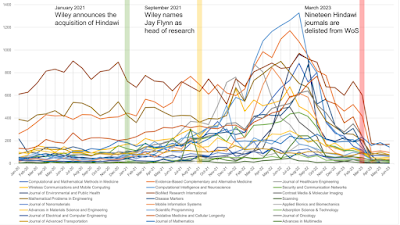
 

Figure 1. Number of submissions received per month for 24 journals that subsequently had papers retracted by Hindawi. Data from Hindawi Journal Report.

The papermill problem 

The first concerns were raised by research integrity communities and individuals, who since 2021 posted thousands of comments on the PubPeer journal club relating to papers published in hundreds of special issues of Hindawi journals. Many comments were made by anonymous sleuths Rhipidura albiventris, Hoya camphorifolia and Parashorea tomentella, whose contributions sometimes exceeded 100 per day.  Problems were not limited to individual special issues or even individual journals. There appeared to be systematic manipulation of the publishing process, especially affecting special issues, indicating activities of so-called “paper mills” – fraudulent organisations that will sell authorship and/or citations of papers, often faked, for a fee. Leonid Schneider, who runs the blog For Better Science, assisted David Bimler and others in posting their findings from Hindawi journals. Nick Wise discussed “What is going on in Hindawi special issues?” on October 12, 2022. These sleuths noted that many supposedly ‘peer-reviewed’ manuscripts had incoherent or unintelligible content, and corresponding authors used email addresses from other institutions; furthermore, a large number of papers cited irrelevant references, presumably to boost citation counts; some paper mills used the article processing charge (APC) waiver policy of Hindawi to make more profit. The pattern of abnormal citations confirmed that the fraud was not bounded by journals, and so publication-based investigations made it difficult to expose specific paper mills. 

It soon became clear that the special issues that were such a lucrative source of income for Hindawi were wide open to corrupt "guest editors" who, once appointed, could use fake peer review and flood the journal with fraudulent papers and irrelevant citations. In the gold open access model, Wiley earns APCs for every article published in Hindawi journals, whether in a special issue or not, so their incentive to exert quality control is compromised. Some examples are so extreme that nobody could take them seriously, such as an article on the ideological and political education of the Chinese Communist Party in a special issue "Exploration of Human Cognition using Artificial Intelligence in Healthcare", which was submitted, peer-reviewed and received on the same day. There are thousands of other papers which may be genuine but whose subject falls well outside the scope of the special issue where they are published, indicating that the journal is out of editorial control. 

Many of the authors and guest editors of the problematic papers mentioned by Bimler came from Asia. Ruihang Huang, Chunjiong Zhang, and Hanlie Cheng, PhD students at Donghua University, Tongji University and China University of Geosciences, Beijing, respectively, were beneficiaries of the citation manipulation and participants in the manipulation of special issues. Another example is Kaifa Zhao, who approved many nonsense manuscripts for publication as a guest editor at two journals: Computational Intelligence and Neuroscience and Journal of Environmental and Public Health. TigerBB8 identified Zhao as a PhD student at the Hong Kong Polytechnic University, and Dorothy Bishop requested an investigation by the university. As reported in Retraction Watch, their report claimed that Zhao's identity had been stolen by Yizhang Jiang, Zhao's master's program advisor. 

"According to Mr Zhao, he was not aware of relevant emails from Hindawi and has never responded to emails that are related to the two special issues"

 Hindawi takes action (slowly)

After a year of rapid growth in the Chinese market (Figure 2), Wiley acted. On September 28, 2022, Ferguson announced that 511 papers would be retracted from Hindawi journals. Intrestingly, no mention was made of the comments on PubPeer and Bimler's blog post; instead it was stated that these retractions were based on the findings of the Hindawi Research Integrity Team. The first retractions were seen in mid-November with concentrated releases during the Lunar New Year.
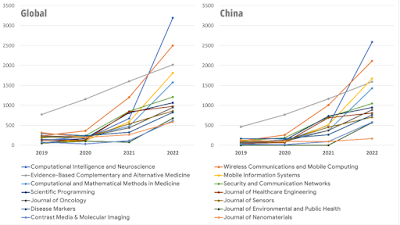
 

Figure 2. Number of articles and reviews published in 14 Hindawi journals 2019-2022. Data from Scopus.

It is possible that mass retractions were delayed because Wiley did not want to disrupt their agenda at the 74th Frankfurter Buchmesse (October 19 to 23, 2022). There was no indication that Wiley shared Hindawi's problems at the book fair. Instead, they were busy with other things. Flynn announced the creation of Wiley Partners Solution to meet the "scholarly publishing needs at scale" on October 17. Ferguson participated in a forum entitled "How the Article-Based Economy is Transforming Research Publishing" on October 19. Intriguingly, an essay posted by Chemistry World on April 24, 2023, citing Flynn, noted that Wiley had convened a meeting of publishers at that book fair, invited Clarivate, the owner of major journal database Web of Science (WoS) Core Collection, and disclosed to them the problems with Hindawi journals. We do not know the outcome of this meeting, but change did occur. On the one hand, Hindawi began issuing retractions on November 16, 2022. Nevertheless, in October 2022, special issues of Hindawi journals were still being published with many compromised articles, though from December 2022 onwards, the number of papers published in special issues decreased.  

Delisting of Hindawi journals

The public information prompted journal databases to re-evaluate whether Hindawi journals should continue to be indexed. In February 2023, DOAJ (Directory of Open Access Journals) delisted thirteen Hindawi journals. Then Scopus discontinued the indexing of six Hindawi journals. On March 20, 2023, Clarivate delisted nineteen Hindawi journals from WoS Core Collection. The fact that Education Research International was delisted suggested Clarivate conducted an independent investigation, as this journal had not been mentioned in relevant sources.  

As shown in Figure 3, the actions of the publisher and journal databases did not always involve the same journals. 


Figure 3. Twenty-six problematic Hindawi journals. WoS Core Collection: The journal was delisted from WoS Core Collection in March 2023. DOAJ: The journal was delisted from DOAJ in February 2023. Scopus: The journal was delisted from Scopus in the first half of 2023. Ferguson 500+: Papers in the journal were retracted and Liz Ferguson's statement was cited in the retraction statement. Flynn 2200+: Papers in the journal were retracted by Wiley using similar statements after May 2023. 

Clarivate did not publish the reasons for the delisting of each journal, nor did they delist more Hindawi journals before the release of 2023 Journal Citation Reports on June 28, 2023. Compared to MDPI, whose mega-journal the International Journal of Environmental Research and Public Health was delisted, Wiley's public response was subdued. In a mildly worded statement on March 22, 2023, on their WeChat Official Account, Hindawi said they were "disappointed" that their journals were delisted by Clarivate but did not offer any defence. In another post on April 5, 2023, Hindawi stated they would not appeal the delisting and suggested that the authors submit their manuscripts to Wiley journals. A guest post by Flynn in the Scholarly Kitchen on April 4, 2023, mentioned that:

 “At Wiley we take full responsibility for the quality of the content we publish across our portfolio.” 

He also announced a further 1,200 retractions to be issued by Hindawi journals. Flynn disclosed to Chemistry World how they selected which publications to retract, specifically that he deployed 200 people from his editorial staff to conduct "a manual review of every single paper that we thought may have been compromised'".

Impact on authors

Many authors published in Hindawi journals because they had the cachet of being listed in scholarly databases. One author of an article published in February 2023 in Oxidative Medicine and Cellular Longevity distributed email templates she drafted to others via an instant messaging software, encouraging them to ask Hindawi to work with Clarivate to index papers with publication dates before March 19, 2023. Anonymous sources described the chaos of Hindawi's customer service in late March 2023. Many people complained that Hindawi never responded to their emails. On the other hand, one author received a response from Oxidative Medicine and Cellular Longevity (omcl@hindawi.com), even though his complaint was about an article in another journal. Some authors of accepted manuscripts complained that Hindawi delayed their requests to withdraw their submissions, and feared that manuscripts would be accidentally published. 

Other authors turned on the sleuths who had exposed paper mill activity on PubPeer, describing their activities as "social media-related PubPeer extortion". Jincheng Wang from the Nanjing Drum Tower Hospital, who had published in a compromised special issue, suggested that the intent of those who posted comments was to blackmail the authors, under the threat of translating publicly available comments into Chinese and then posting them on social media in China. He encouraged authors to report these comments to the moderators.

Impact of delisting on Hindawi’s business 

Wiley did not inform investors about the retractions in Hindawi journals in their 2nd quarter report (August 1 to October 31, 2022) published on December 7, 2022. In the 3rd quarter report (November 1, 2022, to January 31, 2023) on March 9, 2023, Napack confronted the issue head-on: 

“Upon discovery, the Wiley team responded quickly, suspending the Hindawi special issues program and fixing the source of the problem by purging the external bad actors and by implementing measures to prevent this from happening again. To date, these actions include increasing editorial controls and introducing new AI-based screening tools into the editorial process. We've also been scrubbing the archive and publicly retracting any compromised articles.”

 And, 

“We put the fixes in place. We feel very good about what we've done. We are reopening the programs. And we are moving forward to clear the backlog and drive forward with our publishing program.” 

However, the statistics on publications showed that publications in special issues continued through November 2022 to January 2023. Despite the claim that the problem had been resolved, more than 200 articles published in special issues of 34 Hindawi journals in 2023 received comments on PubPeer relating to concerns about the publishing process. The release of retraction statements was also delayed. As of July 20, 2023,  retraction statements were issued on six dates, on May 24, June 21, June 28, June 29, July 12, and July 19, with 112, 559, 514, 1, 521, and 510 retractions, respectively. The total number of retracted papers, approximately 2700 including the initial 500 from 2022, substantially exceeds the 1200 mentioned by Flynn

An interesting development has been the involvement of law firms who specialize in shareholder rights litigation, such as Rosen Law Firm, Kirby McInerney LLP, Schall Law Firm, Glancy Prongay & Murray LLP, the Law Offices of Frank R. Cruz and the Law Offices of Howard G. Smith. All of these firms recently advertised that they are investigating whether Wiley issued misleading information about Hindawi to the investing public. 

In the 4th quarterly report for 2023, Napack stated that they had remedied all the problems, and were ready for “revitalization” 

“As discussed in Q3, we suspended the fast-growing special issues program after identifying a research integrity issue. This issue was the result of external misconduct by non-Wiley editors and reviewers. Essentially, Wiley decided to take a short-term hit to preserve the integrity of our journals and the value of our highly respected Wiley brand. This industry-wide issue has been widely reported on, and we believe that we now have it fully remediated in Wiley.” 

In the same report, Napack was still expressing satisfaction with Hindawi's performance since the acquisition: 

“Our expectation for Hindawi was a couple-fold. One, it would accelerate our position in that market, which it has; and that it would provide significant growth, which it has, and it will provide the ability to provide significant cascade across our portfolio that we could find homes for the many hundreds of thousands of articles that we get every year that are not published. Our expectations are the same going forward. We expect that over the next 12 to 18 months, we will be fully ramping back up. So, by '25, we're back on course with our volume growth and it should drop to the bottom line at/or we're close to the margin -- very healthy margin that it always has in our -- across all of our Open Access, but certainly across the Hindawi asset. So, the -- relative to our initial expectations, this acquisition has outperformed if you just can look aside for a minute against a very short-term thing that happened to us. But we're going to lead our way -- lead the industry out of it, and we feel very, very good about the future of our overall Open Access program.” 

So the paper mill debacle, which led to thousands of fraudulent papers being published in Hindawi journals over at least two years, is described as “a very short-term thing that happened to us” and is now “fully remediated”, was blamed on “external misconduct by non-Wiley editors and reviewers”. This leaves hanging the question of how those non-Wiley editors and reviewers not only achieved powerful positions determining what was published in Hindawi journals, but also continued to do so long after attention had been drawn to the problem by sleuths.

Regaining the market? 

Wiley is a mighty, major international publisher, and they have the potential to achieve a Hindawi revitalization, if revitalization is defined as a significant rebound in the number of papers published in Hindawi journals. The question is, which niche market does Hindawi intend to regain? Are they well-positioned to do so? Do they have any appreciation of the tension between their goal of publishing as much as possible, and the reputational costs of publishing papers that are low-quality at best and fraudulent at worst?

The sleuth Parashorea tomentella described the evolution of the niche of special issues of Hindawi journals after its acquisition in China. There is a highly competitive "first-tier" niche of authors from research universities and institutions, who have many manuscripts. China also has an extended, "second-tier" niche of authors from community colleges, polytechnics, and non-teaching hospitals. There are many, many of these potential customers, but they lack manuscripts on the one hand, and desire publications for promotion on the other. Paper mills fill the need of authors in this niche to publish and the needs of publishers to make money. It would be difficult for Hindawi to regain the first-tier niche, because most authors and institutions care about the reputation of the publisher, and even if they aren’t concerned about integrity they are spooked by unprecedented large-scale retractions. 

Hindawi is, however, in a strong position to regain the second-tier niche. First, despite all the problems, they still have many journals that are recognized by the Chinese authorities (typically those listed in databases such as WoS Core Collection and Engineering Village). Wiley has close links with those who maintain databases and may have an advantage in avoiding their journals being blacklisted. Wiley's longstanding commitment and partnership with Chinese research institutes and government stakeholders has brought them particularly close to the National Science Library, Chinese Academy of Sciences (NSL/CAS), a bureaucracy that compiles a blacklist which is recognized by many Chinese institutions. On June 16, 2023, Wiley and NSL/CAS announced the establishment of a Joint Laboratory on Scientific and Technical Journal Innovation. The press release mentioned that an important topic for the joint lab is research integrity, and Liying Yang, director of journal evaluation in NSL/CAS, introduced what NSL/CAS can do, including updating their Early Warning Journal List, which aimed to target paper mills. 

For reasons unknown, NSL/CAS has been particularly kind to Hindawi journals. NSL/CAS released their controversial Early Warning Journal List in December 2020, December 2021 and January 2023. In the latest version, the Hindawi journals Biomed Research International, Complexity, Advances in Civil Engineering, Shock and Vibration, Scientific Programming and Journal of Mathematics, which had been on the blacklist, were reinstated. Other problematic Hindawi journals were never on the blacklist. In contrast, the blacklist compiled by another Chinese bureaucracy, the Institute of Scientific and Technical Information of China (ISTIC), does not show undue goodwill toward Hindawi journals. In January and February 2023, some Chinese institutions, such as Zhejiang Gongshang University and Anhui Provincial Hospital (The First Affiliated Hospital of University of Science and Technology of China), told their employees not to submit to Hindawi journals. NSL/CAS was sending a different signal from other Chinese institutions and encouraged authors to continue submitting to Hindawi journals, although this effect was offset by Clarivate's delisting of nineteen Hindawi journals three months later. 

Hindawi’s determination to retain the second-tier niche may explain why they have continued to publish their customers' manuscripts from known paper mills. For instance, an article (now retracted) was published on March 11, 2023, long after the guest editor Kaifa Zhao had been proven to be an impostor. To take another example, the Hindawi Research Integrity Team retracted nine articles from a special issue of BioMed Research International on “Minimally Invasive Treatment Protocols in Clinical Dentistry” between November 22, 2022, and February 14, 2023, but subsequently published new articles in the same special issue on topics out of scope.
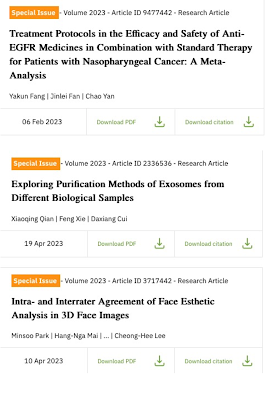
 

Figure 6. A special issue (https://www.hindawi.com/journals/bmri/si/652179/ ) of BioMed Research International published articles on a topic out of scope in between retraction statements
 

Even more alarmingly, special issues of four journals (Computational and Mathematical Methods in Medicine, Journal of Healthcare Engineering, Journal of Environmental and Public Health, and Computational Intelligence and Neuroscience) continued to publish questionable articles after Hindawi announced that the journals had closed on May 2, 2023, see e.g., https://pubpeer.com/publications/1F1263D5537A0EF96588929A60D15B ). In one weird case, an article that had been accepted 604 days previously was published in Journal of Healthcare Engineering on July 7, 2023. Perhaps this manuscript had been blocked by production processes or the Hindawi Research Integrity Team, but it was eventually published after the journal was closed. 

Reasons for pessimism 

The reason I am pessimistic is that so far Wiley's proposals to improve the publishing process for Hindawi journals have focused on the use of AI-based screening tools. Wiley has not committed to hiring more editors for Hindawi journals. As the number of submissions increases, the situation will only get worse if peer-review processes hosted by guest editors are assigned to overworked in-house editors to oversee. 

Wiley still has a chance to fix things. The first thing they should do is stop manuscripts received by external bad actors from continuing to be published. The second is to issue more retractions. I'm glad to see that in June 2023, Catriona MacCallum, the director of Open Science of Hindawi shared their approach to scaling up retractions, including focusing on manipulation of the process rather than author wrongdoing. Publisher retractions are painful for the publisher, journals, and authors, but they are necessary, and there are not enough of them. The third is to investigate the internal bad actors in an open and transparent manner. I would also encourage them to recruit more in-house editors, release the identities of the external bad actors they have found, and document the details of how internal controls failed so lessons can be learned. 

Most of us value our reputation for its own sake. As Shakespeare said in Othello: 

“Good name in man and woman, dear my lord, 

Is the immediate jewel of their souls: 

Who steals my purse steals trash; ’tis something, nothing; ’twas mine, ’tis his, and has been slave to thousands; 

But he that filches from me my good name 

Robs me of that which not enriches him, 

And makes me poor indeed” 

Indeed, as the Hindawi story shows, for a commercial organization, reputation is not just a desirable feel-good factor – it has huge financial implications. If an academic publisher like Wiley becomes known for boosting their profits by publishing screeds of arrant nonsense, their bottom line will ultimately suffer. Reputable researchers will not want their name associated with a publisher who behaves this way. If Wiley are not willing to control fraud because it is the right thing to do, they should at least recognize the importance of integrity for retaining the confidence of the academic institutions on whom they depend. 


Footnote 

* The author declares that there is no potential conflict of interest. The author uses a pseudonym because he/she lives in an authoritarian state and fears facing unpredictable political reprisals.


Tuesday, 11 April 2023

Papers affected by misconduct: Erratum, correction or retraction?


This week, Retraction Watch drew attention to a case summary of a misconduct investigation by the Office of Research Integrity (ORI) into grants and publications by Carlo Spirli, an Assistant Professor of Medicine, Department of Digestive Diseases, Yale University. This was based on an investigation conducted by Yale University plus analysis by ORI, which is reported with commendable transparency.

The conclusions were stark:

“ORI found that Respondent engaged in research misconduct by knowingly, intentionally, or recklessly falsifying and/or fabricating data included in the following four published papers, two presentations, and three grant applications submitted for PHS funds”. Details of the fabricated material in each of these sources were listed.

I suspect this investigation has been going on for a while; I could find no publications by Dr Spirli since 2019. In response to this report, he will "exclude himself voluntarily for a period of four years beginning on March 28, 2023” from contracting or subcontracting (presumably applying for grants) or serving on US Public Health Service committees. Compared to a French case that I blogged about recently this is a rather more serious outcome, though it nevertheless attracted critical comment on Twitter, and it is less severe than the measures that respondents thought appropriate for misconduct in a recently published survey of Fellows of the National Science Foundation. See Table 5, here.

My focus, here, however, is on another feature, which is similar to the French case. The report concluded that “Respondent will request that the following papers be corrected or retracted”, and then listed three articles published in Hepatology, two from 2012, and another from 2013.

Two of these have already had an ‘erratum’ published in 2022 (more details in Appendix below).

This seems inappropriate for two reasons.

First, according to Elsevier best practice guidelines, ‘an erratum refers to a correction of errors introduced to the article by the publisher’, as opposed to a ‘corrigendum’, which is a correction made on request by the author. 

Dr Spirli has an old CV online dating from 2017, in which he states he is a member of the Editorial Board of Hepatology. One wonders if this influenced the Editor who agreed to listing these two corrections as ‘Erratum’.

Second, though, the other category of ‘Corrigendum’ (i.e. Correction) also seems inappropriate here. We all make mistakes – I’ve got corrections to some of my papers, even though I try to be careful. It is all too easy to upload the wrong figure or miscompute some values when submitting a paper. If the conclusions are not affected by the error, a Correction is appropriate. But where there is a repeated pattern of falsification of data, or evidence that figures have deliberately been manipulated to fit a narrative, then a correction is not appropriate. The accompanying statements for Spirli’s ‘errata’ (see Appendix below) state that the conclusions are not affected. But the ORI report states that there was ‘reckless falsification or fabrication’ of data. Why, we ask ourselves, would an author falsify or fabricate data? The answer is obvious – to make inconclusive, inconsistent or null findings publishable. If the findings were solid in showing a desired result, there would be no need to engage in fraud. And if an author has shown a repeated tendency to engage in fraud, how can we trust the other data in their papers?

So this is a plea to ORI, CNRS, and other institutions, as well as editors, to start being more robust about the need for retraction of articles when misconduct has been demonstrated. Trying to ‘correct’ fraudulent articles is like trying to cut out a bad section from a rotting fish. The whole thing needs to be thrown away if you want to get rid of the stink.

Appendix

May 4 2022, Erratum to Spirli et al (2012a), Hepatology 2012;56:2363-74. doi: 10.1002/hep.25872

In reference to Spirli et al.,[1] we have become aware of possible errors in Figures 4C, and 5 A, B, and C. Forensic analysis concluded that in Figure 4C, the Actin blot appears to have been spliced and replicated. Therefore, the readings of CC3 as an index of apoptosis induced by Sorafenib are inconclusive. In Figure 5A, splicing is also present in Figure 5A (lane 1 and 12) and 5B (lane 12). These figures intend to show the paradoxical effect of Sorafenib on B-Raf and Raf-1 activity in WT and PC2-defective cells. The phenomenon remains valid, as shown in supplementary Figure 5, where exposure to Raf265, a Raf inhibitor with similar mechanism of Sorafenib generated a similar paradoxical effect. In Figure 5C there is a splice between lines 4 and 6 (effect of the higher concentration-10 μM- sorafenib in PKI treated cells). However, the observation that inhibition of cAMP/PKA with PKI prevents the paradoxical effect of Sorafenib on pERK and proliferation as shown in Figure 6 remains valid and is consistent with the in vivo finding. We believe that within the above limitations, the results and interpretation of the paper remain valid.

In addition to the four problematic figures (‘possible errors’) noted here, the ORI report mentions problems with Figures 3 and 6.

April 17 2022, Erratum to Spirli et al (2012b), Hepatology 2012;55(3):856-68. doi:10.1002/hep.24723

In reference to Spirli et al.,[1] we have become aware of an error in Figure 6A. This figure is intended to show that ER Calcium depletion (in this case using thapsigargin, an inhibitor of SERCA, the pump that allows ER Calcium entry) results in activation of the ERK pathway. The blot shows an example of Western blots from which the averages between phosphorylated ERK and total ERK shown in the bar graphs are then calculated. Forensic analysis concluded that Figure 6A contains lines seemingly duplicated for re-use in separate groups, as the bottom line 1–3 appears the same as lines 4–6. As such this figure should be considered erroneous (or falsified). However, reducing ER Calcium by another mean (chelation by TPEN) still increases ERK phosphorylation, and thus the results and interpretation of the paper remain valid.

17 June 2022, Retraction of Spirli et al (2015), Hepatology 2015 Dec;62(6):1828-39. doi: 10.1002/hep.28138.

The retraction has been agreed upon due to recently verified concerns regarding data authenticity rendering the conclusions uncertain. Several figures included in the article were found to have been falsified.

One can see from the ORI report that this one had so many figure manipulations that it was beyond help. It is the only paper in the report that had been flagged (by an anonymous commenter) on PubPeer.


Finally - please note that I welcome civil and on-topic comments, but they may take a while to appear, as comments are moderated to prevent spam.