Showing posts with label retraction. Show all posts

Monday, 5 January 2026

An Open Letter to the BMJ Editorial Board

 
to: Editor in chief, Kamran Abbasi, kabbasi@bmj.com
     Executive editor, Theodora Bloom, tbloom@bmj.com
     Head of research, Elizabeth Loder, eloder@bmj.com
     Head of journalism, Rebecca Coombes, rcoombes@bmj.com
     Publication ethics and content integrity editor, BMJ Journals, Helen Macdonald, hmacdonald@bmj.com
     Handling academic editor, Juan Franco, juanfranco@bmj.com
 
Dear Editors

We are writing to ask the BMJ to respond swiftly to the numerous issues with the article by Attar et al: Prevention of acute myocardial infarction induced heart failure by intracoronary infusion of mesenchymal stem cells: phase 3 randomised clinical trial (PREVENT-TAHA8) BMJ 2025; 391 doi: https://doi.org/10.1136/bmj-2024-083382 and retract this article without further delay. Although an Expression of Concern was added to the online version of the article on 12 November, this is not included in the PDF version, so readers who rely on the PDF will be unaware of the concerns. In contrast to the substantial publicity for the original article, no mention of the Expression of Concern has been posted by the BMJ on X, Bluesky or Facebook. 

The article was published on 29th October 2025. On 1st November, Dorothy Bishop looked at the associated dataset deposited on Figshare and immediately spotted that the reported ages for participants were not consistent with the inclusion criteria, which specified age below 65. 127 of 396 participants in the dataset had ages 65 and above, with the oldest being 86. A check of the means/SDs reported for age in the article showed them to be consistent with the dataset. Thus, this dataset, with one third of participants aged over 65, appears to be the one used to produce the results that were reported in the article. These concerns were immediately posted on PubPeer and reported to the editor, Dr Juan Franco.

On 2nd November, Nick Brown added a comment on PubPeer showing repeating patterns in the deposited dataset. These are incontrovertible evidence of fabricated data, as such repetitive patterns are vanishingly unlikely to have occurred by chance. Dorothy Bishop wrote again to Dr Franco, drawing attention to this new evidence.

The lead author, Dr Armin Attar, replied on PubPeer to say 

"During an internal audit, we have noticed some inconsistencies in the baseline demographic data of the study. Our team is currently conducting a detailed review to identify the source of these discrepancies. This process is expected to take approximately two to three weeks."

A few days later, he wrote:  

"... we have initiated a full technical audit of our data assembly and analysis pipeline. We are specifically investigating the reported 101‑record cycles, systematic trends in WBC/Hb/Plt, and baseline age discrepancies across outputs, and will document root causes and corrections where needed. The complete audit package will be posted within 2–3 weeks, and any confirmed errors will be transparently corrected via the journal."

At the time of writing, some 8 weeks later, no audit package has been publicly posted. And indeed, it does not appear to be possible for an “audit” to rescue the situation. It is not a case of a few odd datapoints, but rather that the dataset used for the analyses in the article shows numerous hallmarks of fabrication.  If the dataset is "corrected" then the analyses in the article will be false.

Over the next couple of weeks, additional concerns were raised by different commenters on PubPeer  and in letters and rapid replies to the BMJ. Alison Avenell emailed a full summary of all issues from PubPeer, BMJ rapid responses, submitted letters and additional concerns to Drs Abbasi and Franco on 3rd December, but no acknowledgement has been received. In brief, as well as numerous additional signatures of fabricated data, the following points were noted:
  • The review record shows that reviewers commented only on the first version of the article, even though some substantial issues were raised, particularly by reviewer Manoj Lalu.
  • The deposited dataset was added only after final acceptance, so not reviewed.
  • Problems with the registration, subsequently dealt with by adding a new protocol to the final version of the article. A citation to the original protocol was removed from the final version of the paper.
  • Numerous changes to the actual study start date in the clinical trial registry (https://clinicaltrials.gov/study/NCT05043610), which were undisclosed and post-dated study completion. According to the original trial registration and all versions until version 4, dated October 7th 2024 (close to manuscript submission), as well as to the published protocol (doi: 10.1186/s13063-022-06594-1), the trial was retrospectively registered. The authors altered the actual study start date and misleadingly presented the trial as prospectively registered. It is not possible in 2024 to realize the trial actually started in September 2021, not January 2021. The BMJ as well as all ICMJE journals explicitly don’t publish retrospectively registered randomized trials.
  • Secondary outcomes added after data collected
  • Changes to the author list. In particular, addition of two authors (Anthony Mathur and Sheik Dowlut) who are listed as "involved in conceptualisation, methodology, patient management, procedures, administration, and supervision", despite not being listed on the original study registration, and being based in the UK.
  • Undisclosed financial COIs by co-author Anthony Mathur.
  • Undisclosed COI by co-author Massoud Vosough
  • Inconsistencies for sample size, randomisation block size and period of follow-up between registration documents, published protocol and paper.
  • Concern about retrospective ethical approval and potential medical risks of the procedure for delivering cells.
Most of these points were posted prior to an Editorial written by the Editor-in-Chief about this case.

While we appreciate that journal editors and publishers must follow clear processes that take into account the authors' viewpoint, it should be amply evident to anyone with expertise in this area that the problems with this article go way beyond anything that could be dealt with by a correction. For summary see comment 64 in the PubPeer chain. It should have been clear just on the basis of the first two PubPeer comments (reported by email to the editor) that there were serious issues with this article, and yet here we are, over two months later, with no retraction.
 
The Editorial concluded: 
"We’re in this together, and we welcome your ideas. The goal is to act in the best interests of the public, to devise more robust processes and new solutions that indeed allow evidence and data to rebuild confidence." 
In response to this invitation, our ideas are:
  • The BMJ should monitor PubPeer comments on articles and take action when credible concerns are raised.
  • The BMJ should honor its own commitment to the ICMJE prospective registration mandate, as a founding member of ICMJE. It is unfortunate that a retrospectively registered clinical trial made it through peer-review in 2024.
  • The BMJ should adhere to COPE Guidelines, which state: 
"To minimise harmful effects and uptake (eg, citation of erroneous work, acting on their findings, or drawing incorrect conclusions), retraction notices should be published as soon as the editor is confident that the publication is seriously flawed, misleading, or falls into any of the categories described above. If there is a delay in making that determination, editors should publish an expression of concern [...]. When an editor has lost confidence in the results or conclusions of an article, they should not delay retraction solely because the authors or their institutions are not cooperative or responding promptly." 
We believe it is particularly important to retract this paper immediately, not just to maintain integrity of the scientific record, but because replication by other clinicians could carry serious risks for patients.

Yours sincerely,

Dorothy Bishop, Emeritus Professor of Developmental Neuropsychology, University of Oxford
Alison Avenell, Clinical Chair in Health Services Research, University of Aberdeen, UK
Mark Bolland, Associate Prof of Medicine, University of Auckland.
Nicholas J L Brown, Department of Psychology, Linnaeus University, Sweden
Ioana Alina Cristea, Associate Professor of Clinical Psychology, University of Padova
Sophie Hill, PhD student, Department of Government, Harvard University
Ian Hussey, Senior Lecturer, University of Bern
Thomas Kesteman, Oxford University Clinical Research Unit, Vietnam
Patricia Murray, Professor of Stem Cells and Regenerative Medicine, University of Liverpool, UK
Maarten van Kampen, ASML BV, The Netherlands
Peter Wilmshurst, Cardiologist


 P.S. 

5th Jan 2026

We've had a prompt response from the EIC:

Dear All,

Thank you for writing to us. We continue to investigate a range of issues related to this paper.

We will make a full decision once we have completed our due process.

Yours sincerely,

Kamran Abbasi FRCP Edin Lon
Editor in chief, The BMJ


Thursday, 20 June 2024

Does Elsevier's negligence pose a risk to public health?


Yesterday, Retraction Watch published a piece about a notorious 2020 article by Gautret et al that had promoted the idea that hydroxychloroquine could treat COVID-19. Despite numerous concerns, the article has not been retracted from the International Journal for Antimicrobial Agents, a journal that is co-owned by the publisher, Elsevier, and The International Society of Antimicrobial Chemotherapy (ISAC).

On June 3rd, a group of concerned scientists wrote to Elsevier asking for the paper to be retracted in light of the evidence that the paper was flawed and had serious consequences for public health. The fact that the article pops up in the Web of Science database with a trophy symbol denoting it as a 'highly cited paper' just adds to concerns that it is still being taken seriously, giving credence to those who continue to promote an ineffective drug, hydroxychloroquine, to treat COVID-19.


Elsevier's response? They are "reopening the investigation" into the paper. This is the investigation that previously decided nothing needed to be done, despite a damning report by a group of respected experts. In their reply to the letter they stated:

"We cannot currently provide further detail as to the particulars of this investigation as it remains ongoing, and is necessarily confidential while we allow time to discuss our concerns with the authors as part of due process and in line with COPE recommendations. I will however be more then glad to keep you appraised of any final decisions in due course."

As one experienced in these communications, I can confirm that this is the kind of reply you get by a publisher who is kicking the issue into the long grass in the hope that you will forget about it and go away. The wonderful phrase "it remains ongoing" typically refers to something that goes on, and on, and on, and "due course" can take years.

A pertinent question is what COPE recommendations are being followed: there are a whole range of flowcharts provided by COPE for different circumstances. The most relevant in this case would appear to be this one on "Concerns about risk in published data".

Early on in the flowchart, the decision tree asks "Based on the initial assessment, should the dataset be removed or restricted during the investigation to mitigate potential risk?" If the answer is YES, then the appropriate action is "Remove public access to the dataset while following up on the concerns."

Given that the article is still freely available on the web, we have to ask ourselves, is Elsevier being negligent here? Have they decided that there is no risk, despite the evidence that we and others have provided that public health is endangered by publicising misleading data on an ineffective drug? Or do they agree that there is risk, but deem it inconvenient for them to take action?

Tuesday, 11 April 2023

Papers affected by misconduct: Erratum, correction or retraction?


This week, Retraction Watch drew attention to a case summary of a misconduct investigation by the Office of Research Integrity (ORI) into grants and publications by Carlo Spirli, an Assistant Professor of Medicine, Department of Digestive Diseases, Yale University. This was based on an investigation conducted by Yale University plus analysis by ORI, which is reported with commendable transparency.

The conclusions were stark:

“ORI found that Respondent engaged in research misconduct by knowingly, intentionally, or recklessly falsifying and/or fabricating data included in the following four published papers, two presentations, and three grant applications submitted for PHS funds”. Details of the fabricated material in each of these sources were listed.

I suspect this investigation has been going on for a while; I could find no publications by Dr Spirli since 2019. In response to this report, he will "exclude himself voluntarily for a period of four years beginning on March 28, 2023” from contracting or subcontracting (presumably applying for grants) or serving on US Public Health Service committees. Compared to a French case that I blogged about recently this is a rather more serious outcome, though it nevertheless attracted critical comment on Twitter, and it is less severe than the measures that respondents thought appropriate for misconduct in a recently published survey of Fellows of the National Science Foundation. See Table 5, here.

My focus, here, however, is on another feature, which is similar to the French case. The report concluded that “Respondent will request that the following papers be corrected or retracted”, and then listed three articles published in Hepatology, two from 2012, and another from 2013.

Two of these have already had an ‘erratum’ published in 2022 (more details in Appendix below).

This seems inappropriate for two reasons.

First, according to Elsevier best practice guidelines, ‘an erratum refers to a correction of errors introduced to the article by the publisher’, as opposed to a ‘corrigendum’, which is a correction made on request by the author. 

Dr Spirli has an old CV online dating from 2017, in which he states he is a member of the Editorial Board of Hepatology. One wonders if this influenced the Editor who agreed to listing these two corrections as ‘Erratum’.

Second, though, the other category of ‘Corrigendum’ (i.e. Correction) also seems inappropriate here. We all make mistakes – I’ve got corrections to some of my papers, even though I try to be careful. It is all too easy to upload the wrong figure or miscompute some values when submitting a paper. If the conclusions are not affected by the error, a Correction is appropriate. But where there is a repeated pattern of falsification of data, or evidence that figures have deliberately been manipulated to fit a narrative, then a correction is not appropriate. The accompanying statements for Spirli’s ‘errata’ (see Appendix below) state that the conclusions are not affected. But the ORI report states that there was ‘reckless falsification or fabrication’ of data. Why, we ask ourselves, would an author falsify or fabricate data? The answer is obvious – to make inconclusive, inconsistent or null findings publishable. If the findings were solid in showing a desired result, there would be no need to engage in fraud. And if an author has shown a repeated tendency to engage in fraud, how can we trust the other data in their papers?

So this is a plea to ORI, CNRS, and other institutions, as well as editors, to start being more robust about the need for retraction of articles when misconduct has been demonstrated. Trying to ‘correct’ fraudulent articles is like trying to cut out a bad section from a rotting fish. The whole thing needs to be thrown away if you want to get rid of the stink.

Appendix

May 4 2022, Erratum to Spirli et al (2012a), Hepatology 2012;56:2363-74. doi: 10.1002/hep.25872

In reference to Spirli et al.,[1] we have become aware of possible errors in Figures 4C, and 5 A, B, and C. Forensic analysis concluded that in Figure 4C, the Actin blot appears to have been spliced and replicated. Therefore, the readings of CC3 as an index of apoptosis induced by Sorafenib are inconclusive. In Figure 5A, splicing is also present in Figure 5A (lane 1 and 12) and 5B (lane 12). These figures intend to show the paradoxical effect of Sorafenib on B-Raf and Raf-1 activity in WT and PC2-defective cells. The phenomenon remains valid, as shown in supplementary Figure 5, where exposure to Raf265, a Raf inhibitor with similar mechanism of Sorafenib generated a similar paradoxical effect. In Figure 5C there is a splice between lines 4 and 6 (effect of the higher concentration-10 μM- sorafenib in PKI treated cells). However, the observation that inhibition of cAMP/PKA with PKI prevents the paradoxical effect of Sorafenib on pERK and proliferation as shown in Figure 6 remains valid and is consistent with the in vivo finding. We believe that within the above limitations, the results and interpretation of the paper remain valid.

In addition to the four problematic figures (‘possible errors’) noted here, the ORI report mentions problems with Figures 3 and 6.

April 17 2022, Erratum to Spirli et al (2012b), Hepatology 2012;55(3):856-68. doi:10.1002/hep.24723

In reference to Spirli et al.,[1] we have become aware of an error in Figure 6A. This figure is intended to show that ER Calcium depletion (in this case using thapsigargin, an inhibitor of SERCA, the pump that allows ER Calcium entry) results in activation of the ERK pathway. The blot shows an example of Western blots from which the averages between phosphorylated ERK and total ERK shown in the bar graphs are then calculated. Forensic analysis concluded that Figure 6A contains lines seemingly duplicated for re-use in separate groups, as the bottom line 1–3 appears the same as lines 4–6. As such this figure should be considered erroneous (or falsified). However, reducing ER Calcium by another mean (chelation by TPEN) still increases ERK phosphorylation, and thus the results and interpretation of the paper remain valid.

17 June 2022, Retraction of Spirli et al (2015), Hepatology 2015 Dec;62(6):1828-39. doi: 10.1002/hep.28138.

The retraction has been agreed upon due to recently verified concerns regarding data authenticity rendering the conclusions uncertain. Several figures included in the article were found to have been falsified.

One can see from the ORI report that this one had so many figure manipulations that it was beyond help. It is the only paper in the report that had been flagged (by an anonymous commenter) on PubPeer.


Finally - please note that I welcome civil and on-topic comments, but they may take a while to appear, as comments are moderated to prevent spam.


Friday, 16 December 2022

When there are no consequences for misconduct: Parallels between politics and science


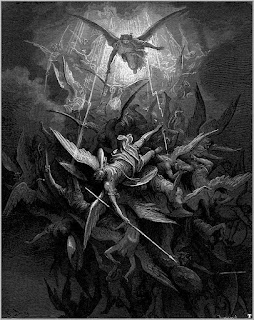
Gustave Doré: Illustration for Paradise Lost

(Updated 17 Dec 2022) 

As children, we grow up with stories of the battle between good and evil, but good ultimately triumphs. In adulthood, we know things can be more complicated: bad people can get into positions of power and make everyone suffer.  And yet, we tell ourselves, we have a strong legal framework, there are checks and balances, and a political system aspires to be free and fair.


During the last decade, I started for the first time to have serious doubts about those assumptions. In both the UK and the US, the same pattern is seen repeatedly: the media report on a scandal involving the government or a public figure, there is a brief period of public outrage, but then things continue as before.


In the UK we have become accustomed to politicians lying to Parliament and failing to correct the record, to bullying by senior politicians, and to safety regulations being ignored.  The current scandal is a case of disaster capitalism where government cronies made vast fortunes from the Covid pandemic by gaining contracts for personal protective equipment – which was not only provided at inflated prices, but then could not be used as it was substandard.


These are all shocking stories, but even more shocking is the lack of any serious consequences for those who are guilty. In the past, politicians would have resigned for minor peccadilloes, with pressure from the Prime Minister if need be. During Boris Johnson’s premiership, however, the Prime Minister was part of the problem. 


During the Trump presidency in the US, Sarah Kendzior wrote about “saviour syndrome”  - the belief people had that someone would come along and put things right. As she noted: “Mr. Trump has openly committed crimes and even confessed to crimes: What is at stake is whether anyone would hold him accountable.” And, sadly, the answer has been no.


No consequences for scientific fraud

So what has this got to do with science?  Well, I get the same sinking feeling that there is a major problem, everyone can see there's a problem, but nobody is going to rescue us. Researchers who engage in obvious malpractice repeatedly get away with no consequences.  This has been a recurring theme from those who have exposed academic papermills (Byrne et al., 2021) and/or reported manipulation of figures in journal articles (Bik et al., 2016).  For instance, when Bik was interviewed by Nature, she noted that 60-70% of the 800 papers she had reported to journals had not been dealt with within 5 years. That matches my more limited experience; if one points out academic malpractice to publishers or institutions, there is often no reply. Those who do reply typically say they will investigate, but then you hear no more.


At a recent symposium on Research Integrity at Liverpool Medical Institution*, David Sanders (Purdue University) told of repeated experiences of being given the brush-off by journals and institutions when reporting suspect papers. For instance, he reported an article that had simply recycled a table from a previous paper on a different topic. The response was “We will look into it”. “What”, said David incredulously, “is there to look into?”. This is the concern – that there can be blatant evidence of malpractice within a paper, yet the complainant is ignored. In this case, nothing happened. There are honorable exceptions, but it seems shocking that serious and obvious errors in work are not dealt with in a prompt and professional manner.


At the same seminar, there was a searing presentation by Peter Wilmshurst, whose experiences of exposing medical fraud by powerful individuals and organisations have led him to be the subject of numerous libel complaints.  Here are a few details of two of the cases he presented:


Paolo Macchiarini:  Convicted in 2022 of causing bodily harm with an experimental transplant of a synthetic windpipe that he performed between 2011-2012.  Wilmshurst noted that the descriptions of the experimental surgery in journals were incorrect. For a summary see this BMJ article.   A 2008 paper by Macchiarini and colleagues is still published in the Lancet, despite demands for it to be retracted. 


Don Poldermans: An eminent cardiologist who conducted a series of studies on perioperative betablockers, leading them to be recommended in guidelines from the European Society of Cardiology,  whose task force he chaired. A meta-analysis challenged that conclusion, showing mortality increased; an investigation found that work by Poldermans had serious integrity problems, and he was fired. Nevertheless, the papers have not been retracted. Wilmshurst estimated that thousands of deaths would have resulted from physicians following the guidelines recommending betablockers.


The week before the Liverpool meeting, there was a session on Correcting the Record at AIMOS2022.  The four speakers, John Loadsman (anaesthesiology), Ben Mol (Obstetrics and Gynecology), Lisa Parker (Oncology) and Jana Christopher (image integrity) covered the topic from a range of different angles, but in every single talk, the message came through loud and clear: it’s not enough to flag up cases of fraud – you have to then get someone to act on them, and that is far more difficult than it should be.


And then on the same day as the Liverpool meeting, Le Monde ran a piece about a researcher whose body of work contained numerous problems: the same graphs were used across different articles that purported to show different experiments, and other figures had signs of manipulation.  There was an investigation by the institution and by the funder, Centre National de la Recherche Scientifique (CNRS), which concluded that there had been several breaches of scientific integrity. However, it seems that the recommendation was simply that the papers should be “corrected”.


Why is scientific fraud not taken seriously?

There are several factors that conspire to get scientific fraud brushed under the carpet.

1.     Accusations of fraud may be unfounded. In science, as in politics, there may be individuals or organisations who target people unfairly – either for personal reasons, or because they don’t like their message. Furthermore, everyone makes mistakes and it would be dangerous to vilify researchers for honest errors. So it is vital to do due diligence and establish the facts. In practice, however, this typically means giving the accused the benefit of the doubt, even when the evidence of misconduct is strong.  While it is not always easy to demonstrate intent, there are many cases, such as those noted above, where a pattern of repeated transgressions is evident in published papers – and yet nothing is done.  

2.     Conflict of interest. Institutions may be reluctant to accept that someone is fraudulent if that person occupies a high-ranking role in the organisation, especially if they bring in grant income. Worries about reputational risk also create conflict of interest. The Printeger project is a set of case studies of individual research misconduct cases, which illustrates just how inconsistently these are handled in different countries, especially with regard to transparency vs confidentiality of process. It concluded “The reflex of research organisations to immediately contain and preferably minimise misconduct
cases is remarkable
”.

3.     Passing the buck. Publishers may be reluctant to retract papers unless there is an institutional finding of misconduct, even if there is clear evidence that the published work is wrong. I discussed this here.  My view is that leaving flawed research in the public record is analogous to a store selling poisoned cookies to customers – you have a responsibility to correct the record as soon as possible when the evidence is clear to avoid harm to consumers. Funders might be expected to also play a role in correcting the record when research they have funded is shown to be flawed. Where public money is concerned, funders surely have a moral responsibility to ensure it is not wasted on fraudulent or sloppy research. Yet in her introduction to the Liverpool seminar, Patricia Murray noted that the new UK Committee on Research Integrity (CORI) does not regard investigation of research misconduct as within its purview.  

4.     Concerns about litigation. Organisations often have concerns that they will be sued if they make investigations of misconduct public, even if they are confident that misconduct occurred. These concerns are justified, as can be seen from the lawsuits that most of the sleuths who spoke at AIMOS and Liverpool have been subjected to.  My impression is that, provided there is clear evidence of misconduct, the fraudsters typically lose libel actions, but I’d be interested in more information on that point.


Consequences when misconduct goes unpunished


The lack of consequences for misconduct has many corrosive impacts on society. 


1.     Political and scientific institutions can only operate properly if there is trust. If lack of integrity is seen to be rewarded, this erodes public confidence. 


2.     People depend on us getting things right. We are confronting major challenges to health and to our environment. If we can’t trust researchers to be honest, then we all suffer as scientific progress stalls.  Over-hyped findings that make it into the literature can lead subsequent generations of researchers to waste time pursuing false leads.  Ultimately, people are harmed if we don’t fix fraud.


3.     Misconduct leads to waste of resources. It is depressing to think of all the research that could have been supported by the funds that have been spent on fraudulent studies.


4.     People engage in misconduct because in a competitive system, it brings them personal benefits, in terms of prestige, tenure, power and salary. If the fraudsters are not tackled, they end up in positions of power, where they will perpetuate a corrupt system; it is not in their interests to promote those who might challenge them.


5.     The new generation entering the profession will become cynical if they see that one needs to behave corruptly in order to succeed. They are left with the stark choice of joining in the corruption or leaving the field.


What can be done?


There’s no single solution, but I think there are several actions that are needed to help clean up the mess.


1.     Appreciate the scale of the problem.

When fraud is talked about in scientific circles, you typically get the response that “fraud is rare” and “science is self-correcting”.  A hole has been blown in the first assumption by the emergence of industrial-scale fraud in the form of academic paper-mills . The large publishers are now worried enough about this to be taking concerted action to detect papermill activity, and some of them have engaged in mass retractions of fraudulent work (see, e.g. the case of IEEE retractions here). Yet, I have documented on PubPeer numerous new papermill articles in Hindawi special issues appearing since September of this year, when the publisher announced it would be engaging in retraction of 500 papers. It’s as if the publisher is trying to clean up with a mop while a fire-hose is spewing out fraudulent content.  This kind of fraud is different from that reported by Wilmshurst, but it illustrates just how slow the business of correcting the scientific record can be – even when the evidence for fraud is unambiguous. 
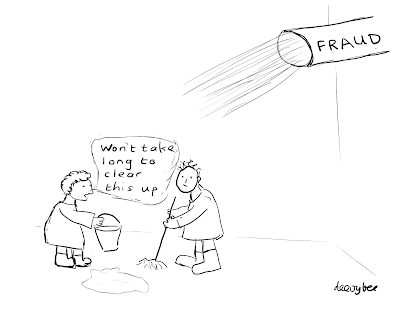
Publishers trying to mop up papermill outputs
 

Yes, self-correction will ultimately happen in science, when people find they cannot replicate the flawed research on which they try to build. But the time-scale for such self-correction is often far longer than it needs to be.  We have to understand just how much waste of time and money is caused by reliance on a passive, natural evolution of self-correction, rather than a more proactive system to root out fraud.  


2.     Full transparency

There’s been a fair bit of debate about open data, and now it is recognised that we also need open code (scripts to generate figures etc.) to properly evaluate results. I would go further, though, and say we also need open peer review. This need not mean that the peer reviewer is identified, but just that their report is available for others to read. I have found open peer reviews very useful in identifying papermill products.


3.     Develop shared standards

Organisations such as the Committee on Publication Ethics (COPE) give recommendations for editors about how to respond when an accusation of misconduct occurs.  Although this looks like a start in specifying standards to which reputable journals should adhere, several speakers at the AIMOS meeting suggested that COPE guidelines were not suited for dealing with papermills and could actually delay and obfuscate investigations. Furthermore, COPE has no regulatory power and publishers are under no obligation to follow the guidelines (even if they state they will do so).


4.     National bodies for promoting scientific integrity

The Printeger project (cited above) noted that “A typical reaction of a research organisation facing unfamiliar research misconduct without appropriate procedures is to set up ad hoc investigative committees, usually consisting of in-house senior researchers…. Generally, this does not go well.”

In response to some high-profile cases that did not go well, some countries have set up national bodies for promoting scientific integrity. These are growing in number, but those who report cases to them often complain that they are not much help when fraud is discovered – sometimes this is because they lack the funding to defend a legal challenge. But, as with shared standards, this is at least a start, and they may help gather data on the scale and nature of the problem.  


5.     Transparent discussion of breaches of research integrity

Perhaps the most effective way of persuading institutions, publishers and funders to act is by publicising when they have failed to respond adequately to complaints.  David Sanders described a case where journals and institutions took no action despite multiple examples of image manipulation and plagiarism from one lab.  He only got a response when the case was featured in the New York Times.

Nevertheless, as the Printeger project noted, relying on the media to highlight fraud is far from ideal – there can a tendency to sensationalise and simplify the story, with potential for disproportionate damage to both accused and whistleblowers. If we had trustworthy and official channels to report suspected research misconduct, then whistleblowers would be less likely to seek publicity through other means.


6.     Protect whistleblowers

In her introduction to the Liverpool Research Integrity seminar, Patricia Murray noted the lack of consistency in institutional guidelines on research integrity. In some cases, the approach to whistleblowers seemed hostile, with the guidelines emphasising that they would be guilty of misconduct if they were found to have made frivolous, vexatious and/or malicious allegations. This, of course, is fair enough, but it needs to be countered by recommendations that allow for whistleblowers who are none of these things, who are doing the institution a service by casting light on serious problems. Indeed, Prof Murray noted that in her institution, failure to report an incident that gives reasonable suspicion of research misconduct is itself regarded as misconduct.  At present, whistleblowers are often treated as nuisances or cranks who need to be shut down. As was evident from the cases of both Sanders and Wilmshurst, they are at risk of litigation, and careers may be put in jeopardy if they challenge senior figures.


7.     Changing the incentive structure in science

It’s well-appreciated that if you really want to stop a problem, you should understand what causes it and stop it at source. People do fraudulent research because the potential benefits are large and the costs seem negligible.  We can change that balance by, on the one hand having serious and public sanctions for those who commit fraud, and on the other hand, rewarding scientists who emphasise integrity, transparency and accuracy in their work, rather than those that get flashy, eyecatching results.


I'm developing my ideas on this topic and I welcome thoughts on these suggestions. Comments are moderated and so do not appear immediately, but I will post any that are on topic and constructive.  


Update 17th December 2022  


Jennifer Byrne suggested one further recommendation, as follows:

To change the incentive structure in scientific publishing. Journals are presently rewarded for publishing, as publishing drives both income (through subscriptions and/or open access charges) and the journal impact factor. In contrast, journals and publishers do not earn income and are not otherwise rewarded for correcting the literature that they publish. This means that the (seemingly rare) journals that work hard to correct, flag and retract erroneous papers are rewarded identically to journals that appear to do very little. Proactive journals appear to represent a minority, but while there are no incentives for journals to take a proactive approach to published errors and misinformation, it should not be surprising that few journals join their efforts. Until publication and correction are recognized as two sides of the same coin, and valued as such, it seems inevitable that we will see a continued drive towards publishing more and correcting very little, or continuing to value publication quantity over quality.


Bibliography 

I'll also add here additional resources. I'm certainly not the first to have made the points in this post, and it may be useful to have other articles gathered together in one place.  


Besançon, L., Bik, E., Heathers, J., & Meyerowitz-Katz, G. (2022). Correction of scientific literature: Too little, too late! PLOS Biology, 20(3), e3001572. https://doi.org/10.1371/journal.pbio.3001572   


Byrne, J. A., Park, Y., Richardson, R. A. K., Pathmendra, P., Sun, M., & Stoeger, T. (2022). Protection of the human gene research literature from contract cheating organizations known as research paper mills. Nucleic Acids Research, gkac1139. https://doi.org/10.1093/nar/gkac1139 


Christian, K., Larkins, J., & Doran, M. R. (2022). The Australian academic STEMM workplace post-COVID: a picture of disarray. BioRxiv. https://doi.org/10.1101/2022.12.06.519378 


Lévy, R. (2022, December 15). Is it somebody else’s problem to correct the scientific literature? Rapha-z-Lab. https://raphazlab.wordpress.com/2022/12/15/is-it-somebody-elses-problem-to-correct-the-scientific-literature/ 


Research misconduct: Theory & Pratico – For Better Science. (n.d.). Retrieved 17 December 2022, from https://forbetterscience.com/2022/08/31/research-misconduct-theory-pratico/   


Star marine ecologist committed misconduct, university says. (n.d.). Retrieved 17 December 2022, from https://www.science.org/content/article/star-marine-ecologist-committed-misconduct-university-says  


Additions on 18th December: Yet more relevant stuff coming to my attention! 


Naudet, Florian (2022) Lecture: Busting two zombie trials in a post-COVID world.   


Wilmshurst, Peter (2022) Blog: Has COPE membership become a way for unprincipled journals to buy a fake badge of integrity?


 *Addition on 20th December

Liverpool Medical Institution seminar on Research Integrity: The introduction by Patricia Murray, talk by Peter Wilmshurt, and Q&A are now available on Youtube.


And finally.... 

A couple of sobering thoughts:


Alexander Trevelyan on Twitter noted  a great quote from the anonymous @mumumouse (author of Research misconduct blogpost above): “To imagine what it’s like to be a whistleblower in the science community, imagine you are trying to report a Ponzi scheme, but instead of receiving help you are told, nonchalantly, to call Bernie Madoff, if you wish." 


Peter Wilmshurst started his talk by relaying a conversation with Patricia Murray in the run-up to his talk. He said he planned to talk about the 3 Fs, fabrication, falsification and honesty.

 To which Patricia replied, “There is no F in honesty”. 

(This may take a few moments to appreciate).


Tuesday, 9 August 2022

Can systematic reviews help clean up science?


The systematic review was not turning out as Lorna had expected

Why do people take the risk of publishing fraudulent papers, when it is easy to detect the fraud? One answer is that they don’t expect to be caught. A consequence of the growth in systematic reviews is that this assumption may no longer be safe. 

In June I participated in a symposium organised by the LMU Open Science Center in Munich entitled “How paper mills publish fake science industrial-style – is there really a problem and how does it work?” The presentations are available here. I focused on the weird phenomenon of papers containing “tortured phrases”, briefly reviewed here. For a fuller account see here. These are fakes that are easy to detect, because, in the course of trying to circumvent plagiarism detection software, they change words, with often unintentionally hilarious consequences. For instance, “breast cancer” becomes “bosom peril” and “random value” becomes “irregular esteem”. Most of these papers make no sense at all – they may include recycled figures from other papers. They are typically highly technical and so to someone without expertise in the area they may seem valid, but anyone familiar with the area will realise that someone who writes “flag to commotion” instead of “signal to noise” is a hoaxer. 

Speakers at the symposium drew attention to other kinds of paper mill whose output is less conspicuously weird. Jennifer Byrne documented industrial-scale research fraud in papers on single gene analyses that were created by templates, and which purported to provide data on under-studied genes in human cancer models. Even an expert in the field may be hoodwinked by these. I addressed the question of “does it matter?” For the nonsense papers generated using tortured phrases, it could be argued that it doesn’t, because nobody will try to build on that research. But there are still victims: authors of these fraudulent papers may outcompete other, honest scientists for jobs and promotion, journals and publishers will suffer reputational damage, and public trust in science is harmed. But what intrigued me was that the authors of these papers may also be regarded as victims, because they will have on public record a paper that is evidently fraudulent. It seems that either they are unaware of just how crazy the paper appears, or that they assume nobody will read it anyway. 

The latter assumption may have been true a couple of decades ago, but with the growth of systematic reviews, researchers are scrutinizing many papers that previously would have been ignored. I was chatting with John Loadsman, who in his role as editor of Anaesthesia and Intensive Care has uncovered numerous cases of fraud. He observed that many paper mill outputs never get read because, just on the basis of the title or abstract, they appear trivial or uninteresting. However, when you do a systematic review, you are supposed to read everything relevant to the research question, and evaluate it, so these odd papers may come to light. 

I’ve previously blogged about the importance of systematic reviews for avoiding cherrypicking of the literature. Of course, evaluation of papers is often done poorly or not at all, in which case the fraudulent papers just pollute the literature when added to a meta-analysis. But I’m intrigued at the idea that systematic reviews might also serve the purpose of putting the spotlight on dodgy science in general, and fraudsters in particular, by forcing us to read things thoroughly. I therefore asked Twitter for examples – I asked specifically about meta-analysis but the responses covered systematic reviews more broadly, and were wide-ranging both in the types of issue that were uncovered and the subject areas. 

Twitter did not disappoint: I received numerous examples – more than I can include here. Much of what was described did not sound like the work of paper mills, but did include fraudulent data manipulation, plagiarism, duplication of data in different papers, and analytic errors. Here are some examples: 

Paper mills and template papers

Jennifer Byrne noted how she became aware of paper mills when looking for studies of a particular gene she was interested in, which was generally under-researched. Two things raised her suspicions: a sudden spike in studies of the gene, plus series of papers that had the same structure, as if constructed from a template. Subsequently, with Cyril Labbé, who developed an automated Seek & Blastn tool to assess nucleotide sequences, she found numerous errors in the reagents and specification of genetic sequences of these repetitive papers, and it became clear that they were fraudulent. 

An example of a systematic review that discovered a startling level of inadequate and possibly fraudulent research was focused on the effect of tranexamic acid on post-partum haemorrhage: out of 26 reports, eight had sections of identical or very similar text, despite apparently coming from different trials. This is similar to what has been described for papers from paper mills, which are constructed from a template. And, as might be expected for a paper mill output, there were also numerous statistical and methodological errors, and some cases without ethical approval. (Thanks to @jd_wilko for pointing me to this example). 

Plagiarism 

Back in 2006, Iain Chalmers, who is generally ahead of his time, noted that systematic reviews could root out cases of plagiarism, citing the example of Asim Kurjak, whose paper on epidural analgesia in labour was heavily plagiarised. 

Data duplication 

Meta-analysis can throw up cases where the same study is reported in two or more papers, with no indication that this is the same data. Although this might seem like a minor problem compared with fraud, it can be serious, because if the duplication is missed in a meta-analysis, that study will be given more weight than it should have. Ioana Cristea noted that such ‘zombie papers’ have cropped up in a meta-analysis she is currently analysing. 

Tampering with peer review 

When a paper considered for a meta-analysis seems dubious, it raises the question of whether proper peer review procedures were followed. It helps if the journal adopts open peer review. Robin N. Kok reported a paper where the same person was listed as an author and a peer reviewer. This was eventually retracted.  

Data seem too good to be true 

This piece in Science tells the story of Qian Zhang, who published a series of studies on impact of cartoon violence in children which on the one hand had remarkably large samples of children all at the same age, and on the other hand had similar samples across apparently different studies.  Because of their enormous size, Zhang’s papers distorted any meta-analysis they were included in. 

Aaron Charlton cited another case, where serious anomalies were picked up in a study on marketing in the course of a meta-analysis. The paper was ultimately retracted 3 years after the concerns were raised, after defensive responses from some of the authors, challenging the meta-analysts. 

This case flagged by Neil O’Connell is especially useful, as it documents a range of methods used to evaluate suspect research. The dodgy work was first flagged up in a meta-analysis of cognitive behaviour therapy for chronic pain.  Three papers with the same lead author, M. Monticone, obtained results that were discrepant with the rest of the literature, with much bigger effect sizes. The meta-analysts then looked at other trials by the same team and found that there was a 6-fold difference between the lower confidence interval of the Monticone studies and the upper confidence interval of all others combined. The paper also reports email exchanges with Dr Monticone that may be of interest to readers. 

Poor methodology 

Fiona Ramage told me that in the course of doing a preclinical systematic review and meta-analysis of nutritional neuroscience, she encountered numerous errors of basic methodology and statistics, e.g. dozens of papers where error bars were presented without indicating if they show SE or SD; studies claiming differences between groups without a direct statistical comparison. This is more likely to be due to ignorance or honest error than to malpractice, but it needs to be flagged up so that the literature is not polluted by erroneous data.

What are the consequences?

Of course, the potential of systematic reviews to detect bad science is only realised if the dodgy papers are indeed weeded out of the literature, and people who commit scientific fraud are fired. Journals and publishers have started to respond to paper mills, but, as Ivan Oransky has commented, this is a game of Whac-a-Mole, and "the process of retracting a paper remains comically clumsy, slow and opaque”. 

I was surprised that even when confronted with an obvious case of a paper that had both numerous tortured phrases and plagiarism, the response from the publisher was slow – e.g. this comically worded example is still not retracted, even though the publisher’s research integrity office acknowledged my email expressing concern over 2 months ago.  But 2 months is nothing. Guillaume Cabanac recently tweeted about a "barn door" case of plagiarism that has just been retracted 20 years after it was first flagged up.  When I discuss the slow responses to concerns with publishers, they invariably say that they are being kept very busy with a huge volume of material from paper mills. To which I answer, you are making immense profits, so perhaps some could be channeled into employing more people to tackle this problem. As I am fond of pointing out, I regard a publisher who leaves seriously problematic studies in the literature as analogous to a restauranteur that serves poisoned food to customers. 

Publishers may be responsible for correcting the scientific record, but it is institutional employers who need to deal with those who commit malpractice. Many institutions don’t seem to take fraud seriously. This point was made back in 2006 by Iain Chalmers, who described the lenient treatment of Asim Kurjak, and argued for public naming and shaming of those who are found guilty of scientific misconduct. Unfortunately, there’s not much evidence that his advice has been heeded. Consider this recent example of a director of a primate reseach lab who admitted fraud, but is still in post. (Here the fraud was highlighted by a whistleblower rather than a systematic review, but this illustrates the difficulty of tackling fraud when there are only minor consequences for fraudsters). 

Could a move towards "slow science" help? In the humanities, literary scholars pride themselves on “close reading” of texts. In science, we are often so focused on speed and concision, that we tend to lose the ability to focus deeply on a text, especially if it is boring. The practice of doing a systematic review should in principle develop better skills in evaluation of individual papers, and in so doing help cleanse the literature from papers that should never have got published in the first place. John Loadsman has suggested we should not only read papers carefully, but should recalibrate ourselves to have a very high “index of suspicion” rather than embracing the default assumption that everyone is honest. 

P.S. 

Many thanks to everyone who sent in examples. Sorry I could not include everything. Please feel free to add other examples or reactions in the Comments – these tend to get overwhelmed with adverts for penis enlargement or (ironically) essay mills, and so are moderated, but I do check them and relevant comments will eventually appear.

PPS. Florian Naudet sent a couple of relevant links that readers might enjoy: 

Fascinating article by Fanelli et al who looked at how inclusion of retracted papers affected meta-analyses: https://www.tandfonline.com/doi/full/10.1080/08989621.2021.1947810  

And this piece by Lawrence et al shows the dangers of meta-analyses when there is insufficient scrutiny of the papers that are included: https://www.nature.com/articles/s41591-021-01535-y  

Also, Joseph Lee tweeted about this paper about inclusion of papers from predatory publications in meta-analyses: https://jmla.pitt.edu/ojs/jmla/article/view/491 

PPPS. 11th August 2022

A couple of days after posting this, I received a copy of "Systematic Reviews in Health Research" edited by Egger, Higgins and Davey Smith. Needless to say, the first thing I did was to look up "fraud" in the index. Although there are only a couple of pages on this, the examples are striking. 

First, a study by Nowbar et al (2014) on bone marrow stem cells for heart disease found that in a review of 133 reports, over 600 discrepancies were found, and the number of discrepancies increased with the reported effect size. There's a trail of comments on Pubpeer relating to some of the sources, e.g. https://pubpeer.com/publications/B346354468C121A468D30FDA0E295E.

Another example concerns the use of beta-blockers during surgery. A series of studies from one centre (the DECREASE trials) showing good evidence of effectiveness was investigated and found to be inadequate, with missing data and failure to follow research protocols. When these studies were omitted from a meta-analysis, the conclusion was that, far from receiving benefit from beta-blockers, patients in the treatment group were more likely to die (Bouri et al, 2014). 

 PPPPS, 18th August 2022

This comment by Jennifer Byrne was blocked by Blogger - possibly because it contained weblinks.

Anyhow, here is what she said:

I agree, reading both widely and deeply can help to identify problematic papers, and an ideal time for this to happen is when authors are writing either narrative or systematic reviews. Here's another two examples where Prof Carlo Galli and colleagues identified similar papers that may have been based on templates: https://www.mdpi.com/2304-6775/7/4/67, https://link.springer.com/article/10.1007/s11192-022-04434-2 


Saturday, 13 March 2021

Time for publishers to consider the rights of readers as well as authors


© cartoonstock.com
I've just been reading this piece entitled: "Publication ethics: Barriers in resolving figure corrections" by Lataisia Jones, on the website of the American Society for Microbiology, which publishes several journals.  Microbiology is a long way from my expertise and interests, but I have been following the work of Elisabeth Bik, datasleuth extraordinaire, for some time - see here. As Bik points out, the responses (or more often lack of response) she gets when she raises concerns about papers are similar to those seen in other fields where whistleblowers try to flag up errors  (e.g. this Australian example). 

It's clear that there are barriers to correcting the scientific record when errors are identified, and so I was pleased to see a piece tackling this head-on, which attempts to explain why responses by journals and publishers often appear to be so slow and unsatisfactory. However, I felt the post, missed some key points that need to be taken seriously by publishers and editors. 

The post starts by saying that: "Most figure concerns are created out of error and may present themselves in the form of image duplication, splicing and various figure enhancements." I think we need to have that "most" clarified in the form of a percentage. Yes, of course, we all make mistakes, but many of the issues flagged up by Bik are not the kinds of error made by someone going "oops" as they prepare their figures. I felt that on the one hand it is crucial to be aware that many papers are flawed because they contain honest errors, but that fact should not lead us to conclude that most cases of problematic images are of this kind. At least, not until there is hard evidence on that point. 

The post goes on to document the stages that are gone through when an error has been flagged up, noting in particular these guidelines produced by the Committee on Publication Ethics (COPE). First, the author is contacted. "Since human error is a common reason behind published figure concerns, ASM remains mindful and vigilant while investigating to prevent unnecessarily tarnishing a researcher’s reputation. Oftentimes, the concern does not proceed past the authors, who tend to be extremely responsive." So here again, Jones emphasises human error as a "common reason" for mistakes in figures, and also describes authors as "extremely responsive". And here again, I suggest some stastistics on both points would be of considerable interest. 

Jones explains that this preliminary step may take a long time when several years have elapsed between publication and the flagging up of concerns. The authors may be hard to contact, and the data may no longer be available. Assuming the authors give a satisfactory response, what happens next depends on whether the error can be corrected without changing the basic results or conclusions. If so, then a Correction is published. Interestingly, Jones says nothing about what happens if an honest error does change the basic results or conclusions. I think many readers would agree that in that case there should be a retraction, but I sense a reluctance to accept that, perhaps because Jones appears to identify retraction with malpractice. 

She describes the procedure followed by ASM if the authors do not have a satisfactory response: the problem is passed on to the authors' institution for investigation. As Jones points out, this can be an extended process, as it may require identification of old data, and turn into an inquiry into possible malpractice. Such enquiries often move slowly because the committee members responsible for this work are doing their investigations on top of their regular job. And, as Jones notes: "Additionally, multiple figure concerns and multiple papers take longer to address and recovering the original data files could take months alone." So, the institution feeds back its conclusions (typically after months or possibly years), which may return us to the point where it is decided a Correction is appropriate. But, "If the figure concerns are determined to have been made intentionally or through knowingly manipulating the data, the funding agencies are notified." And yet another investigation starts up, adding a few more months or years to the process. 

So my reading of this is that if the decision to make a Correction is not reached, the publisher and journal at this point hand all responsibility over to other agencies - the institution and the funders. The post by Jones at no point mentions the conditions that need to be met for the paper to actually be retracted (in which case it remains in the public domain but with a retraction notice) or withdrawn (in which case it is removed). Indeed, the word 'retract' does not appear at all in her piece. 

What else is missing from all of this? Any sense of responsibility to other researchers and the general public. A peer-reviewed published article is widely regarded as a credible piece of work. It may be built on by other researchers, who assume they can trust the findings. Its results may be used to inform treatment of patients or, in other fields, public policy. Leaving an erroneous piece of work in a peer-reviewed journal without any indication that concerns have been raised is rather like leaving a plate of cookies out for public consumption, when you know they may be contaminated. 

Ethical judgements by publishers need to consider their readers, as well as their authors. I would suggest they should give particularly high priority to published articles where concerns have not been adequately addressed by authors, and which also have been cited by others. The more citations, the greater the urgency to act, as citations spawn citations, with the work achieving canonical status in some cases. In addition, if there are multiple papers by the same author with concerns, surely this should be treated as a smoking gun, rather than an excuse for why it takes years to act.

It should not be necessary to wait until institutions and funders have completed investigations into possible malpractice. Malpractice is actually a separate issue here: the key point for readers of the journal is whether the published record is accurate. If it is inaccurate - either due to honest error or malpractice - the work should be retracted, and there is plenty of precedent for retraction notices to specify the reason for retraction. This also applies to the situation where there is a realistic concern about the work (such as manipulated figures or internally inconsistent data) and the author cannot produce the raw data that would allow for the error to be identified and corrected. In short, it should be up to the author to ensure that the work is transparent and reproducible. Retaining erroneous work in a journal is not a neutral act. It pollutes the scientific literature and ignores the rights of readers not to be misled or misinformed.