Showing posts with label editor. Show all posts

Friday, 30 September 2022

Reviewer-finding algorithms: the dangers for peer review


Last week many words were written for Peer Review Week, so you might wonder whether there is anything left to say. I may have missed something, but I think I do have a novel take on this, namely to point out that some recent developments in automation may be making journals vulnerable to fake peer review. 

Finding peer reviewers is notoriously difficult these days. Editors are confronted with a barrage of submissions, many outside their area. They can ask authors to recommend peer reviewers, but this raises concerns of malpractice, if authors recommend friends, or even individuals tied up with paper mills, who might write a positive review in return for payment.

One way forward is to harness the power of big data to identify researchers who have a track record of publishing in a given area. Many publishers now use such systems. This way a journal editor can select from a database of potential reviewers that is formed by identifying papers with some overlap to a given submission.

I have become increasingly concerned, however, that use of algorithmically-based systems might leave a journal vulnerable to fraudulent peer reviewers who have accumulated publications by using paper mills. I became interested in this when submitting work to Wellcome Open Research and F1000, where open peer review is used, but it is the author rather than an editor who selects reviewers. Clearly, with such a system, one needs to be careful to avoid malpractice, and strict criteria are imposed. As explained here,  reviewers need to be:
  1. Qualified: typically hold a doctorate (PhD/MD/MBBS or equivalent). 
  2. Expert: have published at least three articles as lead author in a relevant topic, with at least one article having been published in the last five years. 
  3. Impartial: No competing interests and no co-authorship or institutional overlap with current authors. 
  4. Global: geographically diverse and from different institutions. 
  5. Diverse: in terms of gender, geographic location and career stage

Unfortunately, now that we have paper mills, which allow authors, for a fee, to generate and publish a large number of fake papers, these criteria are inadequate. Consider the case of Mohammed Sahab Uddin, who features in this account in Retraction Watch. As far as I am aware, he does not have a doctorate*, but I suspect people would be unlikely to query the qualifications of someone who had 137 publications and an H-index of 37. By the criteria above, he would be welcomed as a reviewer from an underrepresented location. And indeed, he was frequently used as a reviewer: Leslie McIntosh, who unmasked Uddin’s deception, noted that before he wiped his Publons profile, he had been listed as a reviewer on 300 papers. 

This is not an isolated case. We are only now beginning to get to grips with the scale of the problem of paper mills. There are undoubtedly many other cases of individuals who are treated as trusted reviewers on the back of fraudulent publications. Once in positions of influence, they can further distort the publication process. As I noted in last week's blogpost, open peer review offers a degree of defence against this kind of malpractice, as readers will at least be able to evaluate the peer review, but it is disturbing to consider how many dubious authors will have already found themselve promoted to positions of influence based on their apparently impressive track record of publishing, reviewing and even editing.

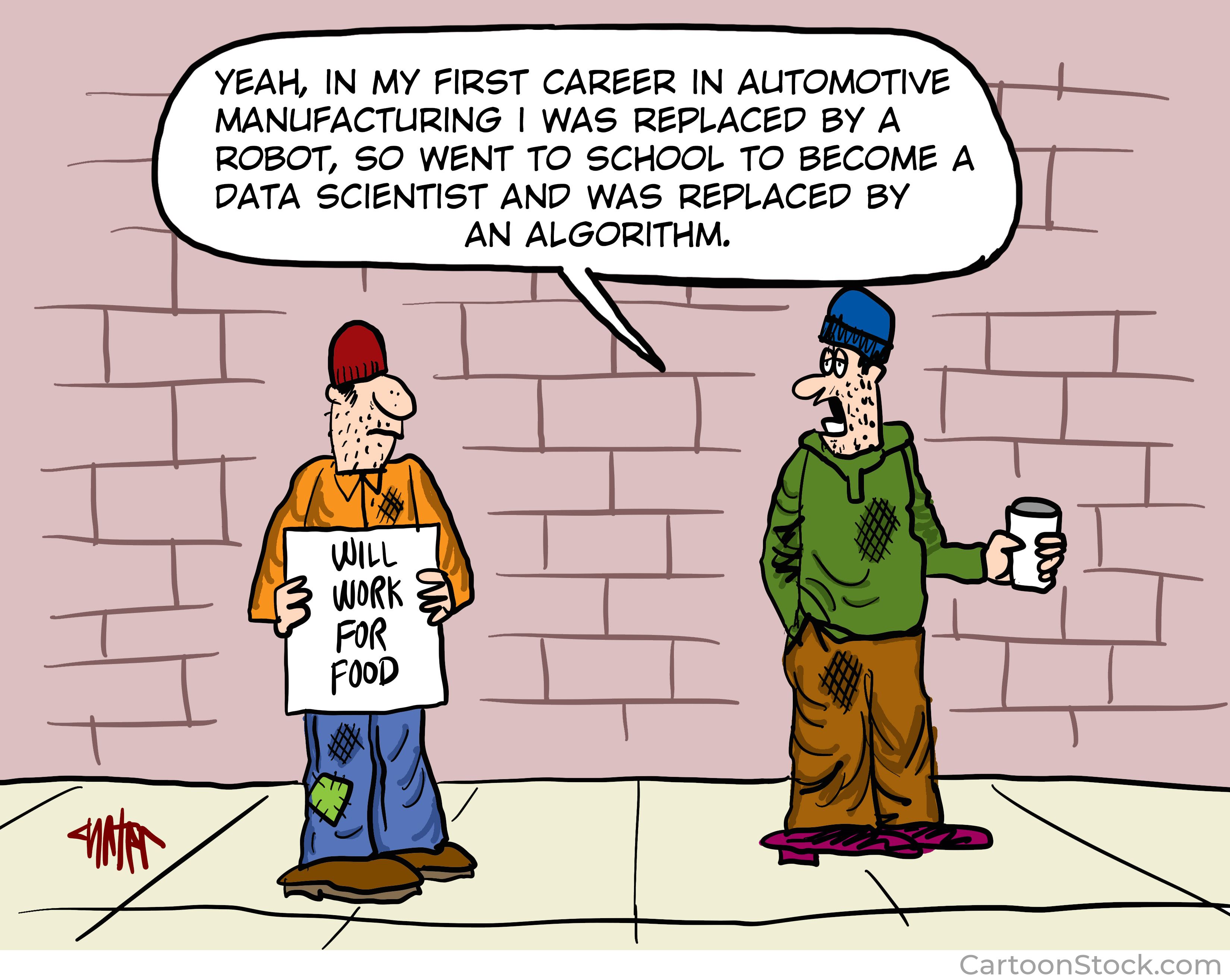
I started to think about this might interact with other moves to embrace artificial intelligence. A recent piece in Times Higher Education stated: “Research England has commissioned a study of whether artificial intelligence could be used to predict the quality of research outputs based on analysis of journal abstracts, in a move that could potentially remove the need for peer review from the Research Excellence Framework (REF).” This seems to me to be the natural endpoint of the move away from trusting the human brain in the publication process. We could end up with a system where algorithms write the papers, which are attributed to fake authors,  peer reviewed by fake peer reviewers, and ultimately evaluated in the Research Excellence Framework by machines. Such a system is likely to be far more successful than mere mortals, as it will be able to rapidly and flexibly adapt to changing evaluation criteria. At that point, we will have dispensed with the need for human academics altogether and have reached peak academia. 

 *Correction 30/9/22: Leslie McIntosh tells me he does have a doctorate and was working on a postdoc.

Sunday, 26 August 2018

Should editors edit reviewers?


How Einstein dealt with peer review: from http://theconversation.com/hate-the-peer-review-process-einstein-did-too-27405

This all started with a tweet from Jesse Shapiro under the #shareyourrejections hashtag:

JS: Reviewer 2: “The best thing these authors [me and @ejalm] could do to benefit this field of study would be to leave the field and never work on this topic again.” Paraphrasing only slightly.

This was quickly followed by another example;
Bill Hanage: #ShareYourRejections “this paper is not suitable for publication in PNAS, or indeed anywhere.”

Now, both of these are similarly damning, but there is an important difference. The first one criticises the authors, the second one criticises the paper. Several people replied to Jesse’s tweet with sympathy, for instance:

Jenny Rohn: My condolences. But Reviewer 2 is shooting him/herself in the foot - most sensible editors will take a referee's opinion less seriously if it's laced with ad hominem attacks.

I took a different tack, though:
DB: A good editor would not relay that comment to the author, and would write to the reviewer to tell them it is inappropriate. I remember doing that when I was an editor - not often, thankfully. And reviewer apologised.

This started an interesting discussion on Twitter:

Ben Jones: I handled papers where a reviewer was similarly vitriolic and ad hominem. I indicated to the reviewer and authors that I thought it was very inappropriate and unprofessional. I’ve always been very reluctant to censor reviewer comments, but maybe should reconsider that view

DB: You're the editor. I think it's entirely appropriate to protect authors from ad hominem and spiteful attacks. As well as preventing unnecessary pain to authors, it helps avoid damage to the reputation of your journal

Chris Chambers: Editing reviews is dangerous ground imo. In this situation, if the remainder of the review contained useful content, I'd either leave the review intact but inform the authors to disregard the ad hom (& separately I'd tell reviewer it's not on) or dump the whole review.

DB: I would inform reviewer, but I don’t think it is part of editor’s job to relay abuse to people, esp. if they are already dealing with pain of rejection.

CC: IMO this sets a dangerous precedent for editing out content that the editor might dislike. I'd prefer to keep reviews unbiased by editorial input or drop them entirely if they're junk. Also, an offensive remark or tone could in some cases be embedded w/i a valid scientific point.

Kate Jeffery: I agree that editing reviewer comments without permission is dodgy but also agree that inappropriate comments should not be passed back to authors. A simple solution is for editor to revise the offending sentence(s) and ask reviewer to approve change. I doubt many would decline.

A middle road was offered by Lisa deBruine:
LdB: My solution is to contact the reviewer if I think something is wrong with their review (in either factual content or professional tone) and ask them to remove or rephrase it before I send it to the authors. I’ve never had one decline (but it doesn’t happen very often).

I was really surprised by how many people felt strongly that the reviewer’s report was in some sense sacrosanct and could and should not be altered. I’ve pondered this further, but am not swayed by the arguments.

I feel strongly that editors should be able to distinguish personal abuse from robust critical comment, and that, far from being inappropriate, it is their duty to remove the former from reviewer reports. And as for Chris’s comment: ‘an offensive remark or tone could in some cases be embedded w/i a valid scientific point’ – the answer is simple. You rewrite to remove the offensive remark; e.g. ‘The authors’ seem clueless about the appropriate way to run a multilevel model’ could be rewritten to ‘The authors should take advice from a statistician about their multilevel model, which is not properly specified’. And to be absolutely clear, I am not talking about editing out comments that are critical of the science, or which the editor happens to disagree with. If a reviewer got something just plain wrong, I’m okay with giving a clear steer in the editor’s letter, e.g.: ‘Reviewer A suggests you include age as a covariate. I notice you have already done that in the analysis on p x, so please ignore that comment.’ I am specifically addressing comments that are made about the authors rather than the content of what they have written. A good editor should find that an easy distinction to make. From the perspective of an author, being called out for getting something wrong is never comfortable: being told you are a useless person because you got something wrong just adds unnecessary pain.

Why do I care about this? It’s not just because I think we should all be kind to each other (though, in general, I think that’s a good idea). There’s a deeper issue at stake here. As editors, we should work to reinforce the idea that personal disputes should have no place in science. Yes, we are all human beings, and often respond with strong emotions to the work of others. I can get infuriated when I review a paper where the authors appear to have been sloppy or stupid. But we all make mistakes, and are good at deluding ourselves. One of the problems when you start out is that you don’t know what you don’t know: I learned a lot from having my errors pointed out by reviewers, but I was far more likely to learn from this process if the reviewer did not adopt a contemptuous attitude. So, as reviewers, we should calm down and self-edit, and not put ad hominem comments in our reviews. Editors can play a role in training reviewers in this respect.

For those who feel uncomfortable with my approach - i.e. edit the review and tell reviewer why you have done so – I would recommend Lisa de Bruine’s solution of raising the issue with the reviewer and asking them to amend their review. Indeed, in today’s world where everything is handled by automated systems, that may be the only way of ensuring that an insulting review does not go to the author (assuming the automated system lets you do that!).

Finally, as everyone agreed that, this this does not seem to be a common problem, so perhaps not worth devoting much space to, but I'm curious to know how other editors respond to this issue.